

Escrito por estudiantes que aprobaron Inmediatamente disponible después del pago Leer en línea o como PDF ¿Documento equivocado? Cámbialo gratis 4,6 TrustPilot
logo-home
Document preview thumbnail
Vista previa 2 fuera de 9 páginas
Examen

Pathology 101 Physical Therapy Midterm Practice Review Exam 2026

Document preview thumbnail
Vista previa 2 fuera de 9 páginas

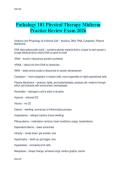
Pathology 101 Physical Therapy Midterm Practice Review Exam 2026 Anatomy and Physiology of a Normal Cell - -Nucleus, DNA, RNA, Cytoplasm, Plasma Membrane DNA (deoxyribonucleic acid) - -contains genetic material that is unique to each person ( except identical twins where DNA is same for both rRNA - -found in ribosomes (protein synthesis) mRNA - -takes info from DNA to ribosomes tRNA - -takes amino acids to ribosomes for protein development Cytoplasm - -more cytoplasm in mature cells, more organelles in highly specialized cells Plasma Membrane - -proteins, lipids, and carbohydrates, protects cell, medium through which cell interacts with environment; homeostasis Reversible - -damage to cell is short in duration Hypoxia - -reduced O2 Anoxia - -no O2 Edema - -swelling; normal par of inflammatory process Angioedema - -allergic reaction (hives swelling) Pitting edema - -indentation remains; heart conditions, prego, lymphodema Dependent edema - -lower extremites Atrophy - -break down, get smaller; size Hypertrophy - -build up, get bigger, size Hyperplasia - -increasing # of cells Metaplasia - -shape change, smokers lungs, tendon graphs, cancer PATH 101 PATH 101 Irreversible - -apoptosis, necrosis, hypoxia, anoxia, toxicity, pathogens, ischemia, dystrophic calcification, heterotopic calcification Apoptosis - -programmed cell death (shelf life) Necrosis - -cell death (usually a damaged healthy cell), stroke, anoxia, infection, radiation, trauma, disease, NEVER GOOD Muscle Cramps - -build up of lactic acid (krebs cycle, aneorobic glycolysis); actual mechanism of injury, electrolyte imbalance, dehydration, interference w/ neural control, pain is warning sign (*DON'T PUSH THROUGH) Why know these Categoires? liquefactive, coagulative, caseous, fat - -we work w/wounds Liquefactive - -cells become liquid Coagulative - -cytoplasm Caseous - -lumps form in lungs Why do we get muscle cramps? - -Alkalosis= less H+ on the outside of the cell cramping - -over excited- too much cramping; normally the outside of the cell is positive and the inside is more negative Examples for helping with muscle cramps? - -pickle juice, eating bananas, drinking milk, gatorade Atherosclerosis - -build up of plaque in arteries Gangrene - -NOT GOOD; infected coagulative necrotic tissue Wet gangrene - -bacterial infection- no blood flow; skin goes red------ brown------- black, burn, injury Dry gangrene - -frost bite, diabetes, athrosclerosis- no vascular supply (blood flow) cold/numb skin, can progress to wet Gangrene is commonly found?? - -in lower extremities Toxicity - -radiation, chemo Ischemia - -loss of blood flow to tissue PATH 101 PATH 101 PATH 101 Dystrophic Calcification - -hardening of necrotic tissue that occurs in arteries Metastatic Calcification - -cancer related Heterotopic Calcification - -the development of bone were it shouldn't be found; muscle Cellular Responses to damage or stimuli - -atrophy, hypertrophy, hyperplasia, involution and hypoplasia, metaplasia Inflammation - -body's response to various causes of injury; heals tissue, isoiates problem 5 cardinal signs - -heat= calor; redness= rubor; swelling= tumor; pain= dolor; loss of function of tissue Classification of inflmmation - -acute, chronic, acute on chronic Acute - -immediate (trauma, sprain...); first 24 hours, RICE, interferential therapy Chronic - -long period of time (back pain); any modality- make them feel better, don't really change things; exercise as appropriate; friction massage- do on scars Acute on Chronic - -sprain ankle many times & it keeps healing- then you break it RICE - -rest, ice, compress, elevate Interferential Therapy - -IFC Subacute - -after 24 hours, ROM (ultrasound), if area still warm, ice; if something is cool, use heat Inflammatory Response - -damage to skin occurs, mast cells release chemical into surrounding tissue (histamine), vasoconstriction occurs quickly, histamine causes vasodilation, swelling occurs, redness, warmth of tissue (what we see), congestion at dilated vessels due to influx of platelets to aid in clotting, bradykinin prolongs inflammation response & causes pain Myofibroblasts - -contract wound-shrink edges! Angioblasts - -precurser to blood vessels Granulation tissue - -base of wound Fibroblasts - -made of fibrin (sticky mesh) Type 3 collagen - -scar tissue PATH 101 PATH 101 Types of healing - -process of regeneration, process of repair, surgical wounds Processof regeneration - -reversible cell injury Process of repair - -tissue is replaced with fibrous connective tissue; irreversible cell injury Surgical wounds - -first intention, second intention, delayed healing First intention - -surgical wounds (3-6 weeks to heal)- initial wound closing takes 7-10 days; less scar tissue than 2nd intention Second intention - -contraction of wound- myofibroblasts help with scab formation; granulation tissue formed; organization- deposits of fibrin; scar tissue- type 3 collagen; remodeling of scar tissue (maturation phase) skin loses red appearance becomes closer to original skin, can take up to 18 months to fully heal, skin closer to original color Keloids - -raised scar tissue area from excessive granulation tissue Hypertrophic scars - -remains in boarders of wound, seen more with burns, raised like a keloid Factors that affect wound healing - -infection, diseases, stress, obesity, heart disease, environment/lifestyle- hygiene, age, nutrition, smoking & alcohol consumption- poor oxygenation, diabetes (type 1 or 2), medications Complications of wound healing other than delayed healing - -keloid and hypertrophic scarring, contractures due to formation of adhesions, fibrosis, deiscence Stages of Pressure Ulcers - -Stage 1, 2, 3, 4, Stage 1 pressure ulcer - -intact skin, skin temperature warmer or cooler than surrounding area, pain, discomfort of itching in the area Stage 2 pressure ulcer - -some skin breakdown, blister, injury to epidermis and/or dermis Stage 3 pressure ulcer - -skin breakdown, necrosis of subcutaneous fat layers, a surface ulcer is visible as a crater in the skin Stage 4 pressure ulcer - -skin breakdown, necrosis of subcutaneous fat, fascia, muscle, joint structures and even bone, tunneling and undermining of tissue may occur PATH 101 PATH 101 Modalities for wounds include: - -ultrasound, electrical stimulation, whirlpool, pulsatile lavage, short-wave diathermy, ultraviolet radiation, vacuum-assisted closure, application of dressings, debridement Ultrasound - -maybe used on open wounds during the acute inflammatory phase, stimulate the progression into the proliferative phase of wound healing, stimulates the circulation, reduces pain, may assist in edema reduction Electrical stimulation - -galvanic and pulsed monophasic currents using the negative electrode as the active can stimulate wound healing, Whirlpool - -potential damage to healing granulation tissu

Vista previa del contenido

PATH 101


Pathology 101 Physical Therapy Midterm
Practice Review Exam 2026
Anatomy and Physiology of a Normal Cell - -Nucleus, DNA, RNA, Cytoplasm, Plasma
Membrane

DNA (deoxyribonucleic acid) - -contains genetic material that is unique to each person (
except identical twins where DNA is same for both

rRNA - -found in ribosomes (protein synthesis)

mRNA - -takes info from DNA to ribosomes

tRNA - -takes amino acids to ribosomes for protein development

Cytoplasm - -more cytoplasm in mature cells, more organelles in highly specialized cells

Plasma Membrane - -proteins, lipids, and carbohydrates, protects cell, medium through
which cell interacts with environment; homeostasis

Reversible - -damage to cell is short in duration

Hypoxia - -reduced O2

Anoxia - -no O2

Edema - -swelling; normal par of inflammatory process

Angioedema - -allergic reaction (hives swelling)

Pitting edema - -indentation remains; heart conditions, prego, lymphodema

Dependent edema - -lower extremites

Atrophy - -break down, get smaller; size

Hypertrophy - -build up, get bigger, size

Hyperplasia - -increasing # of cells

Metaplasia - -shape change, smokers lungs, tendon graphs, cancer


PATH 101

, PATH 101


Irreversible - -apoptosis, necrosis, hypoxia, anoxia, toxicity, pathogens, ischemia,
dystrophic calcification, heterotopic calcification

Apoptosis - -programmed cell death (shelf life)

Necrosis - -cell death (usually a damaged healthy cell), stroke, anoxia, infection,
radiation, trauma, disease, NEVER GOOD

Muscle Cramps - -build up of lactic acid (krebs cycle, aneorobic glycolysis); actual
mechanism of injury, electrolyte imbalance, dehydration, interference w/ neural control,
pain is warning sign (*DON'T PUSH THROUGH)

Why know these Categoires? liquefactive, coagulative, caseous, fat - -we work
w/wounds

Liquefactive - -cells become liquid

Coagulative - -cytoplasm

Caseous - -lumps form in lungs

Why do we get muscle cramps? - -Alkalosis= less H+ on the outside of the cell

cramping - -over excited- too much cramping; normally the outside of the cell is positive
and the inside is more negative

Examples for helping with muscle cramps? - -pickle juice, eating bananas, drinking milk,
gatorade

Atherosclerosis - -build up of plaque in arteries

Gangrene - -NOT GOOD; infected coagulative necrotic tissue

Wet gangrene - -bacterial infection- no blood flow; skin goes red------> brown------->
black, burn, injury

Dry gangrene - -frost bite, diabetes, athrosclerosis- no vascular supply (blood flow)
cold/numb skin, can progress to wet

Gangrene is commonly found?? - -in lower extremities

Toxicity - -radiation, chemo

Ischemia - -loss of blood flow to tissue


PATH 101

Información del documento

Subido en
5 de febrero de 2026
Número de páginas
9
Escrito en
2025/2026
Tipo
Examen
Contiene
Preguntas y respuestas
$9.49

¿Documento equivocado? Cámbialo gratis Dentro de los 14 días posteriores a la compra y antes de descargarlo, puedes elegir otro documento. Puedes gastar el importe de nuevo.
Escrito por estudiantes que aprobaron
Inmediatamente disponible después del pago
Leer en línea o como PDF

Seller avatar
Los indicadores de reputación están sujetos a la cantidad de artículos vendidos por una tarifa y las reseñas que ha recibido por esos documentos. Hay tres niveles: Bronce, Plata y Oro. Cuanto mayor reputación, más podrás confiar en la calidad del trabajo del vendedor.
AlexScorer
2.5
(2)
Vendido
11
Seguidores
0
Artículos
1800
Última venta
2 semanas hace


Por qué los estudiantes eligen Stuvia

Creado por compañeros estudiantes, verificado por reseñas

Calidad en la que puedes confiar: escrito por estudiantes que aprobaron y evaluado por otros que han usado estos resúmenes.

¿No estás satisfecho? Elige otro documento

¡No te preocupes! Puedes elegir directamente otro documento que se ajuste mejor a lo que buscas.

Paga como quieras, empieza a estudiar al instante

Sin suscripción, sin compromisos. Paga como estés acostumbrado con tarjeta de crédito y descarga tu documento PDF inmediatamente.

Student with book image

“Comprado, descargado y aprobado. Así de fácil puede ser.”

Alisha Student

Preguntas frecuentes