SOLUTIONS MANUAL
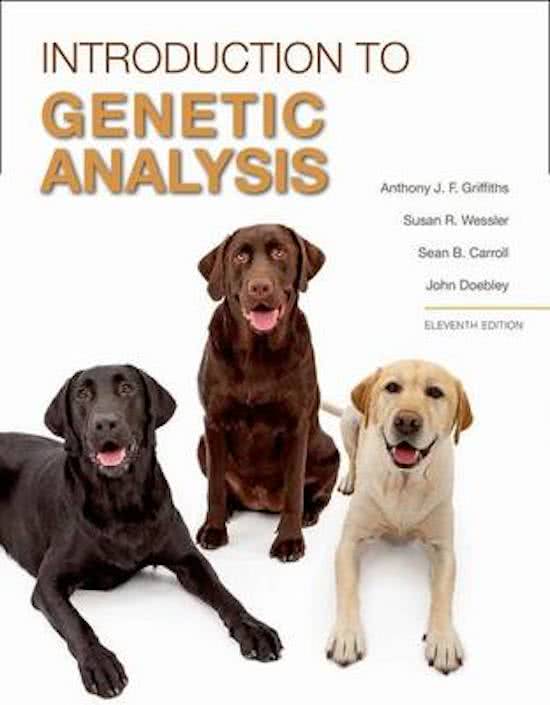
for Introduction to Genetic Analysis Eleventh Edition
by Anthony J.F. Griffiths (Author)
Questions And Answers Graded A+
PRINTEND PDF|ORIGINAL DIRECT FROM PUBLISHER|100% VERIFIED ANSWERS|DOWLOAD
IMMEDIATELY AFTER THE ORDER
11TH EDITION
IGA 11e SM Ch 01.indd 1 11/12/14 2:05 PM
, 1
The Genetics Revolution
Problems
In Each Chapter, A Set Of Problems Tests The Reader’s Comprehension Of The Concepts In The
Chapter And Their Relation To Concepts In Previous Chapters. Each Problem Set Begins With Some
Problems Based On The Figures In The Chapter, Which Embody Important Concepts. These Are
Followed By Problems Of A More General Nature.
Working With The Figures
1. If The White-Flowered Parental Variety In Figure 1-3 Were Crossed To The First-Generation
Hybrid Plant In That Figure, What Types Of Progeny Would You Expect To See And In What
Proportions?
Answer: You Would Get A 1:1 Ratio Of Purple To White. This Is Because The First-Generation
Hybrid Plant Has One Copy Of The Purple Allele And One Copy Of The White Allele, And As A
Result, 50 Percent Of The Gametes Would Carry The Purple Allele And 50 Percent Of The Gametes
Would Carry The White Allele. The White-Flowered Parental Variety Has Two Copies Of The
White Allele, And All The Gametes Produced From The White Plant Will Carry The White Allele.
Hence, A Cross Between The Two Would Produce A 1:1 Ratio Of Purple To White.
Hybrid Plant P/P ¥ White Plant
P/P
Gametes 50% P 50% P ¥ 100%
P
50% P/P : 50% P/P
Purple : White
2. In Mendel’s 1866 Publication As Shown In Figure 1-4, He Reports 705 Purple (Violet)
Flowered Offspring And 224 White-Flowered Offspring. The Ratio He Obtained Is 3.15:1 For
Purple:White. How Do You Think He Explained The Fact That The Ratio Is Not Exactly 3:1?
Answer: This Depends On The Sample Size. When The Sample Size Was Large, The Proportions
Were Close To 3:1 (E.G., For Round And Wrinkled Seeds The Ratio Was 2.95:1 And The Total
Population Size
IGA 11e SM Ch 01.indd 1 11/12/14 2:05 PM
, 1
IGA 11e SM Ch 01.indd 1 11/12/14 2:05 PM
, 2 Chapter 1 The Genetics Revolution
Was 7324), Whereas For A Small Sample Size Such As The Purple And White Petal Flowered
Plants (929 Plants), The Ratio Was Not As Close To 3:1.
3. In Figure 1-6, The Students Have 1 Of 15 Different Heights Plus There Are Two Height Classes (4
Ft 11 In And 5 Ft 0 In) For Which There Are No Observed Students. That Is A Total Of 17 Height
Classes. If A Single Mendelian Gene Can Only Account For Two Classes Of A Trait (Such As
Purple Or White Flowers), How Many Mendelian Genes Would Be Minimally Required To
Explain The Observation Of 17 Height Classes?
Answer: If A Single Gene Can Only Account For Two Classes Of A Trait, Minimum Of 9 Genes
Are Required To Explain The 17 Height Classes.
4. Figure 1-7 Shows A Simplified Pathway For Arginine Synthesis In Neurospora. Suppose You
Have A Special Strain Of Neurospora That Makes Citrulline But Not Arginine. Which Gene(S) Are
Likely Mutant Or Missing In Your Special Strain? You Have A Second Strain Of Neurospora That
Makes Neither Citrulline Nor Arginine But Does Make Ornithine. Which Gene(S) Are Mutant Or
Missing In This Strain?
Answer: If The Mutant Strain Makes Citrulline, That Means Genes A And B Must Be Functional.
Therefore, The Only Gene That Is Missing Or Mutant In The First Neurospora Strain Must Be
Gene C.
In The Second Strain, Gene A Must Be Functional Since It Is Able To Make Ornithine. Gene B
Must Be Missing Or Mutant Since It Is Unable To Make Citrulline. However, Gene C May Or May
Not Be Missing/ Mutant. Enzyme C Converts Citrulline Into Arginine (They Are In The Same
Sequential Pathway), And Enzyme C Is Dependent On The Availability Of Citrulline For Its
Function.
5. Consider Figure 1-8a.
A. What Do The Small Blue Spheres
Represent?
B. What Do The Brown Slabs
Represent?
C. Do You Agree With The Analogy That Dna Is Structured Like A
Ladder?
Answer:
A. The Blue Ribbon Represents Sugar Phosphate Backbone (Deoxyribose And A Phosphate Group),
While The Blue Spheres Signify Atoms.
B. Brown Slabs Show Complementary Bases (A, T, G, And
C).
C. Yes, It Is A Helical
Structure.
6. In Figure 1-8b, Can You Tell If The Number Of Hydrogen Bonds Between Adenine And
Thymine Is The Same As That Between Cytosine And Guanine? Do You Think That A Dna
IGA 11e SM Ch 01.indd 2 11/12/14 2:05 PM
for Introduction to Genetic Analysis Eleventh Edition
by Anthony J.F. Griffiths (Author)
Questions And Answers Graded A+
PRINTEND PDF|ORIGINAL DIRECT FROM PUBLISHER|100% VERIFIED ANSWERS|DOWLOAD
IMMEDIATELY AFTER THE ORDER
11TH EDITION
IGA 11e SM Ch 01.indd 1 11/12/14 2:05 PM
, 1
The Genetics Revolution
Problems
In Each Chapter, A Set Of Problems Tests The Reader’s Comprehension Of The Concepts In The
Chapter And Their Relation To Concepts In Previous Chapters. Each Problem Set Begins With Some
Problems Based On The Figures In The Chapter, Which Embody Important Concepts. These Are
Followed By Problems Of A More General Nature.
Working With The Figures
1. If The White-Flowered Parental Variety In Figure 1-3 Were Crossed To The First-Generation
Hybrid Plant In That Figure, What Types Of Progeny Would You Expect To See And In What
Proportions?
Answer: You Would Get A 1:1 Ratio Of Purple To White. This Is Because The First-Generation
Hybrid Plant Has One Copy Of The Purple Allele And One Copy Of The White Allele, And As A
Result, 50 Percent Of The Gametes Would Carry The Purple Allele And 50 Percent Of The Gametes
Would Carry The White Allele. The White-Flowered Parental Variety Has Two Copies Of The
White Allele, And All The Gametes Produced From The White Plant Will Carry The White Allele.
Hence, A Cross Between The Two Would Produce A 1:1 Ratio Of Purple To White.
Hybrid Plant P/P ¥ White Plant
P/P
Gametes 50% P 50% P ¥ 100%
P
50% P/P : 50% P/P
Purple : White
2. In Mendel’s 1866 Publication As Shown In Figure 1-4, He Reports 705 Purple (Violet)
Flowered Offspring And 224 White-Flowered Offspring. The Ratio He Obtained Is 3.15:1 For
Purple:White. How Do You Think He Explained The Fact That The Ratio Is Not Exactly 3:1?
Answer: This Depends On The Sample Size. When The Sample Size Was Large, The Proportions
Were Close To 3:1 (E.G., For Round And Wrinkled Seeds The Ratio Was 2.95:1 And The Total
Population Size
IGA 11e SM Ch 01.indd 1 11/12/14 2:05 PM
, 1
IGA 11e SM Ch 01.indd 1 11/12/14 2:05 PM
, 2 Chapter 1 The Genetics Revolution
Was 7324), Whereas For A Small Sample Size Such As The Purple And White Petal Flowered
Plants (929 Plants), The Ratio Was Not As Close To 3:1.
3. In Figure 1-6, The Students Have 1 Of 15 Different Heights Plus There Are Two Height Classes (4
Ft 11 In And 5 Ft 0 In) For Which There Are No Observed Students. That Is A Total Of 17 Height
Classes. If A Single Mendelian Gene Can Only Account For Two Classes Of A Trait (Such As
Purple Or White Flowers), How Many Mendelian Genes Would Be Minimally Required To
Explain The Observation Of 17 Height Classes?
Answer: If A Single Gene Can Only Account For Two Classes Of A Trait, Minimum Of 9 Genes
Are Required To Explain The 17 Height Classes.
4. Figure 1-7 Shows A Simplified Pathway For Arginine Synthesis In Neurospora. Suppose You
Have A Special Strain Of Neurospora That Makes Citrulline But Not Arginine. Which Gene(S) Are
Likely Mutant Or Missing In Your Special Strain? You Have A Second Strain Of Neurospora That
Makes Neither Citrulline Nor Arginine But Does Make Ornithine. Which Gene(S) Are Mutant Or
Missing In This Strain?
Answer: If The Mutant Strain Makes Citrulline, That Means Genes A And B Must Be Functional.
Therefore, The Only Gene That Is Missing Or Mutant In The First Neurospora Strain Must Be
Gene C.
In The Second Strain, Gene A Must Be Functional Since It Is Able To Make Ornithine. Gene B
Must Be Missing Or Mutant Since It Is Unable To Make Citrulline. However, Gene C May Or May
Not Be Missing/ Mutant. Enzyme C Converts Citrulline Into Arginine (They Are In The Same
Sequential Pathway), And Enzyme C Is Dependent On The Availability Of Citrulline For Its
Function.
5. Consider Figure 1-8a.
A. What Do The Small Blue Spheres
Represent?
B. What Do The Brown Slabs
Represent?
C. Do You Agree With The Analogy That Dna Is Structured Like A
Ladder?
Answer:
A. The Blue Ribbon Represents Sugar Phosphate Backbone (Deoxyribose And A Phosphate Group),
While The Blue Spheres Signify Atoms.
B. Brown Slabs Show Complementary Bases (A, T, G, And
C).
C. Yes, It Is A Helical
Structure.
6. In Figure 1-8b, Can You Tell If The Number Of Hydrogen Bonds Between Adenine And
Thymine Is The Same As That Between Cytosine And Guanine? Do You Think That A Dna
IGA 11e SM Ch 01.indd 2 11/12/14 2:05 PM