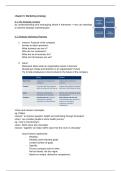
chapter 6: Marketing strategy
6.1 The Strategic Context
by understanding and managing these 4 elements → we can develop
a coherent strategic marketing plan
6.2 Strategic Marketing Planning
1. mission: Purpose of the company
Answer to basic questions:
What business are we in?
Who are our customers?
What are we in business for?
What sort of business are we?
2. vision:
Statement about what an organization wants to become
Should give shape and direction to an organization’s future
Try to help employees to feel involved in the future of the company
Vision and mission: Examples
eg. Philips:
mission: ‘to improve people’s health and well-being through innovation’
vision: ‘we consider people’s entire health journey’
eg. Tony’s chocolonely's:
vision: 100% slave free chocolate
mission: ‘together we make 100% slave free the norm in chocolate’
Good mission statements:
- Realistic:
Realistic (and relevant) goals
Limited number of goals
- Specific:
Fit your company and no other
Not too broad, not too vague
- Based on unique, distinctive competence:
, What do we want to excel at?
How do we differentiate ourselves from competitors? (unique value)
- motivating:
Something to believe in
Important work or positive contribution to others
- market oriented
Product vs. Market Orientation:
starting from production <-> starting from customer needs
Importance of the mission:
start with why = motivation, belief, purpose
‘People don’t buy what you do, they buy why you do it’ (Simon Sinek)
=> people are more inspired by your purpose or beliefs than by your products or services.
Successful brands and leaders focus on sharing their “why”: their mission or reason for
existing
→ this builds trust, loyalty, and emotional connection.
eg. Apple
Apple doesn’t just sell computers (the what).
They believe in challenging the status quo and empowering creativity (the why).
That belief resonates with customers who share those values
so they’re not just buying a product; they’re buying into a mission.
Organizational values:
- Acceptable interpersonal and operating standards of behaviour. Shape
organizational culture
- Govern and guide the behaviour of individuals within the organization
Organizational goals:
- The desired outcomes of the organization’s various activities
- For instance, profit, market share, share value, return on investment or numbers of
customers served
- Short-term or long-term
→ measurable and specific
6.1 The Strategic Context
by understanding and managing these 4 elements → we can develop
a coherent strategic marketing plan
6.2 Strategic Marketing Planning
1. mission: Purpose of the company
Answer to basic questions:
What business are we in?
Who are our customers?
What are we in business for?
What sort of business are we?
2. vision:
Statement about what an organization wants to become
Should give shape and direction to an organization’s future
Try to help employees to feel involved in the future of the company
Vision and mission: Examples
eg. Philips:
mission: ‘to improve people’s health and well-being through innovation’
vision: ‘we consider people’s entire health journey’
eg. Tony’s chocolonely's:
vision: 100% slave free chocolate
mission: ‘together we make 100% slave free the norm in chocolate’
Good mission statements:
- Realistic:
Realistic (and relevant) goals
Limited number of goals
- Specific:
Fit your company and no other
Not too broad, not too vague
- Based on unique, distinctive competence:
, What do we want to excel at?
How do we differentiate ourselves from competitors? (unique value)
- motivating:
Something to believe in
Important work or positive contribution to others
- market oriented
Product vs. Market Orientation:
starting from production <-> starting from customer needs
Importance of the mission:
start with why = motivation, belief, purpose
‘People don’t buy what you do, they buy why you do it’ (Simon Sinek)
=> people are more inspired by your purpose or beliefs than by your products or services.
Successful brands and leaders focus on sharing their “why”: their mission or reason for
existing
→ this builds trust, loyalty, and emotional connection.
eg. Apple
Apple doesn’t just sell computers (the what).
They believe in challenging the status quo and empowering creativity (the why).
That belief resonates with customers who share those values
so they’re not just buying a product; they’re buying into a mission.
Organizational values:
- Acceptable interpersonal and operating standards of behaviour. Shape
organizational culture
- Govern and guide the behaviour of individuals within the organization
Organizational goals:
- The desired outcomes of the organization’s various activities
- For instance, profit, market share, share value, return on investment or numbers of
customers served
- Short-term or long-term
→ measurable and specific