W1 W4 W6
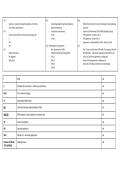
- Overview - Economic and legal foundations of int trade - Topics Regulating for legitimate objectives - Preferential treatment in favor of development and developing
- Free trade vs protectionism (general exceptions). countries.
W2 - Essential security interests. - Decision of 28 November 1979 (l/4903) (Enabling Clause)
- Custom duties (tariffs), other duties and charges, QR - art XX - TBT Agreement - Articles 11 & 12
- II - Art XXI - SPS Agreement - Articles 9 & 10
- XI:1 - Agreement on Trade Facilitation (TFA) - Articles 13 & 14
- XIII W5 - Multilateralism & regionalism W7
W3 - Non discrimination : MFN - The ‘Trump round’ of extra-WTO tariffs. The responses of other
- Non discrimination - Preferential treatment through RTAs WTO Members. Trade ‘deals’ negotiated outside WTO rules.
- NT obligation - Art I:1, - Article 11.1(b) of the Agreement on Safeguards
- III(1),(2),(4) - XXIV :4 - Article 8 of the Agreement on Safeguards §
- XXIV :5 - Article 23 of the Dispute Settlement Understanding
- XXIV :8
I MFN w5
II Schedule of Concessions = ordinary customs duty w2
III(2) NT on internal charges w3
XI Quantitative Restrictions w2
XIII Non-discriminatory Administration of QRs w2
XVIII (9) BOP exception - gov assistance to economic dev w2
XX General exceptions w4
XXI Security exceptions w4
XXIV FTAs & CUs - territorial application w5
Decision of 28 Nov Enabling Clause w6
1979 (L/4903) :
,Non-discrimination
NON DISCRIMINATORY test :
Domestic taxation & regulation are allowed as long as non discriminatory
Determining a non discriminatory rule : 3 qs connected to domestic regulated
a. Are thing A and thing B comparable ?
b. Is there a distinct treatment ? Is there a less favorable treatment ?
c. Is the distinct and less favorable treatment justifiable ?
=overarching principle, includes :
- National treatment - GATT art III
- =Imported goods must not be taxed or treated less favorably than like domestic goods.
- MFN rule - GATT art I
- Objective : facilitated trade, but also for internal taxes, research, statistics,etc
MFN NT
Like products ?
Advantage favor privilege immunity?
Accorded immediately and unconditionally
Applies at the border - on entry Applies inside the market - after entry
Foreign product A vs foreign product B Imported product vs domestic like
product
Advantage :
- Imports supplied by most efficient producer
- Increases liberalisation, extends concessions to smaller states which lack leverage (no need for them to make
concessions themselves)
- Facilitates negotiations
- Simplifies administration
- Less political tension
Disadvantage
- From perspective of individual countries they might be better off without MFN rule
- Might hamper liberalisation : smaller
<,,,,
,Likeness test :
Which provision Subject of provision In application Relevant case law Other relevant case law
Art I = MFN BROAD- ‘any advantage’ - Japan alcoholic beverages
Apply the 4 criterias - EC Asbestos
→but whats more important is the - US poultry (China)
conditions of competition → broad = a = all the same likeness test
lot of things fit in it
→the 4 conditions are alternative, & its a
Art III(2) 1st NT - taxation NARROW interpretation of like = v high Japan alcoholic Bev II holistic and case specific approach
sentence threshold
→higher strictness on the physical
properties of the obkect
Art III(4) = NT - regulation same as MFN
Application of the likeness test : [I= III(4)] > [III(2)]
For III(2)- 1st sentence
From Report by the Working Party on Border Tax Adjustments
of 1970 - p59 manual- : criterias for the determination of
likeness.
1. Properties, nature+ quality of products
2. End use
3. Consumer preferences & perceptions
4. Tariff classification
, W2
1. There is a tariff
2. Determine whether its a violation of art II : check in the schedule of concessions if its higher than the bound tariff -check if tariffs or ODC charged normally at the border that are in excess of what’s in the
schedule
- If there is reference about ‘schedule of concession’ v likely talking about art II.
GATT art II(1) = schedules of concessions = ORDINARY CUSTOMS DUTIES
= standard tariffs charged at the border on imported goods - eg : 10% import tax on shoes at the border = ordinary customs duty.
= tariffs /trade restriction that the WTO is allowed to impose based on schedules
- SCHEDULE =a detailed list of maximum tariff rates (the “bound rates”) it commits to.
→the schedules define what tariffs are allowed, define what counts as legal vs illegal charge at the border.
→schedules ensure stability and transparency
→each member must grant other WTO MS the market access (tariff treatment) listed in its schedule
Art II applies to :
- ‘Other duties and charges’ = ODC →Just bc smt is not called a tariff does not exempt it from art II - so include things not called the same way
→these are not in the schedule but its complicated- since uruguay are not automatically-normally the
→these are also prohibited - what's only allowed is what's in the schedule
- ODC = we call them fiscal measures = measures that put a price on smt - eg : like internal-tax equivalents, anti-dumping duties, or service fees
=monetary charges at the border that are not ordinary custom duties.
= found in domestic legislation of WTO members not in schedule on concession. Normally, they are not fixed on volume or value of good.
To check Article II compliance, ask:
1. Is the product covered by the Member’s Schedule?
2. Is the applied tariff ≤ the bound tariff?
3. If there are other charges, do they fit one of the exceptions under Art II:2?:
4. Is the Schedule being interpreted according to VCLT Art 31? (text, context, object/purpose)
- Understanding on Article II:1(b) → clarifies that:
- Only ODCs recorded in the Schedule are legal.
- New charges can’t be added later unless the Schedule is renegotiated.
- Members must publish lists of ODCs for transparency.
- II(1)(a) = Each WTO Member must have a Schedule of concessions
- II(1)(b) = The Schedule sets the maximum rate of ordinary customs duties that can be imposed on each of the products described therein
→products in the schedule are not subject to any tariff higher than the schedule (= bound tariff) and are not subject to any ODC →ODC = anything thats not a
tariff but thats kinda the same
- Overview - Economic and legal foundations of int trade - Topics Regulating for legitimate objectives - Preferential treatment in favor of development and developing
- Free trade vs protectionism (general exceptions). countries.
W2 - Essential security interests. - Decision of 28 November 1979 (l/4903) (Enabling Clause)
- Custom duties (tariffs), other duties and charges, QR - art XX - TBT Agreement - Articles 11 & 12
- II - Art XXI - SPS Agreement - Articles 9 & 10
- XI:1 - Agreement on Trade Facilitation (TFA) - Articles 13 & 14
- XIII W5 - Multilateralism & regionalism W7
W3 - Non discrimination : MFN - The ‘Trump round’ of extra-WTO tariffs. The responses of other
- Non discrimination - Preferential treatment through RTAs WTO Members. Trade ‘deals’ negotiated outside WTO rules.
- NT obligation - Art I:1, - Article 11.1(b) of the Agreement on Safeguards
- III(1),(2),(4) - XXIV :4 - Article 8 of the Agreement on Safeguards §
- XXIV :5 - Article 23 of the Dispute Settlement Understanding
- XXIV :8
I MFN w5
II Schedule of Concessions = ordinary customs duty w2
III(2) NT on internal charges w3
XI Quantitative Restrictions w2
XIII Non-discriminatory Administration of QRs w2
XVIII (9) BOP exception - gov assistance to economic dev w2
XX General exceptions w4
XXI Security exceptions w4
XXIV FTAs & CUs - territorial application w5
Decision of 28 Nov Enabling Clause w6
1979 (L/4903) :
,Non-discrimination
NON DISCRIMINATORY test :
Domestic taxation & regulation are allowed as long as non discriminatory
Determining a non discriminatory rule : 3 qs connected to domestic regulated
a. Are thing A and thing B comparable ?
b. Is there a distinct treatment ? Is there a less favorable treatment ?
c. Is the distinct and less favorable treatment justifiable ?
=overarching principle, includes :
- National treatment - GATT art III
- =Imported goods must not be taxed or treated less favorably than like domestic goods.
- MFN rule - GATT art I
- Objective : facilitated trade, but also for internal taxes, research, statistics,etc
MFN NT
Like products ?
Advantage favor privilege immunity?
Accorded immediately and unconditionally
Applies at the border - on entry Applies inside the market - after entry
Foreign product A vs foreign product B Imported product vs domestic like
product
Advantage :
- Imports supplied by most efficient producer
- Increases liberalisation, extends concessions to smaller states which lack leverage (no need for them to make
concessions themselves)
- Facilitates negotiations
- Simplifies administration
- Less political tension
Disadvantage
- From perspective of individual countries they might be better off without MFN rule
- Might hamper liberalisation : smaller
<,,,,
,Likeness test :
Which provision Subject of provision In application Relevant case law Other relevant case law
Art I = MFN BROAD- ‘any advantage’ - Japan alcoholic beverages
Apply the 4 criterias - EC Asbestos
→but whats more important is the - US poultry (China)
conditions of competition → broad = a = all the same likeness test
lot of things fit in it
→the 4 conditions are alternative, & its a
Art III(2) 1st NT - taxation NARROW interpretation of like = v high Japan alcoholic Bev II holistic and case specific approach
sentence threshold
→higher strictness on the physical
properties of the obkect
Art III(4) = NT - regulation same as MFN
Application of the likeness test : [I= III(4)] > [III(2)]
For III(2)- 1st sentence
From Report by the Working Party on Border Tax Adjustments
of 1970 - p59 manual- : criterias for the determination of
likeness.
1. Properties, nature+ quality of products
2. End use
3. Consumer preferences & perceptions
4. Tariff classification
, W2
1. There is a tariff
2. Determine whether its a violation of art II : check in the schedule of concessions if its higher than the bound tariff -check if tariffs or ODC charged normally at the border that are in excess of what’s in the
schedule
- If there is reference about ‘schedule of concession’ v likely talking about art II.
GATT art II(1) = schedules of concessions = ORDINARY CUSTOMS DUTIES
= standard tariffs charged at the border on imported goods - eg : 10% import tax on shoes at the border = ordinary customs duty.
= tariffs /trade restriction that the WTO is allowed to impose based on schedules
- SCHEDULE =a detailed list of maximum tariff rates (the “bound rates”) it commits to.
→the schedules define what tariffs are allowed, define what counts as legal vs illegal charge at the border.
→schedules ensure stability and transparency
→each member must grant other WTO MS the market access (tariff treatment) listed in its schedule
Art II applies to :
- ‘Other duties and charges’ = ODC →Just bc smt is not called a tariff does not exempt it from art II - so include things not called the same way
→these are not in the schedule but its complicated- since uruguay are not automatically-normally the
→these are also prohibited - what's only allowed is what's in the schedule
- ODC = we call them fiscal measures = measures that put a price on smt - eg : like internal-tax equivalents, anti-dumping duties, or service fees
=monetary charges at the border that are not ordinary custom duties.
= found in domestic legislation of WTO members not in schedule on concession. Normally, they are not fixed on volume or value of good.
To check Article II compliance, ask:
1. Is the product covered by the Member’s Schedule?
2. Is the applied tariff ≤ the bound tariff?
3. If there are other charges, do they fit one of the exceptions under Art II:2?:
4. Is the Schedule being interpreted according to VCLT Art 31? (text, context, object/purpose)
- Understanding on Article II:1(b) → clarifies that:
- Only ODCs recorded in the Schedule are legal.
- New charges can’t be added later unless the Schedule is renegotiated.
- Members must publish lists of ODCs for transparency.
- II(1)(a) = Each WTO Member must have a Schedule of concessions
- II(1)(b) = The Schedule sets the maximum rate of ordinary customs duties that can be imposed on each of the products described therein
→products in the schedule are not subject to any tariff higher than the schedule (= bound tariff) and are not subject to any ODC →ODC = anything thats not a
tariff but thats kinda the same