
Page 1 KNOWLEDGE_CHECK. LAW 407 KNOWLEDGE_CHECK. LAW 407.pdf
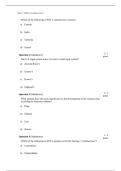
Quiz 1: What is Common Law?
Which of the following is NOT a common-law country?
a) Canada
b) India
c) Tanzania
d) France
1/1
Question 2 (Mandatory)
point
The U.S. legal system traces its roots to what legal system?
a) Ancient Rome’s
b) Greece’s
c) France’s
d) England’s
1/1
Question 3 (Mandatory)
point
What animals have the most significance to the development of the common law,
according to Professor Salmon?
a) Dogs
b) Salmon
c) Cats
d) Horses
1/1
Question 4 (Mandatory)
point
Which of the following is NOT a purpose served by having a “common law”?
a) Consistency
b) Predictability
-2026 KNOWLEDGE_CHECK. LAW 407 KNOWLEDGE_CHECK. LAW 407
,Page 2 KNOWLEDGE_CHECK. LAW 407 KNOWLEDGE_CHECK. LAW 407.pdf
c) Fairness
d) Rigidity
1/1
Question 5 (Mandatory)
point
The notion that a court must follow the precedent of a higher court in its jurisdiction is
called
a) De jure
b) Stare decisis
c) Ad nauseum
d) Res ipsa loquitur
1/1
Question 6 (Mandatory)
point
What law did the Founders of the United States adopt as the original body of law in each
of the first thirteen states?
a) Napoleonic Code
b) Norman French law
c) English common law
d) Canon Law
1/1
Question 7 (Mandatory)
point
Which U.S. state is not purely a common-law jurisdiction?
a) New York
b) Louisiana
c) Florida
d) California
Question 8 (Mandatory) 1/1
-2026 KNOWLEDGE_CHECK. LAW 407 KNOWLEDGE_CHECK. LAW 407
,Page 3 KNOWLEDGE_CHECK. LAW 407 KNOWLEDGE_CHECK. LAW 407.pdf
point
Which of the following is NOT something William the Conqueror did to change the
English legal system?
a) Created the modern jury system
b) Promised to enforce the law as done in Edward the Confessor’s time
c) Established the first court system
d) Organized land ownership, taxes, and criminal adjudication under one central authority
QUIZ 2: CREAC
Read the following paragraphs, excerpted from the discussion section of a legal
memo. These paragraphs represent a portion of a legal analysis organized using the
CREAC paradigm. You then will be given sentences taken from these paragraphs and
asked to identify whether each sentence is a conclusion, part of the rule, part of the
explanation, or part of the application.
-2026 KNOWLEDGE_CHECK. LAW 407 KNOWLEDGE_CHECK. LAW 407
, Page 4 KNOWLEDGE_CHECK. LAW 407 KNOWLEDGE_CHECK. LAW 407.pdf
The rural nature of the area in which Mr. Benson and Ms. Lovelis reside argues
against a finding of nuisance. In considering whether a particular activity constitutes a
nuisance, the court will examine the reasonableness of the activity in light of the traits of
the surrounding community. McQuade, 543 P.2d at 152. An act that is a nuisance in one
locality might not be a nuisance in another. MacDonald, 32 Ariz. at 49. In MacDonald,
the court dealt with an offensive smell coming from city sewer water that the defendant
re-routed to ditches adjacent to the plaintiff’s property in order to irrigate the defendant’s
land. Id. at 41-42, 543 P.2d at 494-95. The court found that the jury should have
considered the fact that both plaintiff and defendant resided in a farming district – where
one might expect certain unpleasant odors – in determining whether the sewage odors
constituted a nuisance under the circumstances. Id. at 53, 255 P. at 498-99. In so
holding, the court observed that
A pigpen maintained in an apartment house, although in the most
sanitary and cleanly manner possible, might rightly be held a nuisance.
On the other hand, a similar pen situated on a farm several miles from
town, although of itself not nearly so free from odors or so carefully
kept as the first one, would be perfectly lawful enterprise, and a
neighboring farmer might not be entitled to abate the same as a nuisance.
Id. Similarly, in finding that a nuisance existed in McQuade, the court found it
significant that the loud, outdoor, mass-attendance rock concerts in question were being
held adjacent to a residential apartment building. 543 P.2d at 150.
In this case, the nature of the neighborhood indicates that Ms. Lovelis should expect
to tolerate some noise and odor from animals. The parties live in a neighborhood zoned
Rural Homestead. The lots are one to four acres in size. The zoning allows residents to
keep horses, which several neighbors do. Numerous other residents have one or more
large dogs that presumably bark on occasion. Moreover, Mr. Benson keeps his dogs
some distance from Ms. Lovelis’s property.
That said, Ms. Lovelis may argue that keeping nineteen Chihuahuas in residential
neighborhood is facially unreasonable. The cumulative waste and noise may well
exceed that one might expect in a neighborhood of this character. On the other hand, the
harm here falls significantly short of the harm in the other nuisance cases. This is not a
loud, mass-attendance rock concert held next to an apartment building, like in McQuade.
Unlike the soup-kitchen patrons in Armory Park, Mr. Benson’s dogs do not defecate,
urinate, litter, or trespass on Ms. Lovelis’s property. Nor does this case involve an open
ditch filled with sewage flowing through a semi-rural neighborhood like in MacDonald.
This is barking and odor from 19 very small dogs that never come closer than 50 yards
from Ms. Lovelis’s property line. In light of the nature and character of the
neighborhood in which she resides, the harm to Ms. Lovelis is probably not significant.
“Unlike the soup-kitchen patrons in Armory Park, Mr. Benson’s dogs do not defecate,
urinate, litter, or trespass on Ms. Lovelis’s property.”
-2026 KNOWLEDGE_CHECK. LAW 407 KNOWLEDGE_CHECK. LAW 407
Quiz 1: What is Common Law?
Which of the following is NOT a common-law country?
a) Canada
b) India
c) Tanzania
d) France
1/1
Question 2 (Mandatory)
point
The U.S. legal system traces its roots to what legal system?
a) Ancient Rome’s
b) Greece’s
c) France’s
d) England’s
1/1
Question 3 (Mandatory)
point
What animals have the most significance to the development of the common law,
according to Professor Salmon?
a) Dogs
b) Salmon
c) Cats
d) Horses
1/1
Question 4 (Mandatory)
point
Which of the following is NOT a purpose served by having a “common law”?
a) Consistency
b) Predictability
-2026 KNOWLEDGE_CHECK. LAW 407 KNOWLEDGE_CHECK. LAW 407
,Page 2 KNOWLEDGE_CHECK. LAW 407 KNOWLEDGE_CHECK. LAW 407.pdf
c) Fairness
d) Rigidity
1/1
Question 5 (Mandatory)
point
The notion that a court must follow the precedent of a higher court in its jurisdiction is
called
a) De jure
b) Stare decisis
c) Ad nauseum
d) Res ipsa loquitur
1/1
Question 6 (Mandatory)
point
What law did the Founders of the United States adopt as the original body of law in each
of the first thirteen states?
a) Napoleonic Code
b) Norman French law
c) English common law
d) Canon Law
1/1
Question 7 (Mandatory)
point
Which U.S. state is not purely a common-law jurisdiction?
a) New York
b) Louisiana
c) Florida
d) California
Question 8 (Mandatory) 1/1
-2026 KNOWLEDGE_CHECK. LAW 407 KNOWLEDGE_CHECK. LAW 407
,Page 3 KNOWLEDGE_CHECK. LAW 407 KNOWLEDGE_CHECK. LAW 407.pdf
point
Which of the following is NOT something William the Conqueror did to change the
English legal system?
a) Created the modern jury system
b) Promised to enforce the law as done in Edward the Confessor’s time
c) Established the first court system
d) Organized land ownership, taxes, and criminal adjudication under one central authority
QUIZ 2: CREAC
Read the following paragraphs, excerpted from the discussion section of a legal
memo. These paragraphs represent a portion of a legal analysis organized using the
CREAC paradigm. You then will be given sentences taken from these paragraphs and
asked to identify whether each sentence is a conclusion, part of the rule, part of the
explanation, or part of the application.
-2026 KNOWLEDGE_CHECK. LAW 407 KNOWLEDGE_CHECK. LAW 407
, Page 4 KNOWLEDGE_CHECK. LAW 407 KNOWLEDGE_CHECK. LAW 407.pdf
The rural nature of the area in which Mr. Benson and Ms. Lovelis reside argues
against a finding of nuisance. In considering whether a particular activity constitutes a
nuisance, the court will examine the reasonableness of the activity in light of the traits of
the surrounding community. McQuade, 543 P.2d at 152. An act that is a nuisance in one
locality might not be a nuisance in another. MacDonald, 32 Ariz. at 49. In MacDonald,
the court dealt with an offensive smell coming from city sewer water that the defendant
re-routed to ditches adjacent to the plaintiff’s property in order to irrigate the defendant’s
land. Id. at 41-42, 543 P.2d at 494-95. The court found that the jury should have
considered the fact that both plaintiff and defendant resided in a farming district – where
one might expect certain unpleasant odors – in determining whether the sewage odors
constituted a nuisance under the circumstances. Id. at 53, 255 P. at 498-99. In so
holding, the court observed that
A pigpen maintained in an apartment house, although in the most
sanitary and cleanly manner possible, might rightly be held a nuisance.
On the other hand, a similar pen situated on a farm several miles from
town, although of itself not nearly so free from odors or so carefully
kept as the first one, would be perfectly lawful enterprise, and a
neighboring farmer might not be entitled to abate the same as a nuisance.
Id. Similarly, in finding that a nuisance existed in McQuade, the court found it
significant that the loud, outdoor, mass-attendance rock concerts in question were being
held adjacent to a residential apartment building. 543 P.2d at 150.
In this case, the nature of the neighborhood indicates that Ms. Lovelis should expect
to tolerate some noise and odor from animals. The parties live in a neighborhood zoned
Rural Homestead. The lots are one to four acres in size. The zoning allows residents to
keep horses, which several neighbors do. Numerous other residents have one or more
large dogs that presumably bark on occasion. Moreover, Mr. Benson keeps his dogs
some distance from Ms. Lovelis’s property.
That said, Ms. Lovelis may argue that keeping nineteen Chihuahuas in residential
neighborhood is facially unreasonable. The cumulative waste and noise may well
exceed that one might expect in a neighborhood of this character. On the other hand, the
harm here falls significantly short of the harm in the other nuisance cases. This is not a
loud, mass-attendance rock concert held next to an apartment building, like in McQuade.
Unlike the soup-kitchen patrons in Armory Park, Mr. Benson’s dogs do not defecate,
urinate, litter, or trespass on Ms. Lovelis’s property. Nor does this case involve an open
ditch filled with sewage flowing through a semi-rural neighborhood like in MacDonald.
This is barking and odor from 19 very small dogs that never come closer than 50 yards
from Ms. Lovelis’s property line. In light of the nature and character of the
neighborhood in which she resides, the harm to Ms. Lovelis is probably not significant.
“Unlike the soup-kitchen patrons in Armory Park, Mr. Benson’s dogs do not defecate,
urinate, litter, or trespass on Ms. Lovelis’s property.”
-2026 KNOWLEDGE_CHECK. LAW 407 KNOWLEDGE_CHECK. LAW 407

