
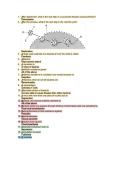
1. After attachment, what is the next step in a successful disease causing infection?
Colonization
2. After this process, what is the next step in the viral life cycle?
Replication
3. A large scale outbreak of a disease all over the world is called:
Pandemic
4. Adhesins:
Help bacteria attach
5. A mycelium is:
A mass of hyphae
6. Antibiotic resistance genes:
All of the above
7. Antibiotic resistance is a problem now mostly because of:
Selection
8. Antibiotics which do not kill bacteria are:
Bacteriostatic
9. A superantigen:
Activates T cells
10.Attenuated strains of bacteria:
Are less able to cause disease than other bacteria
11. A virus with more than one piece of nucleic acid is:
Segmented
12.Bacteria can become antibiotic resistant by
All of the above
13.Bacteria which one acquires through drinking contaminated water are spreading by
Fecal oral transmission
14.Beta-lactamases provide resistance against:
Penicillin
15.Beta-lactamases:
Cleave penicillin
16.Botulism toxin causes:
Flaccid paralysis
17.Clostridium botulinum toxin is:
Neurotoxin
18.Conjugation involves:
F plasmid
19.D could be:
, More than one of the above
20.Deuteromycetes
Are imperfect fungi
21.Diarrhea helps a disease spread by:
Fecal oral spread
22.Diseases acquired from animals are:
Zoonotic infections
23.During a lysogenic cycle, viruses
Insert DNA into the host chromosome
24.Endotoxin is:
A part of gram negative cell walls
25.Entamoeba histolytica causes:
Amoebic dysentry
26.Enteric organisms are usually found:
In the intestine
27.Enveloped viruses can enter a cell by:
Membrane fusion
28.Enveloped viruses leave host cells by:
Budding
29.Exfoliative toxins, which are involved in scalded skin syndrome, are:
Proteases
30.Fibronectin is found:
In the extracellular matrix
31.Food poisoning from eating potato salad that has been out too long at a picnic is caused by:
An enterotoxin
32.Fungi whose sexual reproduction method has not been observed used to be classified as:
Deuteromycetes
33.Giardia:
Is a flagellate
34.Giardia lamblia is a:
Flagellate
35.Gram + bacteria cannot produce:
Endotoxin
36.How do beta lactam antibiotics function?
Preventing addition of new peptidoglycan to the cell wall
37.Inanimate objects which may harbor bacteria are:
Fomites
38.Inanimate objects which may transmit disease are called
Colonization
2. After this process, what is the next step in the viral life cycle?
Replication
3. A large scale outbreak of a disease all over the world is called:
Pandemic
4. Adhesins:
Help bacteria attach
5. A mycelium is:
A mass of hyphae
6. Antibiotic resistance genes:
All of the above
7. Antibiotic resistance is a problem now mostly because of:
Selection
8. Antibiotics which do not kill bacteria are:
Bacteriostatic
9. A superantigen:
Activates T cells
10.Attenuated strains of bacteria:
Are less able to cause disease than other bacteria
11. A virus with more than one piece of nucleic acid is:
Segmented
12.Bacteria can become antibiotic resistant by
All of the above
13.Bacteria which one acquires through drinking contaminated water are spreading by
Fecal oral transmission
14.Beta-lactamases provide resistance against:
Penicillin
15.Beta-lactamases:
Cleave penicillin
16.Botulism toxin causes:
Flaccid paralysis
17.Clostridium botulinum toxin is:
Neurotoxin
18.Conjugation involves:
F plasmid
19.D could be:
, More than one of the above
20.Deuteromycetes
Are imperfect fungi
21.Diarrhea helps a disease spread by:
Fecal oral spread
22.Diseases acquired from animals are:
Zoonotic infections
23.During a lysogenic cycle, viruses
Insert DNA into the host chromosome
24.Endotoxin is:
A part of gram negative cell walls
25.Entamoeba histolytica causes:
Amoebic dysentry
26.Enteric organisms are usually found:
In the intestine
27.Enveloped viruses can enter a cell by:
Membrane fusion
28.Enveloped viruses leave host cells by:
Budding
29.Exfoliative toxins, which are involved in scalded skin syndrome, are:
Proteases
30.Fibronectin is found:
In the extracellular matrix
31.Food poisoning from eating potato salad that has been out too long at a picnic is caused by:
An enterotoxin
32.Fungi whose sexual reproduction method has not been observed used to be classified as:
Deuteromycetes
33.Giardia:
Is a flagellate
34.Giardia lamblia is a:
Flagellate
35.Gram + bacteria cannot produce:
Endotoxin
36.How do beta lactam antibiotics function?
Preventing addition of new peptidoglycan to the cell wall
37.Inanimate objects which may harbor bacteria are:
Fomites
38.Inanimate objects which may transmit disease are called


