

Module 4:
➔ Censorship: Suppression or prohibition of artwork
➔ Iconoclasm: Rejection or destroying an artwork(especially religious ones) because it’s’
seen as wrong and offensive. Often happens during religious or political change.
Ex:Pulling down statues of Lenin after the fall of the Soviet Union in Eastern Europe.
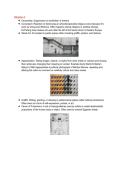
➔ Street Art: Art created in public spaces often including graffiti, posters, and stickers.
➔ Appropriation: Taking images, objects, or styles from other artists or cultures and reusing
them while also changing their meaning or context. Example:Andy Warhol’s Marilyn
Diptych (1962) appropriates a publicity photograph of Marilyn Monroe, repeating and
altering the colors to comment on celebrity culture and mass media.
➔ Graffiti: Writing, painting, or drawing in public/oriavte places (often without permission).
Often seen as a form of self-expression, protest, or art.
➔ Canon of Proportions: A set of rules/guidelines used by artists to create ideal/realistic
proportions of the human body or object. Often used by ancient Egyptian artists.
➔ Censorship: Suppression or prohibition of artwork
➔ Iconoclasm: Rejection or destroying an artwork(especially religious ones) because it’s’
seen as wrong and offensive. Often happens during religious or political change.
Ex:Pulling down statues of Lenin after the fall of the Soviet Union in Eastern Europe.
➔ Street Art: Art created in public spaces often including graffiti, posters, and stickers.
➔ Appropriation: Taking images, objects, or styles from other artists or cultures and reusing
them while also changing their meaning or context. Example:Andy Warhol’s Marilyn
Diptych (1962) appropriates a publicity photograph of Marilyn Monroe, repeating and
altering the colors to comment on celebrity culture and mass media.
➔ Graffiti: Writing, painting, or drawing in public/oriavte places (often without permission).
Often seen as a form of self-expression, protest, or art.
➔ Canon of Proportions: A set of rules/guidelines used by artists to create ideal/realistic
proportions of the human body or object. Often used by ancient Egyptian artists.

