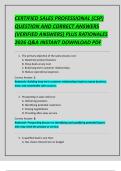
CERTIFIED QUALITY IMPROVEMENT
ASSOCIATE (CQIA) QUESTION AND
CORRECT ANSWERS (VERIFIED
ANSWERS) PLUS RATIONALES 2026 Q&A
INSTANT DOWNLOAD PDF
1. Quality improvement is best defined as:
A. Inspecting products at the end of production
B. Meeting minimum customer requirements
C. Systematically improving processes to enhance performance
D. Eliminating defects only
Answer: C
Rationale: Quality improvement focuses on ongoing, systematic efforts to
improve processes and outcomes, not just inspection or defect removal.
2. The primary focus of quality improvement initiatives is:
A. Cost reduction
B. Compliance
C. Process performance and customer satisfaction
D. Employee discipline
Answer: C
Rationale: QI aims to improve how processes perform to better meet customer
needs.
3. Which of the following is considered a customer in quality terms?
A. Only external buyers
B. Only management
, C. Anyone who receives the output of a process
D. Regulatory bodies only
Answer: C
Rationale: Customers may be internal or external recipients of process outputs.
4. Continuous improvement is best described as:
A. One-time improvement projects
B. Sporadic changes
C. Ongoing, incremental improvement
D. Radical redesign only
Answer: C
Rationale: Continuous improvement emphasizes small, ongoing improvements
over time.
5. Which quality pioneer emphasized “fitness for use”?
A. Crosby
B. Juran
C. Deming
D. Ishikawa
Answer: B
Rationale: Juran defined quality as fitness for use from the customer’s
perspective.
6. Deming is best known for:
A. Zero defects
B. Cost of quality
C. System thinking and the PDCA cycle
D. Quality circles
Answer: C
Rationale: Deming promoted systemic thinking and continuous improvement
through PDCA.
, 7. Crosby defined quality as:
A. Customer satisfaction
B. Continuous improvement
C. Conformance to requirements
D. Statistical control
Answer: C
Rationale: Crosby emphasized meeting requirements exactly.
8. The PDCA cycle stands for:
A. Plan-Develop-Check-Act
B. Plan-Do-Check-Act
C. Prepare-Do-Control-Act
D. Plan-Design-Control-Analyze
Answer: B
Rationale: PDCA is a structured method for continuous improvement.
9. Which phase of PDCA involves implementing the plan?
A. Plan
B. Do
C. Check
D. Act
Answer: B
Rationale: The Do phase executes the planned changes.
10.The “Check” phase of PDCA focuses on:
A. Training staff
B. Implementing changes
C. Evaluating results against expectations
D. Standardizing processes
Answer: C
Rationale: Results are measured and compared during Check.
ASSOCIATE (CQIA) QUESTION AND
CORRECT ANSWERS (VERIFIED
ANSWERS) PLUS RATIONALES 2026 Q&A
INSTANT DOWNLOAD PDF
1. Quality improvement is best defined as:
A. Inspecting products at the end of production
B. Meeting minimum customer requirements
C. Systematically improving processes to enhance performance
D. Eliminating defects only
Answer: C
Rationale: Quality improvement focuses on ongoing, systematic efforts to
improve processes and outcomes, not just inspection or defect removal.
2. The primary focus of quality improvement initiatives is:
A. Cost reduction
B. Compliance
C. Process performance and customer satisfaction
D. Employee discipline
Answer: C
Rationale: QI aims to improve how processes perform to better meet customer
needs.
3. Which of the following is considered a customer in quality terms?
A. Only external buyers
B. Only management
, C. Anyone who receives the output of a process
D. Regulatory bodies only
Answer: C
Rationale: Customers may be internal or external recipients of process outputs.
4. Continuous improvement is best described as:
A. One-time improvement projects
B. Sporadic changes
C. Ongoing, incremental improvement
D. Radical redesign only
Answer: C
Rationale: Continuous improvement emphasizes small, ongoing improvements
over time.
5. Which quality pioneer emphasized “fitness for use”?
A. Crosby
B. Juran
C. Deming
D. Ishikawa
Answer: B
Rationale: Juran defined quality as fitness for use from the customer’s
perspective.
6. Deming is best known for:
A. Zero defects
B. Cost of quality
C. System thinking and the PDCA cycle
D. Quality circles
Answer: C
Rationale: Deming promoted systemic thinking and continuous improvement
through PDCA.
, 7. Crosby defined quality as:
A. Customer satisfaction
B. Continuous improvement
C. Conformance to requirements
D. Statistical control
Answer: C
Rationale: Crosby emphasized meeting requirements exactly.
8. The PDCA cycle stands for:
A. Plan-Develop-Check-Act
B. Plan-Do-Check-Act
C. Prepare-Do-Control-Act
D. Plan-Design-Control-Analyze
Answer: B
Rationale: PDCA is a structured method for continuous improvement.
9. Which phase of PDCA involves implementing the plan?
A. Plan
B. Do
C. Check
D. Act
Answer: B
Rationale: The Do phase executes the planned changes.
10.The “Check” phase of PDCA focuses on:
A. Training staff
B. Implementing changes
C. Evaluating results against expectations
D. Standardizing processes
Answer: C
Rationale: Results are measured and compared during Check.