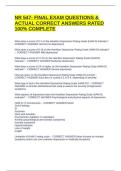
NR 547- FINAL EXAM QUESTIONS &
ACTUAL CORRECT ANSWERS RATED
100% COMPLETE
What does a score of 0-7 on the Hamilton Depression Rating Scale (HAM-D) indicate? -
CORRECT ANSWER Normal (no depression)
What does a score of 8-16 on the Hamilton Depression Rating Scale (HAM-D) indicate?
- CORRECT ANSWER Mild depression
What does a score of 17-23 on the Hamilton Depression Rating Scale (HAM-D)
indicate? - CORRECT ANSWER Moderate depression
What does a score of 24 or higher on the Hamilton Depression Rating Scale (HAM-D)
indicate? - CORRECT ANSWER Severe depression
How are items on the Hamilton Depression Rating Scale (HAM-D) scored? -
CORRECT ANSWER Each item is scored 0-2 or 0-4, depending on severity.
What type of tool is the Hamilton Depression Rating Scale (HAM-D)? - CORRECT
ANSWER A clinician administered tool used to assess the severity of depression
symptoms.
What aspects of depression does the Hamilton Depression Rating Scale (HAM-D)
evaluate? - CORRECT ANSWER Psychological and physical aspects of depression.
HAM-D 17 Components - CORRECT ANSWER Mood
Guilt Feelings
SI
Insomnia
Work and Activities
Psychomotor Agitation or retardation
Anxiety (psychological and somatic symptoms)
Somatic symptoms
Hypochondriasis
Loss of weight
Insight
Limitation of HAM-D rating scale - CORRECT ANSWER More focused on somatic
symptoms which can over estimate depression in medically ill patients
,Alternative to HAM-D Scale - CORRECT ANSWER Montgomery-Ashberg Depression
Rating Scale (MADRS) which is better for tracking and treatment response
Geriatric Depression Scale (GDS) - CORRECT ANSWER Consists of yes/no questions
that assess emotional, cognitive, and behavioral symptoms of depresion in older adults.
It avoids somatic symptoms that may overlap with medical conditions
Key Areas assessed in GDS - CORRECT ANSWER Mood and Enjoyment
Energy Levels
Social Withdrawal
Feelings of Hopelessness
Memory Concerns
Anxiety and Worry
Suicidal Thoughts
Scoring GDS - CORRECT ANSWER 1 point of each depressed response
Yes to negative statements and no to positive statements
Scoring Interpretation of GDS-30 - CORRECT ANSWER 0-30
0-9 Normal (no depression)
10-19 Mild Depression
20-30 Moderate to Severe Depression
Scoring Interpretation GDS-15 - CORRECT ANSWER 0-15
Shorter version
0-4: Normal (No depression)
5-8: Mild Depression
9-11: Moderate Depression
12-15: Severe Depression
Patient Health Questionnaire-9 (PHQ-9) - CORRECT ANSWER self report tool for
screening, diagnosing, and monitoring depression. Based on the DSM-5 criteria for
MDD and evaluates symptom severity over the past two weeks
Components of the PHQ-9 - CORRECT ANSWER Nine Symptom Domains
1. Anhedonia
2. Depressed Mood
3. Sleep Problems
4. Fatigue
5. Appetite Changes
6. Low Self Worth
7. Concentration Issues
8. Psychomotor Changes
,9. Suicidal Thoughts
PHQ-9 Scoring Interpretation - CORRECT ANSWER Each question is scored:
0=Not at all
1= Several Days
2= More than half the days
3= Nearly Every Day
Total Score: 0-27
PHQ-9 Depression Severity Levels - CORRECT ANSWER 0-4: Minimal or No
depression
5-9: Mild Depression
10-14: Moderate Depression
15-19: Moderately Severe Depression
20-27: Severe Depression
Clinica Use of the PHQ-9 - CORRECT ANSWER Score >= 10: Possible clinical
depression, further evaluation needed
Score >=15: Likely MDD, consider therapy and/or medication
Score >=20: Severe Depression, requires urgent intervention
Mood Disorder Questionnaire - CORRECT ANSWER screening tool used for Bipolar
Disorder, and helps differentiate bipolar disorder from unipolar depression and other
mood disorders
Consists of three parts, assessing lifetime history of manic or hypomanic symptoms
Part one of MDQ - CORRECT ANSWER Symptom Checklist
13 yes/no questions
Increased Energy and Activity
Euphoric or irritable mood
Decreased need for sleep
Unusual talkativeness or pressured speech
Racing Thoughts
Easily Distracted
Increase in goal-directed activities
Involvement in Risky behaviors
Unusual Confidence or grandiosity
More outgoing/social than usual
episodes lasting several days or longer
other people noticing these changes
symptoms occurring together in the same time period
, Part 2 MDQ - CORRECT ANSWER Symptom Clustering
1 yes/no question
"Have several of the above symptoms ever happened during the same period of time?"
Part 3 MDQ - CORRECT ANSWER Functional Impairment
1 questions, 3 point scale: No, Minor, or Serious problem
"How much did these problems cause difficulty in work, social, or family life?"
MDQ Scoring Interpretation - CORRECT ANSWER 7 or more "yes" responses in Part 1
"Yes" in Part 2
Moderate or serious impairment in part 3 is a positive screen. This is possible bipolar
disorder, needs a clinical assessment
Negative Screen:
Fewer than 7 "yes" responses in Part 1 OR "No" in part 2 OR "No/Minor problems" in
Part 3= unlikely bipolar disorder
Limitations to MDQ - CORRECT ANSWER More sensitive to Bipolar I Disorder than
Bipolar II or Cyclothymia
May produce false positives in BPD
Anhedonia - CORRECT ANSWER a diminished ability to experience pleasure
TSH - CORRECT ANSWER 0.4-4
For patients on thyroid medications 0.5 -3 is often targeted
Elevated TSH - CORRECT ANSWER Hypothyroidism
Low TSH - CORRECT ANSWER hyperthyroidism
hemoglobin - CORRECT ANSWER Men
13.8-17.2
Women
12.1-15.1
Pregnant women
11-14
Children
11-16
Lithium Level - CORRECT ANSWER Therapeutic range
0.6-1.2
Toxicity Risk
ACTUAL CORRECT ANSWERS RATED
100% COMPLETE
What does a score of 0-7 on the Hamilton Depression Rating Scale (HAM-D) indicate? -
CORRECT ANSWER Normal (no depression)
What does a score of 8-16 on the Hamilton Depression Rating Scale (HAM-D) indicate?
- CORRECT ANSWER Mild depression
What does a score of 17-23 on the Hamilton Depression Rating Scale (HAM-D)
indicate? - CORRECT ANSWER Moderate depression
What does a score of 24 or higher on the Hamilton Depression Rating Scale (HAM-D)
indicate? - CORRECT ANSWER Severe depression
How are items on the Hamilton Depression Rating Scale (HAM-D) scored? -
CORRECT ANSWER Each item is scored 0-2 or 0-4, depending on severity.
What type of tool is the Hamilton Depression Rating Scale (HAM-D)? - CORRECT
ANSWER A clinician administered tool used to assess the severity of depression
symptoms.
What aspects of depression does the Hamilton Depression Rating Scale (HAM-D)
evaluate? - CORRECT ANSWER Psychological and physical aspects of depression.
HAM-D 17 Components - CORRECT ANSWER Mood
Guilt Feelings
SI
Insomnia
Work and Activities
Psychomotor Agitation or retardation
Anxiety (psychological and somatic symptoms)
Somatic symptoms
Hypochondriasis
Loss of weight
Insight
Limitation of HAM-D rating scale - CORRECT ANSWER More focused on somatic
symptoms which can over estimate depression in medically ill patients
,Alternative to HAM-D Scale - CORRECT ANSWER Montgomery-Ashberg Depression
Rating Scale (MADRS) which is better for tracking and treatment response
Geriatric Depression Scale (GDS) - CORRECT ANSWER Consists of yes/no questions
that assess emotional, cognitive, and behavioral symptoms of depresion in older adults.
It avoids somatic symptoms that may overlap with medical conditions
Key Areas assessed in GDS - CORRECT ANSWER Mood and Enjoyment
Energy Levels
Social Withdrawal
Feelings of Hopelessness
Memory Concerns
Anxiety and Worry
Suicidal Thoughts
Scoring GDS - CORRECT ANSWER 1 point of each depressed response
Yes to negative statements and no to positive statements
Scoring Interpretation of GDS-30 - CORRECT ANSWER 0-30
0-9 Normal (no depression)
10-19 Mild Depression
20-30 Moderate to Severe Depression
Scoring Interpretation GDS-15 - CORRECT ANSWER 0-15
Shorter version
0-4: Normal (No depression)
5-8: Mild Depression
9-11: Moderate Depression
12-15: Severe Depression
Patient Health Questionnaire-9 (PHQ-9) - CORRECT ANSWER self report tool for
screening, diagnosing, and monitoring depression. Based on the DSM-5 criteria for
MDD and evaluates symptom severity over the past two weeks
Components of the PHQ-9 - CORRECT ANSWER Nine Symptom Domains
1. Anhedonia
2. Depressed Mood
3. Sleep Problems
4. Fatigue
5. Appetite Changes
6. Low Self Worth
7. Concentration Issues
8. Psychomotor Changes
,9. Suicidal Thoughts
PHQ-9 Scoring Interpretation - CORRECT ANSWER Each question is scored:
0=Not at all
1= Several Days
2= More than half the days
3= Nearly Every Day
Total Score: 0-27
PHQ-9 Depression Severity Levels - CORRECT ANSWER 0-4: Minimal or No
depression
5-9: Mild Depression
10-14: Moderate Depression
15-19: Moderately Severe Depression
20-27: Severe Depression
Clinica Use of the PHQ-9 - CORRECT ANSWER Score >= 10: Possible clinical
depression, further evaluation needed
Score >=15: Likely MDD, consider therapy and/or medication
Score >=20: Severe Depression, requires urgent intervention
Mood Disorder Questionnaire - CORRECT ANSWER screening tool used for Bipolar
Disorder, and helps differentiate bipolar disorder from unipolar depression and other
mood disorders
Consists of three parts, assessing lifetime history of manic or hypomanic symptoms
Part one of MDQ - CORRECT ANSWER Symptom Checklist
13 yes/no questions
Increased Energy and Activity
Euphoric or irritable mood
Decreased need for sleep
Unusual talkativeness or pressured speech
Racing Thoughts
Easily Distracted
Increase in goal-directed activities
Involvement in Risky behaviors
Unusual Confidence or grandiosity
More outgoing/social than usual
episodes lasting several days or longer
other people noticing these changes
symptoms occurring together in the same time period
, Part 2 MDQ - CORRECT ANSWER Symptom Clustering
1 yes/no question
"Have several of the above symptoms ever happened during the same period of time?"
Part 3 MDQ - CORRECT ANSWER Functional Impairment
1 questions, 3 point scale: No, Minor, or Serious problem
"How much did these problems cause difficulty in work, social, or family life?"
MDQ Scoring Interpretation - CORRECT ANSWER 7 or more "yes" responses in Part 1
"Yes" in Part 2
Moderate or serious impairment in part 3 is a positive screen. This is possible bipolar
disorder, needs a clinical assessment
Negative Screen:
Fewer than 7 "yes" responses in Part 1 OR "No" in part 2 OR "No/Minor problems" in
Part 3= unlikely bipolar disorder
Limitations to MDQ - CORRECT ANSWER More sensitive to Bipolar I Disorder than
Bipolar II or Cyclothymia
May produce false positives in BPD
Anhedonia - CORRECT ANSWER a diminished ability to experience pleasure
TSH - CORRECT ANSWER 0.4-4
For patients on thyroid medications 0.5 -3 is often targeted
Elevated TSH - CORRECT ANSWER Hypothyroidism
Low TSH - CORRECT ANSWER hyperthyroidism
hemoglobin - CORRECT ANSWER Men
13.8-17.2
Women
12.1-15.1
Pregnant women
11-14
Children
11-16
Lithium Level - CORRECT ANSWER Therapeutic range
0.6-1.2
Toxicity Risk