lOMoARcPSD|2392027
Wondershare
Verwijder Watermerk
PDFelement
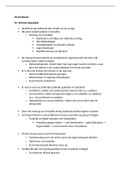
Exam consists of 5 open questions about perspective 2-5 + ethical matrix
2: The professional
120 mil production animals + 30 mil companion animals 17 mil people
o 9 x more animals in NL
o 32,5 x more food producing animals
Plurality => many different views, facts & values
o Not just difficult issue, but wicked problem
o Wicked problem => problem that is impossible of difficult to solve because of incomplete,
contradictory and changing requirements that are often difficult to recognize
o Wicked = resistance & resolution, not evil
o Opinions & views seem mutually exclusive -> separate & very different from each other
More than just plurality:
o Increased focus on animal welfare
o Keeping animals provokes societal scrutiny (= critical observation)
- Differences between laboratory animals, food producing animals & companion animals
o Increased attention for sustainable & responsible co-existing between man & animal
Professionalism
o Work -> occupation
Some occupations -> professions
o Professional does mainly mental work (occupation => psychical work)
o Traditionally only law & medicine: now increased use of the word
o A profession is a cluster of ‘occupational’ roles, that is roles in which the incumbents
perform certain functions valued in & by the society in general, and by these activities,
typically ‘earn a living’ at a ‘fulltime job’.
o Members of a profession have knowledge & skills with respect to a certain practice that
others in society lack
Not easy to distinguish occupation & profession:
o Parsons: ‘’profession = full time occupational job with functions valued in & by society’’
o You can add essential elements that define the profession :
Gedownload door Michou Weimar ()
, lOMoARcPSD|2392027
Wondershare
Verwijder Watermerk
PDFelement
- Education
- Legal standing
- Internal organization
- Ethical or professional code
o Traditional characteristics :
- Expertise + knowledge
Nowadays:
- Members of profession have knowledge & skills that other in society lack
Special position of professions in society
Reliance
As result of special position is society: persons have to rely on/ trust professional workers in
their daily life`
- Does not imply that actions of professionals are beyond discussion!
- Professionals faced genuine criticism last decades
- Expert judgements (doctors, lawyers & scientists) have been questioned
Authority & higher status is not unconditional & not only based on their expert knowledge
Professional autonomy1 = the right to determine work activity on basis of professional
judgement
- This right is granted through public acceptance of professional claims with respect to
their expertise & service orientation
Rollin: ‘’professional autonomy is a situation in which society says:
o You regulate yourselves the way we would regulate you if we understood what you do,
which we don’t. But:
- We will know if you don’t self-regulate properly & then we will regulate you, despite our
lack of understanding
o Professional self-regulation:
1. Individual professional is free to make own judgement
2. Above is minimal condition to function as professional
3. Public relies on professional
3: Philosophy
8.1
Science = based on observable facts nowadays
1
Autonomy = independence of freedom: ability to make own decisions
Gedownload door Michou Weimar ()
Wondershare
Verwijder Watermerk
PDFelement
Exam consists of 5 open questions about perspective 2-5 + ethical matrix
2: The professional
120 mil production animals + 30 mil companion animals 17 mil people
o 9 x more animals in NL
o 32,5 x more food producing animals
Plurality => many different views, facts & values
o Not just difficult issue, but wicked problem
o Wicked problem => problem that is impossible of difficult to solve because of incomplete,
contradictory and changing requirements that are often difficult to recognize
o Wicked = resistance & resolution, not evil
o Opinions & views seem mutually exclusive -> separate & very different from each other
More than just plurality:
o Increased focus on animal welfare
o Keeping animals provokes societal scrutiny (= critical observation)
- Differences between laboratory animals, food producing animals & companion animals
o Increased attention for sustainable & responsible co-existing between man & animal
Professionalism
o Work -> occupation
Some occupations -> professions
o Professional does mainly mental work (occupation => psychical work)
o Traditionally only law & medicine: now increased use of the word
o A profession is a cluster of ‘occupational’ roles, that is roles in which the incumbents
perform certain functions valued in & by the society in general, and by these activities,
typically ‘earn a living’ at a ‘fulltime job’.
o Members of a profession have knowledge & skills with respect to a certain practice that
others in society lack
Not easy to distinguish occupation & profession:
o Parsons: ‘’profession = full time occupational job with functions valued in & by society’’
o You can add essential elements that define the profession :
Gedownload door Michou Weimar ()
, lOMoARcPSD|2392027
Wondershare
Verwijder Watermerk
PDFelement
- Education
- Legal standing
- Internal organization
- Ethical or professional code
o Traditional characteristics :
- Expertise + knowledge
Nowadays:
- Members of profession have knowledge & skills that other in society lack
Special position of professions in society
Reliance
As result of special position is society: persons have to rely on/ trust professional workers in
their daily life`
- Does not imply that actions of professionals are beyond discussion!
- Professionals faced genuine criticism last decades
- Expert judgements (doctors, lawyers & scientists) have been questioned
Authority & higher status is not unconditional & not only based on their expert knowledge
Professional autonomy1 = the right to determine work activity on basis of professional
judgement
- This right is granted through public acceptance of professional claims with respect to
their expertise & service orientation
Rollin: ‘’professional autonomy is a situation in which society says:
o You regulate yourselves the way we would regulate you if we understood what you do,
which we don’t. But:
- We will know if you don’t self-regulate properly & then we will regulate you, despite our
lack of understanding
o Professional self-regulation:
1. Individual professional is free to make own judgement
2. Above is minimal condition to function as professional
3. Public relies on professional
3: Philosophy
8.1
Science = based on observable facts nowadays
1
Autonomy = independence of freedom: ability to make own decisions
Gedownload door Michou Weimar ()