ATLS MCQ ANSWERS
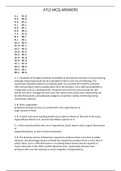
1. c 21. b
2. d 22. b
3. d 23. e
4. c 24. c
5. d 25. c
6. d 26. e
7. e 27. d
8. a 28. c
9. c 29. c
10. e 30. e
11. d 31. c
12. e 32. a
13. d 33. e
14. a 34. e
15. d 35. d
16. d 36. d
17. c 37. d
18. a 38. b
19. a 39. c
20. e 40. b
1. c. Treatment of frostbite should be immediate to decrease the duration of tissue freezing,
although rewarming should not be undertaken if there is the risk of refreezing. The
injured part should be placed in circulating water at a constant 40°C (104°F) until pink
color and perfusion return (usually within 20 to 30 minutes). This is best accomplished in
a large tank, such as a whirlpool tank. Avoid dry heat since this risks burning the skin,
and do not rub or massage the area since this causes more tissue injury. Rewarming can
be extremely painful, and adequate analgesia is essential. Cardiac monitoring during
rewarming is advised.
2. d. Short, largecaliber
peripheral intravenous lines are preferred for the rapid infusion of
large volumes of fluid.
3. d. A spinal cord injury would generally cause absent reflexes at the level of the injury,
Hyperreflexia inferior to it, and normal reflexes superior to it.
4. c. Most injured patients who are in hypovolemic shock require early surgical intervention
or
angioembolization, as well as fluid resuscitation.
5. d. The absolute volume of blood loss required to produce shock is less than in adults.
However, the percentage volume of blood loss required to produce shock is more than in
adults. Note: Up to a 30% diminution in circulating blood volume may be required to
cause a decrease in the child’s systolic blood pressure. Tachycardia and poor skin
perfusion often are the only keys to early recognition of hypovolemia.
1. c 21. b
2. d 22. b
3. d 23. e
4. c 24. c
5. d 25. c
6. d 26. e
7. e 27. d
8. a 28. c
9. c 29. c
10. e 30. e
11. d 31. c
12. e 32. a
13. d 33. e
14. a 34. e
15. d 35. d
16. d 36. d
17. c 37. d
18. a 38. b
19. a 39. c
20. e 40. b
1. c. Treatment of frostbite should be immediate to decrease the duration of tissue freezing,
although rewarming should not be undertaken if there is the risk of refreezing. The
injured part should be placed in circulating water at a constant 40°C (104°F) until pink
color and perfusion return (usually within 20 to 30 minutes). This is best accomplished in
a large tank, such as a whirlpool tank. Avoid dry heat since this risks burning the skin,
and do not rub or massage the area since this causes more tissue injury. Rewarming can
be extremely painful, and adequate analgesia is essential. Cardiac monitoring during
rewarming is advised.
2. d. Short, largecaliber
peripheral intravenous lines are preferred for the rapid infusion of
large volumes of fluid.
3. d. A spinal cord injury would generally cause absent reflexes at the level of the injury,
Hyperreflexia inferior to it, and normal reflexes superior to it.
4. c. Most injured patients who are in hypovolemic shock require early surgical intervention
or
angioembolization, as well as fluid resuscitation.
5. d. The absolute volume of blood loss required to produce shock is less than in adults.
However, the percentage volume of blood loss required to produce shock is more than in
adults. Note: Up to a 30% diminution in circulating blood volume may be required to
cause a decrease in the child’s systolic blood pressure. Tachycardia and poor skin
perfusion often are the only keys to early recognition of hypovolemia.