
1
Problem 1
1.1 What is depression?
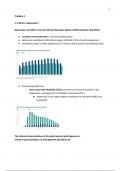
Depression and Other Common Mental Disorders Global Health Estimates (by WHO)
● common mental disorders: anxiety and depression
● depression worldwide: 300 million people affected (4.4% of world population)
● prevalence peaks at older adulthood (55-74 years old) & women are affected more
● Computing health loss
○ Years Lived with Disability (YLD)= prevalence of mental disorder in the
population x average level of disability associated with it
■ depression is the single largest contributor to non-fatal health loss
worldwide
The clinical characterization of the adult patient with depression
aimed at personalization of management (by Maj et al)
, 2
➔ very heterogeneous disease requiring a personalized treatment plan
◆ however, many medications and psychotherapies are mistakenly perceived to be
equal & interchangeable, and thus many patients do not respond to treatment
◆ most treatment guidelines only take into account the severity of depression
◆ different clinical and biological factors might predict the response to various
treatments
◆ machine learning tools might be useful in identifying patient profiles that will
respond to certain treatments
➔ We will review the domains that should be considered when personalizing treatment for
depression
◆ + biological markers should be researched more, but not included in this paper
1. Symptom profile
a. depressed mood and/or diminished interest mandatory for diagnosis
b. the symptoms hopelessness and diminished drive, not included in the DSM-5
criteria performed as well as the actual symptoms in identifying depression
c. sympathetic arousal, anxiety and somatic symptoms are among the most
reported, while not being included in DSM-5
d. lack of mood reactivity: not being happy in the face of positive stimuli
e. there is no consensus, but the symptoms can be clustered into three categories:
i. observed mood: depressed mood & anxiety
, 3
ii. cognitive: pessimism, reduced interest
iii. neurovegetative: sleep, appetite problems
f. or: core emotional symptoms. sleep symptoms, atypical symptoms
(psychomotor agitation/retardation, suicidal ideation, reduced libido)
g. Antidepressant medication in general has been found to be more effective in
treating core emotional and sleep symptoms than “atypical” symptoms
h. high anxiety & somatic symptoms, low interest, reduced activity, indecisiveness
and lack of enjoyment has been associated with a decreased response to
antidepressant medication
2. Clinical subtypes
a. traditionally thought to have two subtypes, now mostly discarded:
i. melancholic/endogenous/vital/autonomous: thought to arise from
biological imbalances
ii. non-melancholic/reactive/neurotic/situational: linked to situational
factors, usually with personality psychopathology
b. the melancholic subtype remains in the DSM-5 as a specifier
i. loss of pleasure, lack of mood reactivity, weight loss, feelings of guilt,
worsening of symptoms in the morning, waking up early…
ii. mixed results about treatment efficacy;
c. psychotic depression
i. delusions or hallucination during depressive episodes; not persisting
beyond the depressive episode
ii. associated with increased suicidality & poorer prognosis
iii. best treatment: antidepressants + antipsychotics
iv. electroconvulsive therapy also possible
d. mixed depression
i. presence of at least 3/7 (hypo)manic symptoms during the depressive
episode
ii. associated with greater anxiety, suicidality, functional impairment, family
history of BD, poorer treatment response
e. depression with anxious distress
i. study shows that this subtype doesn't influence the response to CBT or
medication
f. seasonal depression
i. most common pattern: autumn/winter onset; spring/summer resolution
ii. bright light therapy is an effective treatment
, 4
3. Severity
a. mild/moderate/severe
b. functional impairment criteria limited to social and occupational settings
c. currently considered important while deciding on treatment— however, not a
stable way to evaluate severity!
d. some discourage antidepressants as initial treatment for mild depression
e. moderate & severe depression should be treated with antidepressants
f. antidepressants are shown to be effective across a range of severity levels
g. higher symptom levels don't predict poorer outcomes
4. neurocognition
a. cognitive deficits is a main symptom & can persist during asymptomatic phases
as well
b. link between depression- functional impairment & drop in productivity is
mediated by cognitive impairment
c. can be the reason behind diminished response to antidepressants in some
patients
d. categories
i. executive functions
ii. attention/concentration
iii. learning/memory
1. deficits present esp in this domain
2. volume reduction in the hippocampus
iv. processing speed
e. treatment implications
i. drugs that interfere with cognitive functions should be discontinued—
antidepressants with anticholinergic activity, antipsychotics with
antihistamine properties, and benzodiazepines
ii. cannabis should be avoided
iii. sleep quality should be improved
iv. some approaches to improve cognitive functioning has not been
completely supported yet
1. exercise
2. neurostimulation
3. ketamine, psychostimulants and anti-inflammatory medication
might be beneficial
5. functioning & quality of life (QOL)
Problem 1
1.1 What is depression?
Depression and Other Common Mental Disorders Global Health Estimates (by WHO)
● common mental disorders: anxiety and depression
● depression worldwide: 300 million people affected (4.4% of world population)
● prevalence peaks at older adulthood (55-74 years old) & women are affected more
● Computing health loss
○ Years Lived with Disability (YLD)= prevalence of mental disorder in the
population x average level of disability associated with it
■ depression is the single largest contributor to non-fatal health loss
worldwide
The clinical characterization of the adult patient with depression
aimed at personalization of management (by Maj et al)
, 2
➔ very heterogeneous disease requiring a personalized treatment plan
◆ however, many medications and psychotherapies are mistakenly perceived to be
equal & interchangeable, and thus many patients do not respond to treatment
◆ most treatment guidelines only take into account the severity of depression
◆ different clinical and biological factors might predict the response to various
treatments
◆ machine learning tools might be useful in identifying patient profiles that will
respond to certain treatments
➔ We will review the domains that should be considered when personalizing treatment for
depression
◆ + biological markers should be researched more, but not included in this paper
1. Symptom profile
a. depressed mood and/or diminished interest mandatory for diagnosis
b. the symptoms hopelessness and diminished drive, not included in the DSM-5
criteria performed as well as the actual symptoms in identifying depression
c. sympathetic arousal, anxiety and somatic symptoms are among the most
reported, while not being included in DSM-5
d. lack of mood reactivity: not being happy in the face of positive stimuli
e. there is no consensus, but the symptoms can be clustered into three categories:
i. observed mood: depressed mood & anxiety
, 3
ii. cognitive: pessimism, reduced interest
iii. neurovegetative: sleep, appetite problems
f. or: core emotional symptoms. sleep symptoms, atypical symptoms
(psychomotor agitation/retardation, suicidal ideation, reduced libido)
g. Antidepressant medication in general has been found to be more effective in
treating core emotional and sleep symptoms than “atypical” symptoms
h. high anxiety & somatic symptoms, low interest, reduced activity, indecisiveness
and lack of enjoyment has been associated with a decreased response to
antidepressant medication
2. Clinical subtypes
a. traditionally thought to have two subtypes, now mostly discarded:
i. melancholic/endogenous/vital/autonomous: thought to arise from
biological imbalances
ii. non-melancholic/reactive/neurotic/situational: linked to situational
factors, usually with personality psychopathology
b. the melancholic subtype remains in the DSM-5 as a specifier
i. loss of pleasure, lack of mood reactivity, weight loss, feelings of guilt,
worsening of symptoms in the morning, waking up early…
ii. mixed results about treatment efficacy;
c. psychotic depression
i. delusions or hallucination during depressive episodes; not persisting
beyond the depressive episode
ii. associated with increased suicidality & poorer prognosis
iii. best treatment: antidepressants + antipsychotics
iv. electroconvulsive therapy also possible
d. mixed depression
i. presence of at least 3/7 (hypo)manic symptoms during the depressive
episode
ii. associated with greater anxiety, suicidality, functional impairment, family
history of BD, poorer treatment response
e. depression with anxious distress
i. study shows that this subtype doesn't influence the response to CBT or
medication
f. seasonal depression
i. most common pattern: autumn/winter onset; spring/summer resolution
ii. bright light therapy is an effective treatment
, 4
3. Severity
a. mild/moderate/severe
b. functional impairment criteria limited to social and occupational settings
c. currently considered important while deciding on treatment— however, not a
stable way to evaluate severity!
d. some discourage antidepressants as initial treatment for mild depression
e. moderate & severe depression should be treated with antidepressants
f. antidepressants are shown to be effective across a range of severity levels
g. higher symptom levels don't predict poorer outcomes
4. neurocognition
a. cognitive deficits is a main symptom & can persist during asymptomatic phases
as well
b. link between depression- functional impairment & drop in productivity is
mediated by cognitive impairment
c. can be the reason behind diminished response to antidepressants in some
patients
d. categories
i. executive functions
ii. attention/concentration
iii. learning/memory
1. deficits present esp in this domain
2. volume reduction in the hippocampus
iv. processing speed
e. treatment implications
i. drugs that interfere with cognitive functions should be discontinued—
antidepressants with anticholinergic activity, antipsychotics with
antihistamine properties, and benzodiazepines
ii. cannabis should be avoided
iii. sleep quality should be improved
iv. some approaches to improve cognitive functioning has not been
completely supported yet
1. exercise
2. neurostimulation
3. ketamine, psychostimulants and anti-inflammatory medication
might be beneficial
5. functioning & quality of life (QOL)



