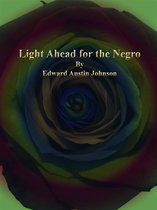
Edward E. Johnson, Light Ahead for the Negro (1904)
Light ahead for the Negro
Life in the South for Black people:
★ Many (recent) utopias contain moments of imperfection and suffering and there
are visions of racial progress that straightforwardly associate utopia and futurity.
(e.g.light ahead for the negro)
★ What is the negro question: "Negro problem" refers to the social and political
issues surrounding the treatment and status of African Americans in the United
States. Johnson believes that this problem can be solved through peaceful means
and by cultivating sympathy and helpfulness towards the Negro race (preface).
p.14
ABOUT THE NEGRO QUESTION
● southerners (farmers and businessmen on) the Negro question: fear of unsettling
business and causing a slump in Southern securities → economic endevours and
fears → the black people must be handled according to the serfdom or shotgun
plan [to keep the railroads earning dividends, keep the cotton market active]
● South long aware of usefulness of black people: positioning against them based
more on political persecution than race hatred → usefulness bound black people
to the South
○ that is also why was there still racial prejudice after the war in the South
● paradoxical scheme; Negro's usefulness had also bound him to the South.:
retaining 6 million black individuals in the population with all the rights and
duties of citizenship, BUT less social and political standing
○ persecution and lawlessness, as did the slave system (p.48)
● Realizing his industrial usefulness, the aim has been to eliminate him from
politics and at the same time use him as a tax-payer and a producer. The
paradoxical task of defining his citizenship as that of one with all the burdens
and duties, less the rights and privileges thereof, has been quite successfully
performed.
⟹Southern people as “friends of the negro race” IF and only IF “they stay in their place”
● no objection against “servile negroes” (p.41) → stereotyped mammy, mulatto
children, OLD NEGRO
○ but if any of these servants managed by industry and tact to rise to higher
walks of life, it became necessary, according to the unwritten law, to
break off close relations → rule to always acknowledge white superiority,
stay out of politics (no voting)
● labor question: labor organizations excluded black members
, ● it was considered virtually a social crime to employ a Negro as a clerk in a store
or elsewhere.
○ the thousands of Negroes who were coming out of the various public
schools/ institutions for higher training established by Northern
philanthropists, had no calling open to them
○ problem - conventional laws of society: In the professions, the white
professional man was by habit and custom →very generally employed by
black people
■ but: - black professionals were rarely or never employed by white
people
● the question of raising the Negro in the scale of civilization was left to posterity.
(p.25 part of the statement)
○ politicians proposed no measures of relief for the great mass of ignorance
and poverty in their midst.
○ 1876 the republican party dropped the negro question as an issue → use
him as a tax-payer and a producer.
● black people’s thoughts: solution by Bishop Turner: emigration to africa ( p.33)
○ Many thought that emigration was the solution of the problem; not
necessarily emigration from the United States, but emigration individually
to states where public sentiment had not been against them
○ reasons listed why black people didn’t leave America (in masses):
ignorance, affection for the land of his birth, peculiar provincialism that
narrowed scope of vision of the world and its opportunities (p.35)
● Lincoln's emancipation proclamation 1863 then displayed strictly as a war
measure by Southerners (in order to cripple the Confederacy's use of slaves in
the war effort):
○ Declared "forever free" more than 3.5 million slaves in Confederate areas
still in rebellion against the Union
○ Promised that the federal government and military would "recognize and
maintain the freedom" of the freed slaves
○ Did not free almost half a million slaves in the border states loyal to the
Union (Maryland, Missouri, Delaware, Kentucky) and in some other areas
under Union control
○ Asked the newly freed slaves to avoid violence unless in self-defense and
recommended that they work for wages
○ Announced that African-American men could enlist in the Union army
and navy
○ Described these actions as "an act of justice, warranted by the
Constitution, upon military necessity"
● lynching; extended to all crimes; and not satisfied with hanging, burning by slow
fire has been substituted, accompanied by torture
Light ahead for the Negro
Life in the South for Black people:
★ Many (recent) utopias contain moments of imperfection and suffering and there
are visions of racial progress that straightforwardly associate utopia and futurity.
(e.g.light ahead for the negro)
★ What is the negro question: "Negro problem" refers to the social and political
issues surrounding the treatment and status of African Americans in the United
States. Johnson believes that this problem can be solved through peaceful means
and by cultivating sympathy and helpfulness towards the Negro race (preface).
p.14
ABOUT THE NEGRO QUESTION
● southerners (farmers and businessmen on) the Negro question: fear of unsettling
business and causing a slump in Southern securities → economic endevours and
fears → the black people must be handled according to the serfdom or shotgun
plan [to keep the railroads earning dividends, keep the cotton market active]
● South long aware of usefulness of black people: positioning against them based
more on political persecution than race hatred → usefulness bound black people
to the South
○ that is also why was there still racial prejudice after the war in the South
● paradoxical scheme; Negro's usefulness had also bound him to the South.:
retaining 6 million black individuals in the population with all the rights and
duties of citizenship, BUT less social and political standing
○ persecution and lawlessness, as did the slave system (p.48)
● Realizing his industrial usefulness, the aim has been to eliminate him from
politics and at the same time use him as a tax-payer and a producer. The
paradoxical task of defining his citizenship as that of one with all the burdens
and duties, less the rights and privileges thereof, has been quite successfully
performed.
⟹Southern people as “friends of the negro race” IF and only IF “they stay in their place”
● no objection against “servile negroes” (p.41) → stereotyped mammy, mulatto
children, OLD NEGRO
○ but if any of these servants managed by industry and tact to rise to higher
walks of life, it became necessary, according to the unwritten law, to
break off close relations → rule to always acknowledge white superiority,
stay out of politics (no voting)
● labor question: labor organizations excluded black members
, ● it was considered virtually a social crime to employ a Negro as a clerk in a store
or elsewhere.
○ the thousands of Negroes who were coming out of the various public
schools/ institutions for higher training established by Northern
philanthropists, had no calling open to them
○ problem - conventional laws of society: In the professions, the white
professional man was by habit and custom →very generally employed by
black people
■ but: - black professionals were rarely or never employed by white
people
● the question of raising the Negro in the scale of civilization was left to posterity.
(p.25 part of the statement)
○ politicians proposed no measures of relief for the great mass of ignorance
and poverty in their midst.
○ 1876 the republican party dropped the negro question as an issue → use
him as a tax-payer and a producer.
● black people’s thoughts: solution by Bishop Turner: emigration to africa ( p.33)
○ Many thought that emigration was the solution of the problem; not
necessarily emigration from the United States, but emigration individually
to states where public sentiment had not been against them
○ reasons listed why black people didn’t leave America (in masses):
ignorance, affection for the land of his birth, peculiar provincialism that
narrowed scope of vision of the world and its opportunities (p.35)
● Lincoln's emancipation proclamation 1863 then displayed strictly as a war
measure by Southerners (in order to cripple the Confederacy's use of slaves in
the war effort):
○ Declared "forever free" more than 3.5 million slaves in Confederate areas
still in rebellion against the Union
○ Promised that the federal government and military would "recognize and
maintain the freedom" of the freed slaves
○ Did not free almost half a million slaves in the border states loyal to the
Union (Maryland, Missouri, Delaware, Kentucky) and in some other areas
under Union control
○ Asked the newly freed slaves to avoid violence unless in self-defense and
recommended that they work for wages
○ Announced that African-American men could enlist in the Union army
and navy
○ Described these actions as "an act of justice, warranted by the
Constitution, upon military necessity"
● lynching; extended to all crimes; and not satisfied with hanging, burning by slow
fire has been substituted, accompanied by torture