When Who What Explained
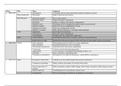
2. 1600-1800 … Physiognomy Correlations between body and internal qualities (branded as science)
Franz Joseph Gall Phrenology Shape of skull (not real science)
René Descartes Mind-body problem How are they related
Hyperbolic doubt Explore alternative explanations
Naturalism Reality is complete with nature (no supernatural)
Productive error Everything can be investigated by modern science, but not the soul
Epistemic dualism Mind can be known independently of body
Metaphysical dualism Mind exists independently of body
Dualism vs. monism Either mental or physical vs. one single reality/substance
Locke Empiricism Knowledge from experience
Anti-nativism Ideas aren’t innate (aangeboren)
Associationism Complex ideas are composed by simple ideas
Hume Casual inference Knowledge beyond senses or memory is because of causal inferences
Bundle theory of mind Mankind has different perceptions, follow each other up with rapidity and are in movement
3. 1800-1900 Wundt Outer experience Physical phenomena have their own causal explanations
Inner experience Mental phenomena have their own parallel
Experimental introspection Experimental self-observation, standardized
Voluntarism Voluntary attention through apperception
Apperception Active experience of perceptual field (making cat from c a t)
Perception Passive experience of perceptual field
Psychophysical parallelism Mental/physical not different phenomena, needed different explanations
4. 1870-1910 James Introspective observation Looking in our own minds (mental and conscious experience)
Comparative psychology Infants, animals and mentally ill (external observation)
James-Lange theory of Before: perception, emotion, bodily change, James-Lange: perception, bodily change, emotion
emotion
Radical empiricist If something can’t be experienced, it doesn’t exist
… Functionalism Role of consciousness and behavior in adapting to environment
2. 1600-1800 … Physiognomy Correlations between body and internal qualities (branded as science)
Franz Joseph Gall Phrenology Shape of skull (not real science)
René Descartes Mind-body problem How are they related
Hyperbolic doubt Explore alternative explanations
Naturalism Reality is complete with nature (no supernatural)
Productive error Everything can be investigated by modern science, but not the soul
Epistemic dualism Mind can be known independently of body
Metaphysical dualism Mind exists independently of body
Dualism vs. monism Either mental or physical vs. one single reality/substance
Locke Empiricism Knowledge from experience
Anti-nativism Ideas aren’t innate (aangeboren)
Associationism Complex ideas are composed by simple ideas
Hume Casual inference Knowledge beyond senses or memory is because of causal inferences
Bundle theory of mind Mankind has different perceptions, follow each other up with rapidity and are in movement
3. 1800-1900 Wundt Outer experience Physical phenomena have their own causal explanations
Inner experience Mental phenomena have their own parallel
Experimental introspection Experimental self-observation, standardized
Voluntarism Voluntary attention through apperception
Apperception Active experience of perceptual field (making cat from c a t)
Perception Passive experience of perceptual field
Psychophysical parallelism Mental/physical not different phenomena, needed different explanations
4. 1870-1910 James Introspective observation Looking in our own minds (mental and conscious experience)
Comparative psychology Infants, animals and mentally ill (external observation)
James-Lange theory of Before: perception, emotion, bodily change, James-Lange: perception, bodily change, emotion
emotion
Radical empiricist If something can’t be experienced, it doesn’t exist
… Functionalism Role of consciousness and behavior in adapting to environment