MEIOSIS
INTRODUCTION
When a cell divides, one of its main jobs is to make sure that each of the two new cells gets
a full, perfect copy of genetic material. Mistakes during copying, or unequal division of the
genetic material between cells, can lead to cells that are unhealthy or dysfunctional (and
may lead to diseases such as cancer).
But what exactly is this genetic material, and how does it behave over the course of a cell
division?
DNA AND GENOMES
DNA (deoxyribonucleic acid) is the genetic material of living organisms. In humans, DNA is
found in almost all the cells of the body and provides the instructions they need to grow,
function, and respond to their environment.
When a cell in the body divides, it will pass
on a copy of its DNA to each of its daughter
cells. DNA is also passed on at the level of
organisms, with the DNA in sperm and egg
cells combining to form a new organism
that has genetic material from both its
parents.
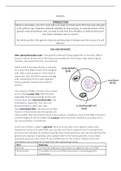
the majority of DNA is found in the nucleus
and is called nuclear DNA. Mitochondria,
organelles that harvest energy for the cell,
contain their own mitochondrial DNA, and
chloroplasts, organelles that carry out
photosynthesis in plant cells, also
have chloroplast DNA. The amounts of DNA
found in mitochondria and chloroplasts are
much smaller than the amount found in the nucleus. In bacteria, most of the DNA is found in
a central region of the cell called the nucleoid, which functions similarly to a nucleus but is
not surrounded by a membrane.
A cell’s set of DNA is called its genome. Since all of the cells in an organism (with a few
exceptions) contain the same DNA, you can also say that an organism has its own genome,
and since the members of a species typically have similar genomes, you can also describe the
genome of a species. In general, when people refer to the human genome, or any other
eukaryotic genome, they mean the set of DNA found in the nucleus. Mitochondria and
chloroplasts are considered to have their own separate genomes.
Term Meaning
Genome The full set of genetic information an organism has in its DNA
Chromosome Threadlike structure of DNA and protein containing genetic
information
, Homologous Set of chromosomes (one from each parent), that are very similar
chromosomes to one another and have the same size/shape
Diploid (2n) Cell that contains two sets of homologous chromosomes
Haploid (n) Cell that contains only a single set of genes
Sex chromosome One of two chromosomes (X or Y) that determines an organism's
sex
Autosome Chromosome that is not a sex chromosome
Karyotype Micrograph image of diploid set of chromosomes, grouped in pairs
CHROMATIN
In a cell, DNA does not usually exist by itself, but instead associates with specialized proteins
that organize it and give it structure. In eukaryotes, these proteins include the histones, a
group of basic (positively charged) proteins that form “bobbins” around which negatively
charged DNA can wrap. In addition to organizing DNA and making it more compact, histones
play an important role in determining which genes are active. The complex of DNA plus
histones and other structural proteins is called chromatin.
CHROMOSOMES
Each species has its own characteristic number of chromosomes. Humans, for instance, have
46 chromosomes in a typical body cell (somatic cell)
Like many species of animals and plants,
humans are diploid (2n), meaning that most
of their chromosomes come in matched
sets known as homologous pairs. The 46
chromosomes of a human cell are organized
into 23 pairs, and the two members of each
pair are said to be homologues of one
another (with the slight exception of the X
and Y chromosomes; see below).
Human sperm and eggs, which have only
one homologous chromosome from each
pair, are said to be haploid (1n).
The sex chromosomes, X and Y, determine a
person's biological sex: XX specifies female and XY specifies male. These chromosomes are
not true homologues and are an exception to the rule of the same genes in the same places.
Aside from small regions of similarity needed during meiosis, or sex cell production, the X and
, Y chromosomes are different and carry different genes. The 44 non-sex chromosomes in
humans are called autosomes.
CHROMOSOMES AND CELL DIVISION
As a cell prepares to divide, it must make a copy of each of its chromosomes. The two copies
of a chromosome are called sister chromatids. The sister chromatids are identical to one
another and are attached to each other by proteins called histones. The attachment between
sister chromatids is tightest at the centromere, a region of DNA that is important for their
separation during later stages of cell division.
As long as the sister chromatids are connected at the centromere, they are still considered to
be one chromosome. However, as soon as they are pulled apart during cell division, each is
considered a separate chromosome.
INTRODUCTION
When a cell divides, one of its main jobs is to make sure that each of the two new cells gets
a full, perfect copy of genetic material. Mistakes during copying, or unequal division of the
genetic material between cells, can lead to cells that are unhealthy or dysfunctional (and
may lead to diseases such as cancer).
But what exactly is this genetic material, and how does it behave over the course of a cell
division?
DNA AND GENOMES
DNA (deoxyribonucleic acid) is the genetic material of living organisms. In humans, DNA is
found in almost all the cells of the body and provides the instructions they need to grow,
function, and respond to their environment.
When a cell in the body divides, it will pass
on a copy of its DNA to each of its daughter
cells. DNA is also passed on at the level of
organisms, with the DNA in sperm and egg
cells combining to form a new organism
that has genetic material from both its
parents.
the majority of DNA is found in the nucleus
and is called nuclear DNA. Mitochondria,
organelles that harvest energy for the cell,
contain their own mitochondrial DNA, and
chloroplasts, organelles that carry out
photosynthesis in plant cells, also
have chloroplast DNA. The amounts of DNA
found in mitochondria and chloroplasts are
much smaller than the amount found in the nucleus. In bacteria, most of the DNA is found in
a central region of the cell called the nucleoid, which functions similarly to a nucleus but is
not surrounded by a membrane.
A cell’s set of DNA is called its genome. Since all of the cells in an organism (with a few
exceptions) contain the same DNA, you can also say that an organism has its own genome,
and since the members of a species typically have similar genomes, you can also describe the
genome of a species. In general, when people refer to the human genome, or any other
eukaryotic genome, they mean the set of DNA found in the nucleus. Mitochondria and
chloroplasts are considered to have their own separate genomes.
Term Meaning
Genome The full set of genetic information an organism has in its DNA
Chromosome Threadlike structure of DNA and protein containing genetic
information
, Homologous Set of chromosomes (one from each parent), that are very similar
chromosomes to one another and have the same size/shape
Diploid (2n) Cell that contains two sets of homologous chromosomes
Haploid (n) Cell that contains only a single set of genes
Sex chromosome One of two chromosomes (X or Y) that determines an organism's
sex
Autosome Chromosome that is not a sex chromosome
Karyotype Micrograph image of diploid set of chromosomes, grouped in pairs
CHROMATIN
In a cell, DNA does not usually exist by itself, but instead associates with specialized proteins
that organize it and give it structure. In eukaryotes, these proteins include the histones, a
group of basic (positively charged) proteins that form “bobbins” around which negatively
charged DNA can wrap. In addition to organizing DNA and making it more compact, histones
play an important role in determining which genes are active. The complex of DNA plus
histones and other structural proteins is called chromatin.
CHROMOSOMES
Each species has its own characteristic number of chromosomes. Humans, for instance, have
46 chromosomes in a typical body cell (somatic cell)
Like many species of animals and plants,
humans are diploid (2n), meaning that most
of their chromosomes come in matched
sets known as homologous pairs. The 46
chromosomes of a human cell are organized
into 23 pairs, and the two members of each
pair are said to be homologues of one
another (with the slight exception of the X
and Y chromosomes; see below).
Human sperm and eggs, which have only
one homologous chromosome from each
pair, are said to be haploid (1n).
The sex chromosomes, X and Y, determine a
person's biological sex: XX specifies female and XY specifies male. These chromosomes are
not true homologues and are an exception to the rule of the same genes in the same places.
Aside from small regions of similarity needed during meiosis, or sex cell production, the X and
, Y chromosomes are different and carry different genes. The 44 non-sex chromosomes in
humans are called autosomes.
CHROMOSOMES AND CELL DIVISION
As a cell prepares to divide, it must make a copy of each of its chromosomes. The two copies
of a chromosome are called sister chromatids. The sister chromatids are identical to one
another and are attached to each other by proteins called histones. The attachment between
sister chromatids is tightest at the centromere, a region of DNA that is important for their
separation during later stages of cell division.
As long as the sister chromatids are connected at the centromere, they are still considered to
be one chromosome. However, as soon as they are pulled apart during cell division, each is
considered a separate chromosome.