Top Management and Political Skill
2020-2021
, Table of contents:
Lecture 1: Boardroom Dynamics I: Theories and Perspectives 2
Hambrick, D. C. (2007). Upper echelons theory: An update. Academy of Management Review, 32(2), 334–343. 2
Hillman, A. J., Withers, M. C., & Collins, B. J. (2009). Resource dependence theory: A review. Journal of Management, 35(6),
1404–1427. 4
Roberts, J., McNulty, T., & Stiles, P. (2005). Beyond agency conceptions of the work of the non-executive director: Creating
accountability in the boardroom. British Journal of Management, 16(1), 5–26. 5
Lecture 2: Boardroom Dynamics II: Inside the Black Box of Actual Board Behavior 7
Gabrielsson, J., & Huse, M. (2004). Context, behavior, and evolution: Challenges in research on boards and governance. International
Studies of Management & Organization, 34(2), 11–36. 7
Tutorial 2: Online Poster Presentations: Attempts to Open the Black Box of Actual Board Behavior. 8
Bezemer, P.-J., Nicholson, G., & Pugliese, A. (2014). Inside the boardroom: Exploring board member interactions. Qualitative
Research in Accounting & Management, 11(3), 1–37. 8
Bezemer, P.-J., Peij, S., de Kruijs, L., & Maassen, G. (2014). How two-tier boards can be more effective. Corporate Governance, 14(1),
15–31. 9
Heemskerk, E. M., Heemskerk, K. & Wats, M. M. (2017). Conflict in the boardroom: A participant observation study of supervisory
board dynamics. Journal of Management & Governance, 21(1), 233–263. 10
Lecture 3: Distributive Negotiations 12
Thompson, L. L., Wang, J., & Gunia, B. C. (2010). Negotiation. Annual Review of Psychology, 61(1), 491–515. 12
Lecture 4: Power Play and Executive Hubris 14
Petit, V., & Bollaert, H. (2012). Flying too close to the sun? Hubris among CEOs and how to prevent it. Journal of Business Ethics,
108(3), 265-283. 14
Tutorial 4: Online Poster Presentations: On Becoming an Effective Negotiator. 16
Sebenius, J. K. (2001). Six habits of merely effective negotiators. Harvard Business Review, 79(4), 87–95. 16
Haselhuhn, M. P. (2015). Support theory in negotiation: How unpacking aspirations and alternatives can improve negotiation
performance. Journal of Behavioral Decision Making, 28(1), 1–13. 17
Chapman, E., Miles, E. W., Maurer, T. (2017). A proposed model for effective negotiation skill development, Journal of Management
Development, 36(7), 940–958. 18
Lecture 5: Integrative Negotiations 20
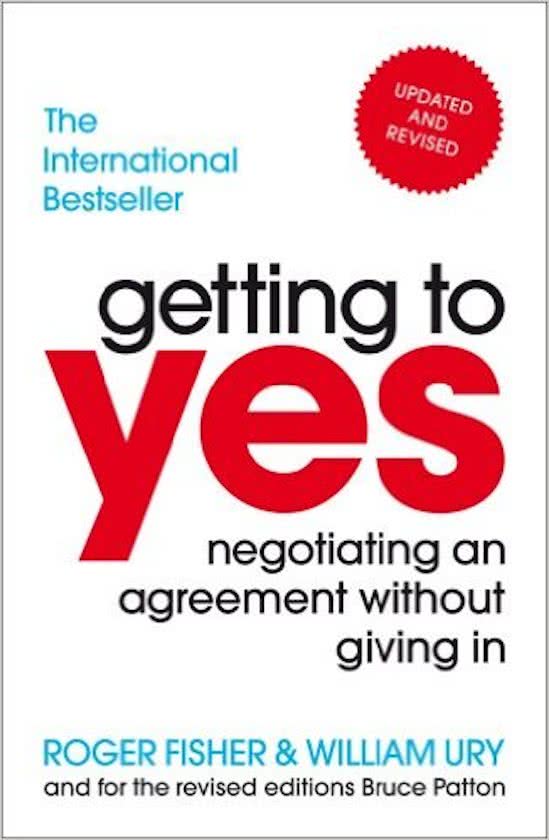
Fisher, R., Ury, W., & Patton, B. (2012). Getting to Yes: Negotiating an agreement without giving in. London, UK: Random House
Business Books. ISBN 9781847940933 [BOOK] 20
Lecture 6: Organizational Justice 22
Rupp, D. E. (2011). An employee-centered model of organizational justice and social responsibility. Organizational Psychology
Review, 1(1), 72-94. 22
Tutorial 6: Online Poster presentations: Negotiation Effects and Outcomes. 24
Wilson, K. S., DeRue, D. S., Matta, F. K., Howe, M., & Conlon, D. E. (2016). Personality similarity in negotiations: Testing the dyadic
effects of similarity in interpersonal traits and the use of emotional displays on negotiation outcomes. Journal of Applied Psychology,
101(10), 1405–1421. 24
Galinsky, A. D., Maddux, W. W., Gilin, D., White, J. B. (2008). Why it pays to get inside the head of your opponent: The differential
effects of perspective taking and empathy in strategic interactions. Psychological Science, 19(4), 378–384. 26
Baarveld, M., Smit, M. & Dewulf, G. (2015) Negotiation processes in urban redevelopment projects: Dealing with conflicts by
balancing integrative and distributive approaches. Planning Theory & Practice, 16(3), 363–384. 27
Lecture 7: Serious Gaming 29
Deterding, S., Dixon, D., Khaled, R., & Nacke, L. (2011, September). From game design elements to gamefulness: Defining
gamification. In Proceedings of the 15th international academic MindTrek conference: Envisioning future media environments (pp.
9-15). ACM. 29
Oprescu, F., Jones, C., & Katsikitis, M. (2014). I PLAY AT WORK—ten principles for transforming work processes through gamification.
Frontiers in psychology, 5, 14. 31
Extra notes 33
1
,Lecture 1: Boardroom Dynamics I: Theories and Perspectives
Hambrick, D. C. (2007). Upper echelons theory: An update. Academy of Management Review, 32(2), 334–343.
This article is a recap of the AMR article in which the theory of upper echelons is presented. The authors reflect
on that article and make a couple of refinements. ‘The central premise of upper echelons theory is that
executives’ experiences, values, and personalities greatly influence their interpretations of the situations they
face and, in turn, affect their choices.’
Upper Echelons theory: Based on two assumptions. 1) Executives act on the basis of their personalized
interpretations of the strategic situations they face and 2) These personalized construals are a function of the
executives’ experiences, values and personalities. It is based on bounded rationality, in which informationally
complex, uncertain situations are not objectively ‘knowable’ but merely interpretable. Leadership is a shared
activity within a complex organization. Therefore, leadership and organizational outcomes are partially based
on the composition of top management teams. The Upper Echelons theory focuses on executive groups rather
than TMT or CEO’s. Much is unknown on their real psychological and social processes that drive executive
behavior, hence why this is known as the ‘black box problem’.
Refinements of the theory:
- Managerial discretion: top executives influence what happens to their organizations. Another view is
that executives have little effect because organizations are inertial, and influenced by external forces.
The authors view both of these views as partially true, depending on how much managerial discretion
exists (whether there is an absence of constraint and a great deal of means-ends ambiguity).
- Executive job demands are based on three variables:
- Task challenges: e.g. difficult strategic conditions
- Performance challenges: e.g. demanding owners or board
- Executive aspirations: e.g. strong personal desire to deliver maximum performance
- Behavioral integration: many TMT’s have few team properties, but often consist of semiautonomous
barons, that each engage in bilateral relations with the CEO but are loose from each other. Behavioral
integration is the degree to which a TMT engages in mutual and collective interaction. Behavioral
integration has been shown to have direct positive effects on organizational performance. An
approach in which only the relevant barons are examined is more fitted to predict organizational
outcomes.
Executive characteristics filter and distort information through their values, experiences and personalities that
affect their...
1. Field of vision: the directions they look and listen
2. Selective perception: what they see and hear
3. Interpretation: how they attach meaning to what they see and hear
Heterogeneity in TMT is beneficial for the support of the Upper Echelons theory (like in the USA as opposed to
Japan or France). Just as exercise matters greatly to how much you—a specific individual—weigh, evidence
indicates that top executives have considerable influence over the form and fate of their specific companies.
We can conclude that CEOs affect organizational outcomes.
The author proposes some steps for research:
- ‘Open the black box’ - a proposed methodology: ‘By exploring the actual information- processing
behaviors of managers, we could improve both our theories and our practical insights.’ -> however
this is proven to be very hard (as mentioned in the lectures)
2
, - The author proposes an alternative method, namely a strategy simulation game (I refer to the article if
you would want to read it)
- Sorting out reverse causality and endogeneity:
- Reverse causality: the question of what is the cause of the executive’s behavior
- Endogeneity: ‘Instead, the causal chain is propelled because the board (or other hiring body)
believes that these executives have precisely the right characteristics needed for the
conditions at hand. In turn, the executives’ actions are due more to their mandate than to
any unwittingly biased information processing on their part.’
So, the author proposes to check for endogeneity and reverse causality in your analysis. ‘More generally,
however, there is a need to turn upper echelons theory on its head by considering executive characteristics as
consequences rather than as causes.’
3
2020-2021
, Table of contents:
Lecture 1: Boardroom Dynamics I: Theories and Perspectives 2
Hambrick, D. C. (2007). Upper echelons theory: An update. Academy of Management Review, 32(2), 334–343. 2
Hillman, A. J., Withers, M. C., & Collins, B. J. (2009). Resource dependence theory: A review. Journal of Management, 35(6),
1404–1427. 4
Roberts, J., McNulty, T., & Stiles, P. (2005). Beyond agency conceptions of the work of the non-executive director: Creating
accountability in the boardroom. British Journal of Management, 16(1), 5–26. 5
Lecture 2: Boardroom Dynamics II: Inside the Black Box of Actual Board Behavior 7
Gabrielsson, J., & Huse, M. (2004). Context, behavior, and evolution: Challenges in research on boards and governance. International
Studies of Management & Organization, 34(2), 11–36. 7
Tutorial 2: Online Poster Presentations: Attempts to Open the Black Box of Actual Board Behavior. 8
Bezemer, P.-J., Nicholson, G., & Pugliese, A. (2014). Inside the boardroom: Exploring board member interactions. Qualitative
Research in Accounting & Management, 11(3), 1–37. 8
Bezemer, P.-J., Peij, S., de Kruijs, L., & Maassen, G. (2014). How two-tier boards can be more effective. Corporate Governance, 14(1),
15–31. 9
Heemskerk, E. M., Heemskerk, K. & Wats, M. M. (2017). Conflict in the boardroom: A participant observation study of supervisory
board dynamics. Journal of Management & Governance, 21(1), 233–263. 10
Lecture 3: Distributive Negotiations 12
Thompson, L. L., Wang, J., & Gunia, B. C. (2010). Negotiation. Annual Review of Psychology, 61(1), 491–515. 12
Lecture 4: Power Play and Executive Hubris 14
Petit, V., & Bollaert, H. (2012). Flying too close to the sun? Hubris among CEOs and how to prevent it. Journal of Business Ethics,
108(3), 265-283. 14
Tutorial 4: Online Poster Presentations: On Becoming an Effective Negotiator. 16
Sebenius, J. K. (2001). Six habits of merely effective negotiators. Harvard Business Review, 79(4), 87–95. 16
Haselhuhn, M. P. (2015). Support theory in negotiation: How unpacking aspirations and alternatives can improve negotiation
performance. Journal of Behavioral Decision Making, 28(1), 1–13. 17
Chapman, E., Miles, E. W., Maurer, T. (2017). A proposed model for effective negotiation skill development, Journal of Management
Development, 36(7), 940–958. 18
Lecture 5: Integrative Negotiations 20
Fisher, R., Ury, W., & Patton, B. (2012). Getting to Yes: Negotiating an agreement without giving in. London, UK: Random House
Business Books. ISBN 9781847940933 [BOOK] 20
Lecture 6: Organizational Justice 22
Rupp, D. E. (2011). An employee-centered model of organizational justice and social responsibility. Organizational Psychology
Review, 1(1), 72-94. 22
Tutorial 6: Online Poster presentations: Negotiation Effects and Outcomes. 24
Wilson, K. S., DeRue, D. S., Matta, F. K., Howe, M., & Conlon, D. E. (2016). Personality similarity in negotiations: Testing the dyadic
effects of similarity in interpersonal traits and the use of emotional displays on negotiation outcomes. Journal of Applied Psychology,
101(10), 1405–1421. 24
Galinsky, A. D., Maddux, W. W., Gilin, D., White, J. B. (2008). Why it pays to get inside the head of your opponent: The differential
effects of perspective taking and empathy in strategic interactions. Psychological Science, 19(4), 378–384. 26
Baarveld, M., Smit, M. & Dewulf, G. (2015) Negotiation processes in urban redevelopment projects: Dealing with conflicts by
balancing integrative and distributive approaches. Planning Theory & Practice, 16(3), 363–384. 27
Lecture 7: Serious Gaming 29
Deterding, S., Dixon, D., Khaled, R., & Nacke, L. (2011, September). From game design elements to gamefulness: Defining
gamification. In Proceedings of the 15th international academic MindTrek conference: Envisioning future media environments (pp.
9-15). ACM. 29
Oprescu, F., Jones, C., & Katsikitis, M. (2014). I PLAY AT WORK—ten principles for transforming work processes through gamification.
Frontiers in psychology, 5, 14. 31
Extra notes 33
1
,Lecture 1: Boardroom Dynamics I: Theories and Perspectives
Hambrick, D. C. (2007). Upper echelons theory: An update. Academy of Management Review, 32(2), 334–343.
This article is a recap of the AMR article in which the theory of upper echelons is presented. The authors reflect
on that article and make a couple of refinements. ‘The central premise of upper echelons theory is that
executives’ experiences, values, and personalities greatly influence their interpretations of the situations they
face and, in turn, affect their choices.’
Upper Echelons theory: Based on two assumptions. 1) Executives act on the basis of their personalized
interpretations of the strategic situations they face and 2) These personalized construals are a function of the
executives’ experiences, values and personalities. It is based on bounded rationality, in which informationally
complex, uncertain situations are not objectively ‘knowable’ but merely interpretable. Leadership is a shared
activity within a complex organization. Therefore, leadership and organizational outcomes are partially based
on the composition of top management teams. The Upper Echelons theory focuses on executive groups rather
than TMT or CEO’s. Much is unknown on their real psychological and social processes that drive executive
behavior, hence why this is known as the ‘black box problem’.
Refinements of the theory:
- Managerial discretion: top executives influence what happens to their organizations. Another view is
that executives have little effect because organizations are inertial, and influenced by external forces.
The authors view both of these views as partially true, depending on how much managerial discretion
exists (whether there is an absence of constraint and a great deal of means-ends ambiguity).
- Executive job demands are based on three variables:
- Task challenges: e.g. difficult strategic conditions
- Performance challenges: e.g. demanding owners or board
- Executive aspirations: e.g. strong personal desire to deliver maximum performance
- Behavioral integration: many TMT’s have few team properties, but often consist of semiautonomous
barons, that each engage in bilateral relations with the CEO but are loose from each other. Behavioral
integration is the degree to which a TMT engages in mutual and collective interaction. Behavioral
integration has been shown to have direct positive effects on organizational performance. An
approach in which only the relevant barons are examined is more fitted to predict organizational
outcomes.
Executive characteristics filter and distort information through their values, experiences and personalities that
affect their...
1. Field of vision: the directions they look and listen
2. Selective perception: what they see and hear
3. Interpretation: how they attach meaning to what they see and hear
Heterogeneity in TMT is beneficial for the support of the Upper Echelons theory (like in the USA as opposed to
Japan or France). Just as exercise matters greatly to how much you—a specific individual—weigh, evidence
indicates that top executives have considerable influence over the form and fate of their specific companies.
We can conclude that CEOs affect organizational outcomes.
The author proposes some steps for research:
- ‘Open the black box’ - a proposed methodology: ‘By exploring the actual information- processing
behaviors of managers, we could improve both our theories and our practical insights.’ -> however
this is proven to be very hard (as mentioned in the lectures)
2
, - The author proposes an alternative method, namely a strategy simulation game (I refer to the article if
you would want to read it)
- Sorting out reverse causality and endogeneity:
- Reverse causality: the question of what is the cause of the executive’s behavior
- Endogeneity: ‘Instead, the causal chain is propelled because the board (or other hiring body)
believes that these executives have precisely the right characteristics needed for the
conditions at hand. In turn, the executives’ actions are due more to their mandate than to
any unwittingly biased information processing on their part.’
So, the author proposes to check for endogeneity and reverse causality in your analysis. ‘More generally,
however, there is a need to turn upper echelons theory on its head by considering executive characteristics as
consequences rather than as causes.’
3