
• Verkeerd document? Gratis ruilen
  • Geschreven door studenten die geslaagd zijn
  • Direct beschikbaar na je betaling
  • Online lezen of als PDF
Verkopen
Kies je studieland
Kies je taal
Document preview thumbnail
Voorbeeld 4 van de 74 pagina's
Samenvatting

Samenvatting Midterm en Endterm - Violence & security. Paradigms and debates (FY)

Document preview thumbnail
Voorbeeld 4 van de 74 pagina's

Samenvatting Midterm en Endterm - Violence & security. Paradigms and debates (FY) Bevat zowel stof uit lectures als uit de readings, voor volgende readings: Lecture 1 | Introductory Lesson Reading: Organized violence 1989–2023, and the prevalence of organized crime groups – Shawn Davies, Garoun Engström, Therése Pettersson & Magnus Öberg Lecture 2 | Violence and State Formation Readings: War and Economic Development: Export-Oriented Industrialization in East and Southeast Asia – Richard Stubbs War Making and State Making as Organized Crime – Charles Tilly Lecture 3 | Nuclear Weapons Readings: The New Era of Counterforce – Keir A. Lieber & Daryl G. Press The Nuclear Taboo: The United States and the Normative Basis of Nuclear Non-Use – Nina Tannenwald Lecture 4 | Democracy and War Readings: Democracy and Civil War: The Case of Colombia – Abbey Steele & Livia I. Schubiger The Flawed Logic of Democratic Peace Theory – Sebastian Rosato Lecture 5 | Ethnic Conflict Readings: Ethnic Conflict and Civil Society: India and Beyond – Ashutosh Varshney Ethnic Nationalism and International Conflict: The Case of Serbia – V.P. Gagnon, Jr. Lecture 6 | Genocide Readings: Destroy Them to Save Us: Theories of Genocide and the Logics of Political Violence – Scott Straus The Slow Violence of Settler Colonialism: Genocide, Attrition, and the Long Emergency of Invasion – Pauline Wakeham Lecture 7 | Terrorism Readings: The Strategies of Terrorism – Andrew H. Kydd & Barbara F. Walter (2006) Violent Radicalization in Europe: What We Know and What We Do Not Know – Anja Dalgaard-Nielsen (2010) Lecture 8 | Gender & Conflict Readings: Explaining Rape during Civil War – Dara Kay Cohen (2013) Noncombat Participation in Rebellion: A Gendered Typology – Meredith Loken (2022) Lecture 9 | Ideology and Rebellion Readings: Ideology in Civil War: Instrumental Adoption and Beyond – Francisco Gutiérrez Sanín & Elisabeth Jean Wood (2014) Perspectives on the Rebel Social Contract: Exit, Voice and Loyalty in the Islamic State – Mara Revkin & Ariel Ahram (2020) The Islamic State as an Ordinary Insurgency – Reyko Huang (2015) Lecture 10 | Civilian Rescuing Readings: Cracking the Code of Genocide: The Moral Psychology of Rescuers, Bystanders, and Nazis during the Holocaust – Kristen Renwick Monroe (2008) Religious Minorities and Resistance to Genocide: The Collective Rescue of Jews in the Netherlands during the Holocaust – Robert Braun (2016) Lecture 11 | Peacebuilding Readings: International Peacebuilding and Local Success: Assumptions and Effectiveness – Séverine Autesserre (2017) Local Peace Committees and Grassroots Peacebuilding in Africa – Fritz Nganje (2020)

Voorbeeld van de inhoud

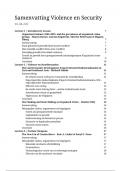
Samenvatting Violence en Security
16-04-202

Lecture 1 | Introductory Lesson​ 7
Organized violence 1989–2023, and the prevalence of organized crime
groups – Shawn Davies, Garoun Engström, Therése Pettersson & Magnus
Öberg​ 7
Samenvatting​ 7
Staat-gebaseerd geweld (State-based conflict)​ 7
Niet-statelijk conflict (Non-state conflict)​ 8
Eénzijdig geweld (One-sided violence)​ 9
Trends in geweld door georganiseerde misdaadgroepen (Organized crime
violence)​ 9
Conclusie​ 10
Lecture 2 | Violence en Stateformation​ 11
War and Economic Development: Export-Oriented Industrialization in
East and Southeast Asia – Richard Stubbs​ 11
Samenvatting​ 11
De relatie tussen oorlog en economische ontwikkeling​ 11
Exportgerichte industrialisatie (Export-Oriented Industrialization, EOI –
exportgerichte industrialisatie)​ 11
Effecten van oorlog​ 12
De sterke staat (Strong State – sterke institutionele staat)​ 12
Amerikaanse steun en geopolitiek​ 12
Tegencasus: de Filipijnen​ 13
Conclusie​ 13
War Making and State Making as Organized Crime – Charles Tilly​ 14
Samenvatting​ 14
Belangrijke claims, argumenten en begrippen​ 14
Staten als georganiseerde misdaad​ 14
Legitimiteit en geweld​ 14
Staatsvorming als historisch proces​ 15
Extractie en kapitaalaccumulatie​ 15
Variatie tussen staten​ 16
Conclusie​ 16
Lecture 3 | Nuclear Weapons​ 17
The New Era of Counterforce – Keir A. Lieber & Daryl G. Press​ 17
Samenvatting​ 17
Belangrijke claims, argumenten en begrippen​ 17
Klassieke nucleaire afschrikking​ 17
Counterforce​ 17
Technologische erosie van overlevingsvermogen​ 18
Theorie van de nucleaire revolutie​ 18

, 1


Gevolgen voor beleid​ 18
Conclusie​ 19
The Nuclear Taboo: The United States and the Normative Basis of Nuclear
Non-Use – Nina Tannenwald​ 20
Samenvatting​ 20
Belangrijke claims, argumenten en begrippen​ 20
De centrale puzzel: waarom zijn kernwapens niet gebruikt?​ 20
Het nucleaire taboe: definitie en functies​ 20
Methodologie en alternatieve verklaringen​ 21
Casestudies: Amerikaans beleid​ 21
Conclusie​ 22
Lecture 4 | Democracy and war​ 23
Democracy and Civil War: The Case of Colombia – Abbey Steele & Livia I.
Schubiger​ 23
Samenvatting​ 23
Belangrijke claims, argumenten en begrippen​ 23
Democratie en geweld tijdens conflict​ 23
Electoral engineering: de UP-casus​ 23
Coöptatie van democratische instituties​ 24
Regionale dynamieken en electorale dreiging​ 24
Decentralisatie als risico​ 24
Conclusie​ 25
The Flawed Logic of Democratic Peace Theory – Sebastian Rosato​ 26
Samenvatting​ 26
Belangrijke claims, argumenten en begrippen​ 26
Democratische Vredestheorie (Democratic Peace Theory – Democratische
vredestheorie)​ 26
De normatieve logica: kritiek​ 26
De institutionele logica: kritiek​ 27
Overige tegenargumenten​ 28
Conclusie​ 28
Lecture 5 | Ethnic conflict​ 29
Ethnic Conflict and Civil Society: India and Beyond – Ashutosh Varshney​29
Samenvatting​ 29
Begrippen, claims en argumenten​ 29
Wat is een etnisch conflict?​ 29
Typen burgerlijke betrokkenheid​ 29
Civil society als buffer tegen geweld​ 30
Verklaring voor variatie in etnisch geweld​ 30
Factoren die interetnische netwerken beïnvloeden​ 31
Relatie tot de theorieën uit de slides​ 31
Conclusie​ 31
Ethnic Nationalism and International Conflict: The Case of Serbia – V.P.
Gagnon, Jr.​ 32

, 2


Samenvatting​ 32
Begrippen, claims en argumenten​ 32
Kernclaim​ 32
Instrumentalisme en de rol van elites​ 32
Strategie van conflictconstructie​ 33
Relevantie van etniciteit​ 33
Kritiek op andere benaderingen​ 33
Voorwaarden voor conflictstrategieën​ 34
Relatie tot de slides​ 34
Conclusie​ 34
Lecture 6 |Genocide​ 35
“Destroy Them to Save Us: Theories of Genocide and the Logics of Political
Violence” – Scott Straus​ 35
Samenvatting​ 35
Theoretische benaderingen van genocide​ 35
Strategische benadering (Strategic approach) – p. 546-548​ 35
Ideologische benadering – p. 548-550​ 36
Compatibiliteit van strategie en ideologie – p. 549​ 36
Andere theoretische inzichten​ 37
Genocide als inherent aan politieke ontwikkeling – p. 550​ 37
Genocide als dynamisch proces – p. 550​ 37
Rol van staatscapaciteit – p. 550​ 37
Genocide en andere vormen van politiek geweld – p. 551-553​ 37
Kennislacunes en toekomstig onderzoek – p. 553-554​ 38
Conclusie​ 38
“The Slow Violence of Settler Colonialism: Genocide, Attrition, and the
Long Emergency of Invasion” – Pauline Wakeham​ 39
Samenvatting​ 39
Kernbegrippen en argumenten​ 39
Trage destructie (Slow violence) – p. 338-339​ 39
Genocide door uitputting (Genocide by attrition) – p. 341​ 39
Juridische discussie over intentie (Mens rea) – p. 340-342​ 40
Structureel kolonialisme – p. 338-339​ 40
Historische en juridische kaders​ 40
Invloed van Lemkin en VN-verdrag – p. 343-344​ 40
Artikel 2 van VN Genocideverdrag – p. 344​ 41
Voorbeelden uit Canada​ 41
Residentiële scholen en vrouwenmoord – p. 340​ 41
Uithongering van de Plains Nations – p. 342​ 41
Gedwongen verplaatsing van Ahiarmiut – p. 343​ 41
Relatie met genocide-studies als veld – p. 345​ 42
Conclusie​ 42
Lecture 7 | Terrorism​ 43
The Strategies of Terrorism – Andrew H. Kydd & Barbara F. Walter (2006)​ 43

, 3


Samenvatting​ 43
Wat is terrorisme?​ 43
Doelen van terroristische groepen​ 43
Strategieën van terrorisme​ 44
1. Uitputting (Attrition) – Uitputtingsstrategie​ 44
2. Intimidatie (Intimidation) – Controle via angst​ 44
3. Provocatie (Provocation) – Gedoeld op overreactie​ 44
4. Vrede saboteren (Spoiling) – Vertrouwen tussen partijen vernietigen​ 44
5. Overbieding (Outbidding) – Strijd om legitimiteit​ 44
Belangrijke begrippen​ 45
Voorwaarden die strategieën beïnvloeden (samengevat uit hele tekst)​ 45
Conclusie​ 45
Violent Radicalization in Europe: What We Know and What We Do Not Know – Anja
Dalgaard-Nielsen (2010)​ 46
Samenvatting​ 46
Definities en afbakening​ 46
Drie verklaringsbenaderingen van radicalisering​ 46
1. Franse sociologie: identiteitscrisis en moderniteit (p. 799–801)​ 46
2. Sociale beweging- en netwerktheorie: radicalisering via sociale netwerken (p.
801–805)​ 47
3. Empirische benadering: individuele motieven en rollen (p. 805–808)​ 47
Overkoepelende inzichten (p. 810–812)​ 48
Concepten en begrippen​ 48
Conclusie​ 48
Lecture 8 | Gender & Conflict​ 49
Explaining Rape during Civil War – Dara Kay Cohen (2013)​ 49
Samenvatting​ 49
Verklaring van begrippen en argumenten​ 49
Verkrachting als sociaal fenomeen tijdens oorlog​ 49
Variatie in oorlogstijdverkrachting​ 49
Bestaande verklaringen (en waarom ze tekortschieten)​ 50
1. Opportunisme/hebzucht (opportunism/greed)​ 50
2. Etnische haat (ethnic hatred)​ 50
3. Genderongelijkheid​ 50
De kernhypothese: Verkrachting als socialisatie-instrument​ 50
Gedwongen rekrutering → lage samenhang → nood aan groepsbinding​ 50
Verkrachting als “costly signal”​ 51
Casus Sierra Leone​ 51
Empirische bevindingen (p. 466–468)​ 51
Belangrijke begrippen​ 51
Conclusie​ 51
Noncombat Participation in Rebellion: A Gendered Typology – Meredith Loken (2022)​ 52
Samenvatting​ 52
Waarom deze typologie?​ 52

Inhoudsopgave

  1. 01 Samenvatting Violence en Security 1
  2. 02 Lecture 1 | Introductory Lesson 8
    1. Organized violence 1989–2023, and the prevalence of organized crime groups – Shawn Davies, Garoun Engström, Therése Pettersson & Magnus Öberg 8
    2. Samenvatting 8
    3. Staat-gebaseerd geweld (State-based conflict) 8
    4. Niet-statelijk conflict (Non-state conflict) 9
    5. Eénzijdig geweld (One-sided violence) 10
    6. Trends in geweld door georganiseerde misdaadgroepen (Organized crime violence) 10
    7. Conclusie 11
  3. 03 Lecture 2 | Violence en Stateformation 12
    1. War and Economic Development: Export-Oriented Industrialization in East and Southeast Asia – Richard Stubbs 12
    2. Samenvatting 12
    3. Conclusie 14
    4. War Making and State Making as Organized Crime – Charles Tilly 15
    5. Samenvatting 15
    6. Belangrijke claims, argumenten en begrippen 15
    7. Conclusie 17
  4. 04 Lecture 3 | Nuclear Weapons 18
    1. The New Era of Counterforce – Keir A. Lieber & Daryl G. Press 18
    2. Samenvatting 18
    3. Belangrijke claims, argumenten en begrippen 18
    4. Conclusie 20
    5. The Nuclear Taboo: The United States and the Normative Basis of Nuclear Non-Use – Nina Tannenwald 21
    6. Samenvatting 21
    7. Belangrijke claims, argumenten en begrippen 21
    8. Conclusie 23
  5. 05 Lecture 4 | Democracy and war 24
    1. Democracy and Civil War: The Case of Colombia – Abbey Steele & Livia I. Schubiger 24
    2. Samenvatting 24
    3. Belangrijke claims, argumenten en begrippen 24
    4. Conclusie 26
    5. The Flawed Logic of Democratic Peace Theory – Sebastian Rosato 27
    6. Samenvatting 27
    7. Belangrijke claims, argumenten en begrippen 27
    8. De normatieve logica: kritiek 27
    9. De institutionele logica: kritiek 28
    10. Overige tegenargumenten 29
    11. Conclusie 29
  6. 06 Lecture 5 | Ethnic conflict 30
    1. Ethnic Conflict and Civil Society: India and Beyond – Ashutosh Varshney 30
    2. Samenvatting 30
    3. Begrippen, claims en argumenten 30
    4. Conclusie 32
    5. Ethnic Nationalism and International Conflict: The Case of Serbia – V.P. Gagnon, Jr. 33
    6. Samenvatting 33
    7. Begrippen, claims en argumenten 33
    8. Relatie tot de slides 35
    9. Conclusie 35
  7. 07 Lecture 6 |Genocide 36
    1. “Destroy Them to Save Us: Theories of Genocide and the Logics of Political Violence” – Scott Straus 36
    2. Samenvatting 36
    3. Theoretische benaderingen van genocide 36
    4. Andere theoretische inzichten 38
    5. Genocide en andere vormen van politiek geweld – p. 551-553 38
    6. Kennislacunes en toekomstig onderzoek – p. 553-554 39
    7. Conclusie 39
    8. “The Slow Violence of Settler Colonialism: Genocide, Attrition, and the Long Emergency of Invasion” – Pauline Wakeham 40
    9. Samenvatting 40
    10. Kernbegrippen en argumenten 40
    11. Historische en juridische kaders 41
    12. Voorbeelden uit Canada 42
    13. Relatie met genocide-studies als veld – p. 345 43
    14. Conclusie 43
  8. 08 Lecture 7 | Terrorism 44
    1. The Strategies of Terrorism – Andrew H. Kydd & Barbara F. Walter (2006) 44
    2. Violent Radicalization in Europe: What We Know and What We Do Not Know – Anja Dalgaard-Nielsen (2010) 47
  9. 09 Lecture 8 | Gender & Conflict 50
    1. Explaining Rape during Civil War – Dara Kay Cohen (2013) 50
    2. Noncombat Participation in Rebellion: A Gendered Typology – Meredith Loken (2022) 53
  10. 10 Lecture 9 | Ideology and Rebellion 56
    1. Ideology in Civil War: Instrumental Adoption and Beyond – Francisco Gutiérrez Sanín & Elisabeth Jean Wood (2014) 56
    2. Perspectives on the Rebel Social Contract: Exit, Voice and Loyalty in the Islamic State – Mara Revkin & Ariel Ahram (2020) 59
    3. The Islamic State as an Ordinary Insurgency – Reyko Huang (2015) 62
  11. 11 Lecture 10 | Civilian Rescuing 65
    1. Cracking the Code of Genocide: The Moral Psychology of Rescuers, Bystanders, and Nazis during the Holocaust – Kristen Renwick Monroe (2008) 65
    2. Religious Minorities and Resistance to Genocide: The Collective Rescue of Jews in the Netherlands during the Holocaust – Robert Braun (2016) 68
  12. 12 Lecture 11 | Peacebulding 71
    1. International Peacebuilding and Local Success: Assumptions and Effectiveness – Séverine Autesserre (2017) 71
    2. “Local Peace Committees and Grassroots Peacebuilding in Africa” – Fritz Nganje (2020) 73

Documentinformatie

Studie
Geüpload op
19 juni 2025
Aantal pagina's
74
Geschreven in
2024/2025
Type
Samenvatting
€8,99

Verkeerd document? Gratis ruilen Binnen 14 dagen na aankoop en voor het downloaden kan je een ander document kiezen. Je kan het bedrag gewoon opnieuw besteden.
Geschreven door studenten die geslaagd zijn
Direct beschikbaar na je betaling
Online lezen of als PDF

Verkocht
3
Volgers
0
Items
2
Laatst verkocht
6 maanden geleden


Waarom studenten kiezen voor Stuvia

Gemaakt door medestudenten, geverifieerd door reviews

Kwaliteit die je kunt vertrouwen: geschreven door studenten die slaagden en beoordeeld door anderen die dit document gebruikten.

Niet tevreden? Kies een ander document

Geen zorgen! Je kunt voor hetzelfde geld direct een ander document kiezen dat beter past bij wat je zoekt.

Betaal zoals je wilt, start meteen met leren

Geen abonnement, geen verplichtingen. Betaal zoals je gewend bent via Bancontact, iDeal of creditcard en download je PDF-document meteen.

Student with book image

“Gekocht, gedownload en geslaagd. Zo eenvoudig kan het zijn.”

Alisha Student

Bezig met je bronvermelding?

Maak nauwkeurige citaten in APA, MLA en Harvard met onze gratis bronnengenerator.

Bezig met je bronvermelding?

Veelgestelde vragen

