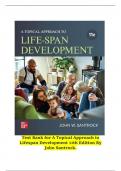
Test Bank for A Topical Approach to
Lifespan Development 11th Edition By
John Santrock.
,TestBankforATopicalApproachtoLifespan
V V V V V V V
VDevelopment11thEditionByJohnSantrock
V V V V V
, 1
Student: V
1. Life-span development covers the period from
V V V V V to .
A. birth; middle adulthood
V V
B. birth; old age V V
C. conception; early adulthood V V
D. conception; death V
2. Which of the following gives the BEST description of how life-span psychologists
V V V V V V V V V V V
describe "development"?
V V
A. growth and decline in skills and processes
V V V V V V
B. growth and decline in skills and processes from birth to adolescence
V V V V V V V V V V
C. growth in skills and processes
V V V V
D. decline in skills and processes
V V V V
3. Life-span development is the study of human development from conception to death. Historically,
V V V V V V V V V V V V
however, most of the focus has been on which age group?
V V V V V V V V V V V
A. children and adolescents V V
B. young adults V
C. middle-aged adults V
D. the elderly
V
4. The upper boundary of the human lifespan is
V V V V V V V years.
A. 105
B. 117
C. 122
D. 131
5. Although the maximum life span of humans has not changed, during the twentieth century, life
V V V V V V V V V V V V V V
expectancy
V
A. in the U.S. has increased by 15 years.
V V V V V V V
B. in the world has increased by 15 years.
V V V V V V V
C. in the U.S. has increased by 30 years.
V V V V V V V
D. in the world has increased by 30 years.
V V V V V V V
6. According to life-span development expert Paul Baltes, which age period dominates development?
V V V V V V V V V V V
A. infancy–childhood
B. adolescence–early adulthood V
C. middle-aged to late adulthood V V V
D. No single age group dominates development.
V V V V V
7. Diana feels that her human development course overemphasizes the changes that occur from birth to
V V V V V V V V V V V V V V
adolescence and disregards the developmental issues of adulthood. Which developmental perspective
V V V V V V V V V V V
would address her concerns?
V V V V
A. traditional
B. life-span
C. ethological
D. ecological
, 8. Some professors want to teach about the life-span approach in a Human Development course, whereas
V V V V V V V V V V V V V V
others want to keep the traditional developmental approach. They disagree about
V V V V V V V V V V V
A. the plasticity of development.
V V V
B. the multidimensional nature of development.
V V V V
C. whether development is lifelong. V V V
D. whether development is multidirectional.
V V V
9. Baltes describes development as multidirectional. What does this mean?
V V V V V V V V
A. Development is not dominated by any single age period. V V V V V V V V
B. Development consists of biological, cognitive, and socioemotional dimensions.
V V V V V V V
C. Development is characterized by both growth and decline. V V V V V V V
D Development needs psychologists, sociologists, biologists, and neuroscientists to work together in
V V V V V V V V V V V
. unlocking the mysteries of development.
V V V V V
10. Kathy believes that life-span development cannot be studied without considering biological, social, and
V V V V V V V V V V V V
cognitive aspects. Kathy believes that development is
V V V V V V V
A. lifelong.
B. multidirectional.
C. multidimensional.
D. plastic.
11. Researchers increasingly study the development of adulthood. This implies that development is
V V V V V V V V V V V
A. lifelong.
B. multidisciplinary.
C. multidirectional.
D. contextual.
12. Which of the following is NOT one of Paul Baltes' eight characteristics of the life-span perspective on
V V V V V V V V V V V V V V V V
development?
V
A. lifelong and multidirectional V V
B. multidimensional and plastic V V
C. contextual
D. unidirectional
13. Many older adults become wiser by calling on experiential knowledge, yet they perform poorly on
V V V V V V V V V V V V V V
cognitive speed tests. This is an example of how development is
V V V V V V V V V V V
A. plastic.
B. contextual.
C. multidimensional.
D. multidirectional.
14. Which of the following is an example of how development is contextual?
V V V V V V V V V V V
A. Reasoning ability is biologically finite and cannot be improved through retraining.
V V V V V V V V V V
B. Parents in the United States are more likely to rear their children to be independent than parents in
V V V V V V V V V V V V V V V V V
Japan. V
C. Older adults call on experience to guide their decision making.
V V V V V V V V V
D. Intelligence may be studied by looking at genetics, anthropology, sociology, and other disciplines.
V V V V V V V V V V V V
15. The capacity for acquiring second and third languages decreases after early childhood, whereas
V V V V V V V V V V V V
experiential wisdom increases with age. This is an example of how development is
V V V V V V V V V V V V V
A. lifelong.
B. multidisciplinary.
C. multidirectional.
D. contextual.
Lifespan Development 11th Edition By
John Santrock.
,TestBankforATopicalApproachtoLifespan
V V V V V V V
VDevelopment11thEditionByJohnSantrock
V V V V V
, 1
Student: V
1. Life-span development covers the period from
V V V V V to .
A. birth; middle adulthood
V V
B. birth; old age V V
C. conception; early adulthood V V
D. conception; death V
2. Which of the following gives the BEST description of how life-span psychologists
V V V V V V V V V V V
describe "development"?
V V
A. growth and decline in skills and processes
V V V V V V
B. growth and decline in skills and processes from birth to adolescence
V V V V V V V V V V
C. growth in skills and processes
V V V V
D. decline in skills and processes
V V V V
3. Life-span development is the study of human development from conception to death. Historically,
V V V V V V V V V V V V
however, most of the focus has been on which age group?
V V V V V V V V V V V
A. children and adolescents V V
B. young adults V
C. middle-aged adults V
D. the elderly
V
4. The upper boundary of the human lifespan is
V V V V V V V years.
A. 105
B. 117
C. 122
D. 131
5. Although the maximum life span of humans has not changed, during the twentieth century, life
V V V V V V V V V V V V V V
expectancy
V
A. in the U.S. has increased by 15 years.
V V V V V V V
B. in the world has increased by 15 years.
V V V V V V V
C. in the U.S. has increased by 30 years.
V V V V V V V
D. in the world has increased by 30 years.
V V V V V V V
6. According to life-span development expert Paul Baltes, which age period dominates development?
V V V V V V V V V V V
A. infancy–childhood
B. adolescence–early adulthood V
C. middle-aged to late adulthood V V V
D. No single age group dominates development.
V V V V V
7. Diana feels that her human development course overemphasizes the changes that occur from birth to
V V V V V V V V V V V V V V
adolescence and disregards the developmental issues of adulthood. Which developmental perspective
V V V V V V V V V V V
would address her concerns?
V V V V
A. traditional
B. life-span
C. ethological
D. ecological
, 8. Some professors want to teach about the life-span approach in a Human Development course, whereas
V V V V V V V V V V V V V V
others want to keep the traditional developmental approach. They disagree about
V V V V V V V V V V V
A. the plasticity of development.
V V V
B. the multidimensional nature of development.
V V V V
C. whether development is lifelong. V V V
D. whether development is multidirectional.
V V V
9. Baltes describes development as multidirectional. What does this mean?
V V V V V V V V
A. Development is not dominated by any single age period. V V V V V V V V
B. Development consists of biological, cognitive, and socioemotional dimensions.
V V V V V V V
C. Development is characterized by both growth and decline. V V V V V V V
D Development needs psychologists, sociologists, biologists, and neuroscientists to work together in
V V V V V V V V V V V
. unlocking the mysteries of development.
V V V V V
10. Kathy believes that life-span development cannot be studied without considering biological, social, and
V V V V V V V V V V V V
cognitive aspects. Kathy believes that development is
V V V V V V V
A. lifelong.
B. multidirectional.
C. multidimensional.
D. plastic.
11. Researchers increasingly study the development of adulthood. This implies that development is
V V V V V V V V V V V
A. lifelong.
B. multidisciplinary.
C. multidirectional.
D. contextual.
12. Which of the following is NOT one of Paul Baltes' eight characteristics of the life-span perspective on
V V V V V V V V V V V V V V V V
development?
V
A. lifelong and multidirectional V V
B. multidimensional and plastic V V
C. contextual
D. unidirectional
13. Many older adults become wiser by calling on experiential knowledge, yet they perform poorly on
V V V V V V V V V V V V V V
cognitive speed tests. This is an example of how development is
V V V V V V V V V V V
A. plastic.
B. contextual.
C. multidimensional.
D. multidirectional.
14. Which of the following is an example of how development is contextual?
V V V V V V V V V V V
A. Reasoning ability is biologically finite and cannot be improved through retraining.
V V V V V V V V V V
B. Parents in the United States are more likely to rear their children to be independent than parents in
V V V V V V V V V V V V V V V V V
Japan. V
C. Older adults call on experience to guide their decision making.
V V V V V V V V V
D. Intelligence may be studied by looking at genetics, anthropology, sociology, and other disciplines.
V V V V V V V V V V V V
15. The capacity for acquiring second and third languages decreases after early childhood, whereas
V V V V V V V V V V V V
experiential wisdom increases with age. This is an example of how development is
V V V V V V V V V V V V V
A. lifelong.
B. multidisciplinary.
C. multidirectional.
D. contextual.