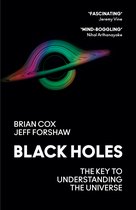
What was once a rather purely theoretical idea of black holes grew up into one of the most
interesting and studied astrophysical phenomena. Cox and Forshaw begin their book with
considering some historical roots of black hole theory. That concept first took the form of the
"dark stars" proposed by the 18th-century thinkers John Michell and Pierre-Simon Laplace, who
speculated that sufficiently large stars might retain light because of their enormous gravitational
pull. Since this really was not mathematically consistent, nor did it have observational
confirmation, it was an early precursor in the study of gravitational phenomena.
The modern notion of the Black Hole was first termed in the early twentieth century with the
general theory of relativity by Albert Einstein, which was advanced in 1915. Einstein
reconceptualized gravity as the curvature of spacetime created by mass and energy. It gave
physicist Karl Schwarzschild the opportunity to consider the solution of Einstein's equations,
using for the first time the concept of "event horizon," an imaginary surface around a black hole
beyond which return is impossible.
The authors have stressed the crucial role the developments in observational astronomy in the
20th century played. For example, the bending of starlight around eclipses, events actually
observed, and even more lately the detection of gravitational waves, all form part of the
empirical evidence supporting Einstein's predictions. These discoveries transformed black holes
from speculative objects into confirmed cosmic entities.
Cox and Forshaw introduce the salient features of a black hole in discussion by first turning
one's attention to that which is taken to be most singular about the objects in question. First, the
authors bring forth this notion of the singularity-the middle of the black hole where the density of
the matter is infinite and the laws of physics, as known, no longer apply. The event horizon sets
the scene around the singularity beyond which there can be no return. According to the authors,
a black hole is so greatly gravitational in nature that spacetime gets deformed by it, going to
such an extent that even light could not outrun the grasp of a black hole.
It has been known that black holes do indeed form through gravitational collapse, particularly of
the most-massive kinds of stars.
It is only when the star has burnt through its nuclear fuel that it can no longer support itself
against the pull of gravity, and a collapse might be initiated, eventually leading to the formation
of a stellar-mass black hole. Supermassive black holes, on the other hand, have been
discovered residing at the centers of galaxies and form a completely different origin in many
ways.
interesting and studied astrophysical phenomena. Cox and Forshaw begin their book with
considering some historical roots of black hole theory. That concept first took the form of the
"dark stars" proposed by the 18th-century thinkers John Michell and Pierre-Simon Laplace, who
speculated that sufficiently large stars might retain light because of their enormous gravitational
pull. Since this really was not mathematically consistent, nor did it have observational
confirmation, it was an early precursor in the study of gravitational phenomena.
The modern notion of the Black Hole was first termed in the early twentieth century with the
general theory of relativity by Albert Einstein, which was advanced in 1915. Einstein
reconceptualized gravity as the curvature of spacetime created by mass and energy. It gave
physicist Karl Schwarzschild the opportunity to consider the solution of Einstein's equations,
using for the first time the concept of "event horizon," an imaginary surface around a black hole
beyond which return is impossible.
The authors have stressed the crucial role the developments in observational astronomy in the
20th century played. For example, the bending of starlight around eclipses, events actually
observed, and even more lately the detection of gravitational waves, all form part of the
empirical evidence supporting Einstein's predictions. These discoveries transformed black holes
from speculative objects into confirmed cosmic entities.
Cox and Forshaw introduce the salient features of a black hole in discussion by first turning
one's attention to that which is taken to be most singular about the objects in question. First, the
authors bring forth this notion of the singularity-the middle of the black hole where the density of
the matter is infinite and the laws of physics, as known, no longer apply. The event horizon sets
the scene around the singularity beyond which there can be no return. According to the authors,
a black hole is so greatly gravitational in nature that spacetime gets deformed by it, going to
such an extent that even light could not outrun the grasp of a black hole.
It has been known that black holes do indeed form through gravitational collapse, particularly of
the most-massive kinds of stars.
It is only when the star has burnt through its nuclear fuel that it can no longer support itself
against the pull of gravity, and a collapse might be initiated, eventually leading to the formation
of a stellar-mass black hole. Supermassive black holes, on the other hand, have been
discovered residing at the centers of galaxies and form a completely different origin in many
ways.