Week 1/2
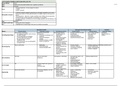
What we talk about
Study Topic Notes
Dillard, Primary & secondary Primary vs secondary goals
Segrin & goals in persuasive
Primary goal ‘influence’ Secondary goals
Harden attempts
(1989) Instigate, provides initial push for Shapes and constrains behaviours whose
influence attempt overriding purpose is to make influence
“I was concerned with getting what i attempt
want”, “important for me to convince
the person”
*influence goals are secondary goals which have become temporarily dominant
Types of secondary goals
Identity Concerned with moral standards
Interaction Concerned with social appropriateness ‘good impression’
Personal resource Concerned with personal assets/rewards (my own safety)
Relational Concerned with relational assets/rewards (potentially damage relationship to get what i want)
resource
Arousal Maintaining one’s idiosyncratic arousal levels (avoiding things that may make one nervous)
management
Compliance gaining → individuals attempt to influence one another to achieve their own ends
G-P-A sequence → production of influence messages = goal of altering target’s behavior → causes planning → guides actions of
, source
Exchange-theory approach (1967) → goals which sources consider when making an influence attempt
Conclusion
-people are aware of and concerned with these goals during interpersonal influence attempt
Greene Action assembly “Human communicative behaviour is at once novel, yet patterned and repetitive”
(1984) theory (cognitive
approach) Cognitive element of communication
- humans are social actors, the cognitive system has developed to facilitate action
- social behaviour of persons-composed of a repertoire of words, topics, themes
,- language = an enactment of routinized sequences
- AKA: All behaviours are novel compositions of already established properties
Building a model of the communicative output system (cognitivism approach)
*the aim of cognitivism is not to build THE model of the mind, but a SUFFICIENT model
The mind: composed of conceptual vs. procedural knowledge
Conceptual Procedural
Knowledge ‘that’ Knowledge ‘how’ - learned to do
Procedural knowledge assertions
(1) Individuals use procedural memory by relying on past action outcome relations that guide behavior
(2) Elements in procedural memory are stored in modular units (large number of elemental units: SCHEMA’S )
→ because if it’d be organised in complex units this would require immense storage requirements
→ because this way allows for easier accommodation of new information + easier decomposition
Steps of producing communicative behaviour
1. GOAL - one carries a goal, eg: to make a favorable impression
2. SELECTION - process involves activation of procedural knowledge
3. ACTIVATION - happens when records exceed threshold value
4. ACTIVATION-CONDITIONS - for the elements: desired outcome and initial conditions matching present conditions: eg: past
favourable impressions, among uni students
5. FORMING A COHERENT OUTPUT REPRESENTATION ‘task to be taken’ - at any time many procedural records can be activated,
task of the communicator is integrate procedural records with activated knowledge from conceptual store to form a coherent output
, representation in response to goals/environmental conditions
Goldsmith Taxonomy of speech Aim: through examining types of speech events reported most commonly in each relationship type, we can begin to see how broad
& Baxter events differences in relationships are embodied in different communications
(1996)
Taxonomy of speech events
(1) gossip → informal talk
(2) making plans → purposive, less formal but goal-directed talk
(3) joking around → informal talk
(4) catching up → informal talk
(5) small talk → superficial talk
(6) recapping day’s events → informal talk
“social/personal relationships are constituted in the mundane, everyday interaction between 2 partners”
Speech events/communication
- speech= the basic building block of communication, it is a jointly enacted communication episode
- Currently exists an overemphasis on goal-directed function of communication, alternatively we can look at as being an
embodiment of a particular kind of relationship
- eg: small talk: “ties of union are created in a mere exchange of words”
Bodies of research that are relevant
Diary studies → respondents record specific information about interactions occurring in daily life
Studies of social situations →Discerning between situations, which involve many features,and speech events, which is one type of
situation
Cognitive memory structures research → focus on cognitive representation of action. MOP’s provide individuals with cognitive
structures for various activities
Ethnographic studies → focus on cultural premises associated with talks,m and cultural interpretations of meanings of speech events
STUDY 4
- 74 women, 44 men (aged 18-47)
- diary record for 2 weeks of all interactions with different relationship types
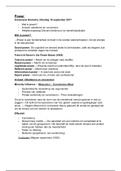
What we talk about
Study Topic Notes
Dillard, Primary & secondary Primary vs secondary goals
Segrin & goals in persuasive
Primary goal ‘influence’ Secondary goals
Harden attempts
(1989) Instigate, provides initial push for Shapes and constrains behaviours whose
influence attempt overriding purpose is to make influence
“I was concerned with getting what i attempt
want”, “important for me to convince
the person”
*influence goals are secondary goals which have become temporarily dominant
Types of secondary goals
Identity Concerned with moral standards
Interaction Concerned with social appropriateness ‘good impression’
Personal resource Concerned with personal assets/rewards (my own safety)
Relational Concerned with relational assets/rewards (potentially damage relationship to get what i want)
resource
Arousal Maintaining one’s idiosyncratic arousal levels (avoiding things that may make one nervous)
management
Compliance gaining → individuals attempt to influence one another to achieve their own ends
G-P-A sequence → production of influence messages = goal of altering target’s behavior → causes planning → guides actions of
, source
Exchange-theory approach (1967) → goals which sources consider when making an influence attempt
Conclusion
-people are aware of and concerned with these goals during interpersonal influence attempt
Greene Action assembly “Human communicative behaviour is at once novel, yet patterned and repetitive”
(1984) theory (cognitive
approach) Cognitive element of communication
- humans are social actors, the cognitive system has developed to facilitate action
- social behaviour of persons-composed of a repertoire of words, topics, themes
,- language = an enactment of routinized sequences
- AKA: All behaviours are novel compositions of already established properties
Building a model of the communicative output system (cognitivism approach)
*the aim of cognitivism is not to build THE model of the mind, but a SUFFICIENT model
The mind: composed of conceptual vs. procedural knowledge
Conceptual Procedural
Knowledge ‘that’ Knowledge ‘how’ - learned to do
Procedural knowledge assertions
(1) Individuals use procedural memory by relying on past action outcome relations that guide behavior
(2) Elements in procedural memory are stored in modular units (large number of elemental units: SCHEMA’S )
→ because if it’d be organised in complex units this would require immense storage requirements
→ because this way allows for easier accommodation of new information + easier decomposition
Steps of producing communicative behaviour
1. GOAL - one carries a goal, eg: to make a favorable impression
2. SELECTION - process involves activation of procedural knowledge
3. ACTIVATION - happens when records exceed threshold value
4. ACTIVATION-CONDITIONS - for the elements: desired outcome and initial conditions matching present conditions: eg: past
favourable impressions, among uni students
5. FORMING A COHERENT OUTPUT REPRESENTATION ‘task to be taken’ - at any time many procedural records can be activated,
task of the communicator is integrate procedural records with activated knowledge from conceptual store to form a coherent output
, representation in response to goals/environmental conditions
Goldsmith Taxonomy of speech Aim: through examining types of speech events reported most commonly in each relationship type, we can begin to see how broad
& Baxter events differences in relationships are embodied in different communications
(1996)
Taxonomy of speech events
(1) gossip → informal talk
(2) making plans → purposive, less formal but goal-directed talk
(3) joking around → informal talk
(4) catching up → informal talk
(5) small talk → superficial talk
(6) recapping day’s events → informal talk
“social/personal relationships are constituted in the mundane, everyday interaction between 2 partners”
Speech events/communication
- speech= the basic building block of communication, it is a jointly enacted communication episode
- Currently exists an overemphasis on goal-directed function of communication, alternatively we can look at as being an
embodiment of a particular kind of relationship
- eg: small talk: “ties of union are created in a mere exchange of words”
Bodies of research that are relevant
Diary studies → respondents record specific information about interactions occurring in daily life
Studies of social situations →Discerning between situations, which involve many features,and speech events, which is one type of
situation
Cognitive memory structures research → focus on cognitive representation of action. MOP’s provide individuals with cognitive
structures for various activities
Ethnographic studies → focus on cultural premises associated with talks,m and cultural interpretations of meanings of speech events
STUDY 4
- 74 women, 44 men (aged 18-47)
- diary record for 2 weeks of all interactions with different relationship types