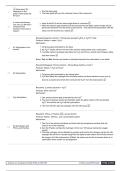
What does "M"
represent on this M is the base peak
1.1
graph? What does this The base peak tells you the molecular mass of the compound
tell you?
In mass soectrimetry
when M and M+2 are the same height there is a bromine
how can you tell that a
When the electron gets booted from the bromine then the alpha carbon breaks off and
2.1 compound has
gives both electrons from the bond to the bromine. - this leaves the hydrocarbon with the
bromine? How does it
cleave? cation and the bromine as a radical
Reactants/reagents: Alcohol + Strong base [usually H2SO4 or H3O+] / Heat
Products: Alkene + water / H3O+
Mechanism:
E1 Dehydration of an 1. OH group gets protonated by the base
3.1
alcohol 2. the H2O+ breaks off from the rest of the alcohol making water and a carbocation
3. the Beta carbon's hydrogen gets taken by H2O and forms a double bond between alpha
and beta carbon
Notes: Tert and Sec alcohols are easier to dehydrate because the carbocation is ore stable
Reactants/Reagents: Primary Alcohol + Strong Base [H2SO4 or H3O+]
Products: Alkane + H2O and H3O+
Mechanism:
4.1 E2 Dehydration
1. OH group gets protonated by the strong base
2. H2O then takes the hydrogen from the beta carbon and those electrons move over to
become a double bond which then removes the H2O+ from the hydrocarbon
Reactants: 2 primary alcohols + H3O+
Products: Ether and H3O+
Mechanism:
5.1 SN2 dehydration 1. One primary alcohol gets protonated by the H3O+
2. The second primary alcohol will backside attack the alpha carbon of the protonated
H2O+ this will kick the H2O off the hydrocarbon
3. The H2O will then take the hydrogen from the OH group
Reactants: POCl3, 2 Pryidine ( ), and an Alcohol
Products: Alkene, -OPOCl2 , and 2 protonated pryidine
Mechanism:
1. The OH of the alcohol will attack and bond with the phosphorus and then that will
E2 dehydration with remove one of the chlorines
6.1 POCl3 and Pyridine 2. then the Pryidine will take the hydrogen of the now +OH group making the oxygen
neutral
3. The beta hydrogen will be attacked by pyridine and bond to the nitrogen just like the OH
hydrogen the will form a double bond from the alpha to beta carbon and will also remove
the oxygen off of the hydrocarbon Note: the reason we do this is because there is no
carbocation which means no rearangement
Explore our developer-friendly HTML to PDF API Printed using PDFCrowd HTML to PDF
, Reactants: Secondary or Primary Alcohol + H2CrO4
Products: Keytone (if sec-alcohol) or Carboxylic acid (if primary alcohol)
Mechanism:
1. The OH from the sec or primary alcohol will attach onto the Cr of the Chromic Acid and
one of the double bond oxygens on the chromic acid will attach to a hydrogen from the
acidic solution
2. the base will take a hydrogen from the alpha carbon and the bon will create a double
Chromic Acid bond ftom the alpha carbon to the oxygenthen the acid will take the hydrogen from the
7.1
Oxidation
double bonded oxygen
Notes:
1. this does not work on tert alcohols
2. when thwe starting material is an primary alcohol the reaction will happen twice which is
what makes the carboxylic acid
Reactants: Primary or secondary alcohol + dimethyl sulfoxide (CH3)2SO, oxalyl chloride
(COCl)2 and triethylamine N(CH2CH3)3
However: Dimethylchlorosulfonium ion ( )is the actual oxidizing agent
Products: Aldehyde (if primary alcohol) and Ketone (if secondary alcohol)
Mechanism:
1. The OH of the alcohol will attach and bond to the S+ which then kicks out the Cl making
8.1 Swern Oxidation Cl-
2. The Cl- then grabs the hydrogen from the OH and neutralizes the oxygen
3. then triethylamine will grab the hydrogen from on of the CH3 connected to the Sulfer
atom which makes the carbon an anion
4. the anion carbon then grabs a hydrogen from the alpha carbon, the bond then becomes
a double bond between the alpha carbon and the oxygen, then this kicks out the sulfur
ion
Reactants: Primary or secondary alcohol + [NaOCl + CH3COOH, 0oC]= HOCl
Products: Aldehyde (if primary alcohol) or Ketone (if secondary alcohol)
Mechanism:
Hypochlorous Acid as 1. HOCl is formed by NaOCl + CH3COOH, 0oC
9.1 the oxidatizing 2. the OH of the alcohol attachs the Hydrogen of HOCl and this makes the oxygen H2O+ ,
Reagent
and -OCl
3. then the OCl attaches to the same carbon as the H2O+ and then kicks off the H2O+
4. The now netural H2O takes the last hydrogen deom the alpha carbon that bond then
becomes a double bond, and boots off the chlorine
Dess–Martin periodinane
(DMP) oxidation - Chemistry
Reagents: Primary or secondary alcohol + DMP (Steps ) + CH2Cl2
Products: Aldehyde (if primary alcohol) or Ketone (if secondary alcohol)
Mechanism:
Dess-Martin 1. The OH of the alcohol attacks and bonds to the Iodine of DMP, this will kick off one of
10.1
Oxidation the AcO ( )
2. then the bond between Iodine and an oxygen from a AcO will break, the double bonded
oxygen will also break and attack one of the hydrogens from the Alcohol, this bond will
become a double bond between the oxygen and the carboxyl carbon, then the bond
between oxygen and iodine will breamk
3. this will leave an aldehyde or ketone
Explore our developer-friendly HTML to PDF API Printed using PDFCrowd HTML to PDF
, Both:
Reagents: Ether, HBr/HI, and heat
Products: a primary alcohol + an alkyl halide (Br or I)
SN1
Mechanism:
1. the ether oxygen attacks the hydrogen bonded to the halogen and this makes an anion
of the halogen
2. then the more subsituted hydrocarbon side will break off from the oxygen
Substitution Rxn of 3. the detached hydrocarbon is now a carbocation which the anion of the halogen will
11.1
Ethers SN1 vs SN2 attack and bond with
SN2
Mechanism:
1. The ether oxygen attacks the hydrogen bonfded to the halogen and this makes an anion
of the halogen
2. the anion halogen then attacks the terminal carbon next to the ether oxygen and this
removes this subsitutent from the oxygen
Reagents: Expoxide + an acid (usually H-X, H2O, or CH3OH)
Products: and alcohol with the deprotonated acid on the adjacent carbon
Mechanism:
Nucleophilic
12.1 subtitution rxns of 1. the oxygen of the epoxide is protonated by the acid and the rest of the acid breaks off
protonated epoxides 2. Due to acidic conditions (the epoxide was protonated) the halogen will attack the more
subsituted carbon of the expoxide and then this will break the carbon oxygen bond of
that carbon opening up the ring Note: this is a back side attack so the
Reactants: Epoxide + a base (usually CH3O-)
Products: and alcohol with the base attached to the adjacent carbon
Mechanism:
Nucleophilic 1. The base attacks the less subsituted side (because the epoxide is in neutral or basic
13.1 subsitution of an conditions) and this will break the carbon oxygen bond opening up the ring
unprotonated epoxide
2. then the oxygen from the epoxide will pick up the hydrogen from the added acid
Notes: epoxides can also bond with cyanide ions or amines which can be usuful for synthesis
Reactants: Two Primary Alcohols
Products: Ether + H3O+
Mechanism:
SN2 Primary Alcohol 1. One of the primary alcohols will get protonated
14.1
reaction 2. The non protonated OH of one Alcohol will attack the alpha carbon of the other alcohol
and bond to it forcing the water to break off
3. the broken off water will then deprotonate the oxygen
Notes: the Elimination reaction is favored due to the high heat required
Reactants: Alcohol + Phosphorus Oxychloride ( ) + Pyridine ( )
Products: Alkene + -OPOCl2 + 2 protonated Pyridine
Mechanism:
Dehydration Via 1. The OH of the alcohol will attack and bond to the phosphorus and this will kick off one of
15.1 Phosphorus the chlorines
Oxychloride 2. Pyridine will then attack the hydrogen from the orginial alcohol which will make the
oxygen neutral
3. A second pyridine will then take a hydrogen from the beta carbon and this will become
the double bond
Notes: no carbocation means no rearrangement
Explore our developer-friendly HTML to PDF API Printed using PDFCrowd HTML to PDF
represent on this M is the base peak
1.1
graph? What does this The base peak tells you the molecular mass of the compound
tell you?
In mass soectrimetry
when M and M+2 are the same height there is a bromine
how can you tell that a
When the electron gets booted from the bromine then the alpha carbon breaks off and
2.1 compound has
gives both electrons from the bond to the bromine. - this leaves the hydrocarbon with the
bromine? How does it
cleave? cation and the bromine as a radical
Reactants/reagents: Alcohol + Strong base [usually H2SO4 or H3O+] / Heat
Products: Alkene + water / H3O+
Mechanism:
E1 Dehydration of an 1. OH group gets protonated by the base
3.1
alcohol 2. the H2O+ breaks off from the rest of the alcohol making water and a carbocation
3. the Beta carbon's hydrogen gets taken by H2O and forms a double bond between alpha
and beta carbon
Notes: Tert and Sec alcohols are easier to dehydrate because the carbocation is ore stable
Reactants/Reagents: Primary Alcohol + Strong Base [H2SO4 or H3O+]
Products: Alkane + H2O and H3O+
Mechanism:
4.1 E2 Dehydration
1. OH group gets protonated by the strong base
2. H2O then takes the hydrogen from the beta carbon and those electrons move over to
become a double bond which then removes the H2O+ from the hydrocarbon
Reactants: 2 primary alcohols + H3O+
Products: Ether and H3O+
Mechanism:
5.1 SN2 dehydration 1. One primary alcohol gets protonated by the H3O+
2. The second primary alcohol will backside attack the alpha carbon of the protonated
H2O+ this will kick the H2O off the hydrocarbon
3. The H2O will then take the hydrogen from the OH group
Reactants: POCl3, 2 Pryidine ( ), and an Alcohol
Products: Alkene, -OPOCl2 , and 2 protonated pryidine
Mechanism:
1. The OH of the alcohol will attack and bond with the phosphorus and then that will
E2 dehydration with remove one of the chlorines
6.1 POCl3 and Pyridine 2. then the Pryidine will take the hydrogen of the now +OH group making the oxygen
neutral
3. The beta hydrogen will be attacked by pyridine and bond to the nitrogen just like the OH
hydrogen the will form a double bond from the alpha to beta carbon and will also remove
the oxygen off of the hydrocarbon Note: the reason we do this is because there is no
carbocation which means no rearangement
Explore our developer-friendly HTML to PDF API Printed using PDFCrowd HTML to PDF
, Reactants: Secondary or Primary Alcohol + H2CrO4
Products: Keytone (if sec-alcohol) or Carboxylic acid (if primary alcohol)
Mechanism:
1. The OH from the sec or primary alcohol will attach onto the Cr of the Chromic Acid and
one of the double bond oxygens on the chromic acid will attach to a hydrogen from the
acidic solution
2. the base will take a hydrogen from the alpha carbon and the bon will create a double
Chromic Acid bond ftom the alpha carbon to the oxygenthen the acid will take the hydrogen from the
7.1
Oxidation
double bonded oxygen
Notes:
1. this does not work on tert alcohols
2. when thwe starting material is an primary alcohol the reaction will happen twice which is
what makes the carboxylic acid
Reactants: Primary or secondary alcohol + dimethyl sulfoxide (CH3)2SO, oxalyl chloride
(COCl)2 and triethylamine N(CH2CH3)3
However: Dimethylchlorosulfonium ion ( )is the actual oxidizing agent
Products: Aldehyde (if primary alcohol) and Ketone (if secondary alcohol)
Mechanism:
1. The OH of the alcohol will attach and bond to the S+ which then kicks out the Cl making
8.1 Swern Oxidation Cl-
2. The Cl- then grabs the hydrogen from the OH and neutralizes the oxygen
3. then triethylamine will grab the hydrogen from on of the CH3 connected to the Sulfer
atom which makes the carbon an anion
4. the anion carbon then grabs a hydrogen from the alpha carbon, the bond then becomes
a double bond between the alpha carbon and the oxygen, then this kicks out the sulfur
ion
Reactants: Primary or secondary alcohol + [NaOCl + CH3COOH, 0oC]= HOCl
Products: Aldehyde (if primary alcohol) or Ketone (if secondary alcohol)
Mechanism:
Hypochlorous Acid as 1. HOCl is formed by NaOCl + CH3COOH, 0oC
9.1 the oxidatizing 2. the OH of the alcohol attachs the Hydrogen of HOCl and this makes the oxygen H2O+ ,
Reagent
and -OCl
3. then the OCl attaches to the same carbon as the H2O+ and then kicks off the H2O+
4. The now netural H2O takes the last hydrogen deom the alpha carbon that bond then
becomes a double bond, and boots off the chlorine
Dess–Martin periodinane
(DMP) oxidation - Chemistry
Reagents: Primary or secondary alcohol + DMP (Steps ) + CH2Cl2
Products: Aldehyde (if primary alcohol) or Ketone (if secondary alcohol)
Mechanism:
Dess-Martin 1. The OH of the alcohol attacks and bonds to the Iodine of DMP, this will kick off one of
10.1
Oxidation the AcO ( )
2. then the bond between Iodine and an oxygen from a AcO will break, the double bonded
oxygen will also break and attack one of the hydrogens from the Alcohol, this bond will
become a double bond between the oxygen and the carboxyl carbon, then the bond
between oxygen and iodine will breamk
3. this will leave an aldehyde or ketone
Explore our developer-friendly HTML to PDF API Printed using PDFCrowd HTML to PDF
, Both:
Reagents: Ether, HBr/HI, and heat
Products: a primary alcohol + an alkyl halide (Br or I)
SN1
Mechanism:
1. the ether oxygen attacks the hydrogen bonded to the halogen and this makes an anion
of the halogen
2. then the more subsituted hydrocarbon side will break off from the oxygen
Substitution Rxn of 3. the detached hydrocarbon is now a carbocation which the anion of the halogen will
11.1
Ethers SN1 vs SN2 attack and bond with
SN2
Mechanism:
1. The ether oxygen attacks the hydrogen bonfded to the halogen and this makes an anion
of the halogen
2. the anion halogen then attacks the terminal carbon next to the ether oxygen and this
removes this subsitutent from the oxygen
Reagents: Expoxide + an acid (usually H-X, H2O, or CH3OH)
Products: and alcohol with the deprotonated acid on the adjacent carbon
Mechanism:
Nucleophilic
12.1 subtitution rxns of 1. the oxygen of the epoxide is protonated by the acid and the rest of the acid breaks off
protonated epoxides 2. Due to acidic conditions (the epoxide was protonated) the halogen will attack the more
subsituted carbon of the expoxide and then this will break the carbon oxygen bond of
that carbon opening up the ring Note: this is a back side attack so the
Reactants: Epoxide + a base (usually CH3O-)
Products: and alcohol with the base attached to the adjacent carbon
Mechanism:
Nucleophilic 1. The base attacks the less subsituted side (because the epoxide is in neutral or basic
13.1 subsitution of an conditions) and this will break the carbon oxygen bond opening up the ring
unprotonated epoxide
2. then the oxygen from the epoxide will pick up the hydrogen from the added acid
Notes: epoxides can also bond with cyanide ions or amines which can be usuful for synthesis
Reactants: Two Primary Alcohols
Products: Ether + H3O+
Mechanism:
SN2 Primary Alcohol 1. One of the primary alcohols will get protonated
14.1
reaction 2. The non protonated OH of one Alcohol will attack the alpha carbon of the other alcohol
and bond to it forcing the water to break off
3. the broken off water will then deprotonate the oxygen
Notes: the Elimination reaction is favored due to the high heat required
Reactants: Alcohol + Phosphorus Oxychloride ( ) + Pyridine ( )
Products: Alkene + -OPOCl2 + 2 protonated Pyridine
Mechanism:
Dehydration Via 1. The OH of the alcohol will attack and bond to the phosphorus and this will kick off one of
15.1 Phosphorus the chlorines
Oxychloride 2. Pyridine will then attack the hydrogen from the orginial alcohol which will make the
oxygen neutral
3. A second pyridine will then take a hydrogen from the beta carbon and this will become
the double bond
Notes: no carbocation means no rearrangement
Explore our developer-friendly HTML to PDF API Printed using PDFCrowd HTML to PDF