The EU:
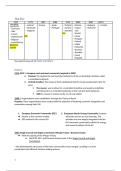
1952 1973 1981 1986 1995 2004 2007 2013
Founding - Ireland Greece - Spain - Finland - Estonia - Bulgaria - Croatia
members:
- Germany - Denmark - Portugal - Austria - Cyprus - Romania
- Italy - England - Sweden (not
- France FAS North)
- Netherlands IDE - Latvia
- Belgium - Hungary
- Luxembourg - Poland
BENELUX - Malta
GEFRIT - Lithuania
- Slovenia
- Slovakia
- Czech
Republic
You need to know all 28 state members:
History
1952: ECSC = European coal and steel community (expired in 2002)
o Purpose: To regulate the coal and steel industries of the six founding members under
a centralized authority.
o Limited duration: The treaty of Paris established that the treaty would expire after 50
years.
The reason: was to allow for a controlled transition and avoid an indefinite
commitment to a centralized authority in the coal and steel industries.
AND no reason to extend as the era of coal ended.
1958: 2 Organizations were established: through the Treaty of Rome
Purpose: These organizations were created with the objective of fostering economic integration and
cooperation among their MS.
1. European Economic Community (EEC) 2. European Atomic Energy Community Euratom
Known as the common market still exists but has no real meaning. The
EEC evolved in the current EU activities are now largely integrated into the
EU framework, particularly within the energy
and research policies of the EU
1967: Single Council and Single Commission (Merger treaty = Brussels treaty)
With the signing of the Merger Treaty,
o the ECSC, EEC, and Euratom became part of the Single Council and Single
Commission.
= the administrative structures of the three communities were merged, resulting in a more
coordinated and efficient decision-making process
1
,1968: The Customs Union
abolishing all customs between the MS, introducing the common customs tariff for
outsiders
The members countries also established a common external trade policy
1971: Community’s Own Resources (a concept within the framework of European communities)
= financial resources that EU generates to fund its activities and programs.
Ensures a stable and independent source of funding for its operations.
1973: First Enlargement Round (UK, Denmark, Ireland)
France had a significant number of colonies that could be integrated into the EU as overseas
territories, the British colonies were generally more independent and self-governing. This
made it more challenging to reunite them as part of the EU.
1979: Introduction of Direct elections of European Parliament
Citizens of EU MS could directly vote for their own representatives, = Members of the
European Parliament (MEPs)
Before: The MEP were members appointed by national governments
The role of MEP: consultive
The seats in the European Parliament were allocated to MS based on their population size.
= larger members had more seats compared to smaller MS.
o In some cases, members divided their allocated seats into constituencies = a more
localized representation within the EP
MEPs were grouped based on their political affiliations
o This allowed for MEPs from other MS to work together and form alliances within the
European Parliament.
1981: Greece joins
It joined late because it was a military dictatorship
1985: 2 events took place:
1. Session of Greenland (autonomous region of Denmark)
Greenland had joined the European Communities as a part of Denmark when Denmark
became a member in 1973. However, Greenland decided to leave the Communities
2. Schengen Agreement (signing)
Signed in 1985, enacted in 1995
is an agreement between European countries, which established a free movement zone.
o The agreement allows for passport-free travel between the participating countries.
22 of 28 EU MS: The countries not currently part of Schengen are Bulgaria, Romania,
Croatia, Cyprus, the United Kingdom, and Ireland.
4 non-EU (just European countries): Switzerland, Iceland, Liechtenstein and Norway.
3 European states: Monaco, San Marino, and Vatican City
IMPORTANT:
The Schengen visa allows individuals to travel within the Schengen Area, but it does not grant
working permits or override specific immigration requirements of individual countries.
2
, 1986: 3 events took place
1. Spain and Portugal join the Eu
Spain and Portugal joined later because, they were transitioning from dictatorships to
democratic systems.
2. Single European Act
Aimed to complete the Internal Market without borders:
o Ensures free movement of services, goods, people and capital
o Also allowed to trade and do business freely by removing bureaucratic and technical
barriers
3. Introduction of the Qualified Majority Voting in The Council:
o requires the support of at least 55% of MS, representing at least 65% of the EU
population.
o Aimed to strengthen the role of European Parliament:
giving it more influence in the decision-making process of the
European Community
MEPs gained more authority in shaping legislation and policies.
1992: TEU = Treaty of Maastricht is signed
1993: 2 important developments in the EU
1. Launch of the European Single market
PURPOSE: to create a unified economic space among the MS
o It aimed to remove barriers to trade, and the movement of goods & services, capital,
and people.
2. The Treaty of the European Union (= Maastricht) introduced several key elements to
the European Union:
Economic and Monetary Union (EMU):
o The EMU involved: the coordination of economic and fiscal policies among MS
o the establishment of a common monetary policy => the euro.
o Currently, 19 out of the 28 EU MS share the euro as their currency.
European Community (EC) and Euratom:
o EC = an institution of the European Union responsible for proposing legislation,
implementing decisions, upholding EU treaties, and managing day-to-day EU affairs.
o Euratom = focuses on nuclear business and energy cooperation
Common Foreign and Security Policy (CFSP):
o An agreed foreign policy in the areas of : Security, defense diplomacy, and actions.
o It deals with specific domains of the EU's external relations, including trade and
commercial policy, funding to third countries, etc.
Co-operation on Justice and Home Affairs(JHA): is a configuration of the Council of the
European Union
o Composed of the justice and home affairs ministers (28).
o Develops cooperation and common policies on various cross-border issues, aiming to
establish an EU-wide area of justice.
EU-Citizenship
o It’s an addition to national citizenship.
o EU citizenship grants rights, freedoms and legal protections to all individuals who
hold it, including the right to move and reside freely within the EU.
Principle of Subsidiarity:
o The European Union should only intervene in matters that cannot be effectively
addressed by individual MS.
o It ensures that actions and decision-making occur at the most appropriate level, at
EU, national, regional, or local level.
Introduction of the co-decision procedure:
o Parliament + Council of the European Union => equal decision-making power
3
1952 1973 1981 1986 1995 2004 2007 2013
Founding - Ireland Greece - Spain - Finland - Estonia - Bulgaria - Croatia
members:
- Germany - Denmark - Portugal - Austria - Cyprus - Romania
- Italy - England - Sweden (not
- France FAS North)
- Netherlands IDE - Latvia
- Belgium - Hungary
- Luxembourg - Poland
BENELUX - Malta
GEFRIT - Lithuania
- Slovenia
- Slovakia
- Czech
Republic
You need to know all 28 state members:
History
1952: ECSC = European coal and steel community (expired in 2002)
o Purpose: To regulate the coal and steel industries of the six founding members under
a centralized authority.
o Limited duration: The treaty of Paris established that the treaty would expire after 50
years.
The reason: was to allow for a controlled transition and avoid an indefinite
commitment to a centralized authority in the coal and steel industries.
AND no reason to extend as the era of coal ended.
1958: 2 Organizations were established: through the Treaty of Rome
Purpose: These organizations were created with the objective of fostering economic integration and
cooperation among their MS.
1. European Economic Community (EEC) 2. European Atomic Energy Community Euratom
Known as the common market still exists but has no real meaning. The
EEC evolved in the current EU activities are now largely integrated into the
EU framework, particularly within the energy
and research policies of the EU
1967: Single Council and Single Commission (Merger treaty = Brussels treaty)
With the signing of the Merger Treaty,
o the ECSC, EEC, and Euratom became part of the Single Council and Single
Commission.
= the administrative structures of the three communities were merged, resulting in a more
coordinated and efficient decision-making process
1
,1968: The Customs Union
abolishing all customs between the MS, introducing the common customs tariff for
outsiders
The members countries also established a common external trade policy
1971: Community’s Own Resources (a concept within the framework of European communities)
= financial resources that EU generates to fund its activities and programs.
Ensures a stable and independent source of funding for its operations.
1973: First Enlargement Round (UK, Denmark, Ireland)
France had a significant number of colonies that could be integrated into the EU as overseas
territories, the British colonies were generally more independent and self-governing. This
made it more challenging to reunite them as part of the EU.
1979: Introduction of Direct elections of European Parliament
Citizens of EU MS could directly vote for their own representatives, = Members of the
European Parliament (MEPs)
Before: The MEP were members appointed by national governments
The role of MEP: consultive
The seats in the European Parliament were allocated to MS based on their population size.
= larger members had more seats compared to smaller MS.
o In some cases, members divided their allocated seats into constituencies = a more
localized representation within the EP
MEPs were grouped based on their political affiliations
o This allowed for MEPs from other MS to work together and form alliances within the
European Parliament.
1981: Greece joins
It joined late because it was a military dictatorship
1985: 2 events took place:
1. Session of Greenland (autonomous region of Denmark)
Greenland had joined the European Communities as a part of Denmark when Denmark
became a member in 1973. However, Greenland decided to leave the Communities
2. Schengen Agreement (signing)
Signed in 1985, enacted in 1995
is an agreement between European countries, which established a free movement zone.
o The agreement allows for passport-free travel between the participating countries.
22 of 28 EU MS: The countries not currently part of Schengen are Bulgaria, Romania,
Croatia, Cyprus, the United Kingdom, and Ireland.
4 non-EU (just European countries): Switzerland, Iceland, Liechtenstein and Norway.
3 European states: Monaco, San Marino, and Vatican City
IMPORTANT:
The Schengen visa allows individuals to travel within the Schengen Area, but it does not grant
working permits or override specific immigration requirements of individual countries.
2
, 1986: 3 events took place
1. Spain and Portugal join the Eu
Spain and Portugal joined later because, they were transitioning from dictatorships to
democratic systems.
2. Single European Act
Aimed to complete the Internal Market without borders:
o Ensures free movement of services, goods, people and capital
o Also allowed to trade and do business freely by removing bureaucratic and technical
barriers
3. Introduction of the Qualified Majority Voting in The Council:
o requires the support of at least 55% of MS, representing at least 65% of the EU
population.
o Aimed to strengthen the role of European Parliament:
giving it more influence in the decision-making process of the
European Community
MEPs gained more authority in shaping legislation and policies.
1992: TEU = Treaty of Maastricht is signed
1993: 2 important developments in the EU
1. Launch of the European Single market
PURPOSE: to create a unified economic space among the MS
o It aimed to remove barriers to trade, and the movement of goods & services, capital,
and people.
2. The Treaty of the European Union (= Maastricht) introduced several key elements to
the European Union:
Economic and Monetary Union (EMU):
o The EMU involved: the coordination of economic and fiscal policies among MS
o the establishment of a common monetary policy => the euro.
o Currently, 19 out of the 28 EU MS share the euro as their currency.
European Community (EC) and Euratom:
o EC = an institution of the European Union responsible for proposing legislation,
implementing decisions, upholding EU treaties, and managing day-to-day EU affairs.
o Euratom = focuses on nuclear business and energy cooperation
Common Foreign and Security Policy (CFSP):
o An agreed foreign policy in the areas of : Security, defense diplomacy, and actions.
o It deals with specific domains of the EU's external relations, including trade and
commercial policy, funding to third countries, etc.
Co-operation on Justice and Home Affairs(JHA): is a configuration of the Council of the
European Union
o Composed of the justice and home affairs ministers (28).
o Develops cooperation and common policies on various cross-border issues, aiming to
establish an EU-wide area of justice.
EU-Citizenship
o It’s an addition to national citizenship.
o EU citizenship grants rights, freedoms and legal protections to all individuals who
hold it, including the right to move and reside freely within the EU.
Principle of Subsidiarity:
o The European Union should only intervene in matters that cannot be effectively
addressed by individual MS.
o It ensures that actions and decision-making occur at the most appropriate level, at
EU, national, regional, or local level.
Introduction of the co-decision procedure:
o Parliament + Council of the European Union => equal decision-making power
3