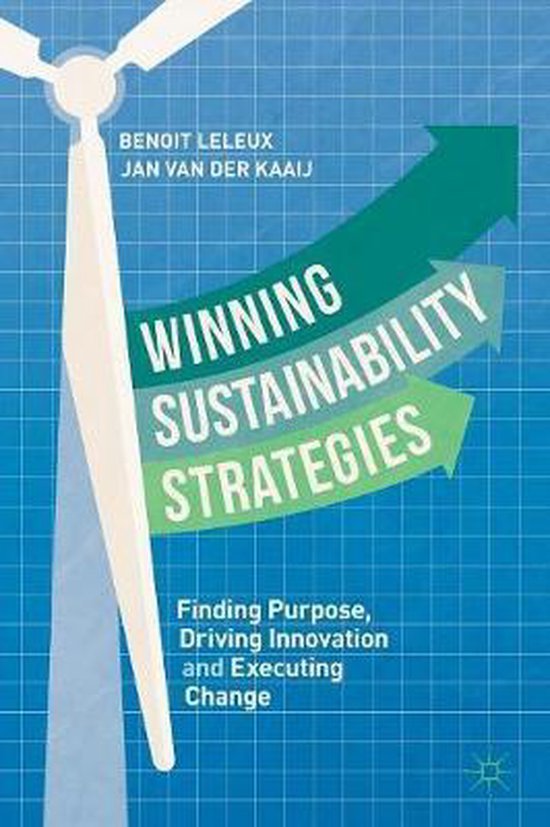
P1 Ch 1: Introduction
Date October 29, 2025
Week 1
Vectoring
“Vectoringˮ is presented as a framework helping companies combine:
Direction → choosing the right sustainability priorities (“materialitiesˮ)
Magnitude Speed) → mobilizing resources, partnerships, and execution
capabilities to accelerate impact
Boards and CEOs must set strategic bearings and ensuring focused
execution.
Reduces noise and improves performance: reflects what happens when
companies establish clear priorities and align resources accordingly.
Vectoring as a diagnostic tool and prescriptive method
P1 Ch 1 Introduction 1
, P1 Ch 2: Patterns of
frontrunners
Date October 29, 2025
Week 1
Key Findings and Insights
Sustainability is now a core concern for major companies and CEO
agendas, but speed of adoption varies widely across sectors and firms.
Failures in sustainability (e.g., Volkswagenʼs Dieselgate) can cause huge
financial and reputational damage, showing the importance of compliance
—yet sometimes have surprisingly little impact on sales, raising questions
about real business incentives for sustainability.
There is significant variation in sustainability performance between industry
leaders ("frontrunners") and average companies, offering a chance to
identify success patterns and actionable strategies.
Frontrunners in sustainability outperform industry averages by 1625% on
climate strategy metrics
Some industries have wide scoring gaps: up to 36% difference between
best and worst.
Performance is measured by
risk reduction: e.g., minimizing exposures
opportunity seizing: e.g., innovative products or cost savings
Successful sustainability transformations combine
focus: choosing a few high-impact sustainability issues
speed: quick, decisive implementation
P1 Ch 2 Patterns of frontrunners 1
, The Four Sustainability Archetypes
Example
Archetype Description
Sectors/Firms
Tobacco,
Traditional High risk, compliance-driven, little innovation
weapons
High on ESG reporting, low on concrete impact, Automotive
Communicative
focus on compliance and risk reduction (mainstream)
Diversified
conglomerates
Opportunistic Exploit opportunities, but still high risk
Energy,
renewables
Embed sustainability in core strategy, high Umicore, Red
Transformational
impact, embraced sustainability holistically Eléctrica
Fundamentals for Success
Focusing on few, material sustainability topics is key for value creation
Trying to address too many leads to diluted effort and poor results.
True leaders build sustainability into their core business processes, not as
a "nice-to-have" layer or isolated department.
P1 Ch 2 Patterns of frontrunners 2
, Best programs use clear business cases for sustainability, combining cost
savings, new revenue, reputation, and risk reduction.
Reporting and compliance are necessary, but avoid the "reporting trap"—
focus on actionable programs over endless documentation.
Integrated Reporting (<IR>) Framework
The inputs and assets a company draws upon to operate and create value in
the short, medium, and long term.
Financial Capital: The funds that are available to your organization for value
creation such as debt, equity and grants.
Manufactured Capital: Your manufactured capital is made up of assets
such as buildings, infrastructure and production equipment.
Intellectual Capital: The most common forms of intellectual capital are, for
example, tacit knowledge, intangibles from brand and reputation and
patents.
Human Capital: Human capital is created from your peopleʼs
competencies, their capabilities and experiences.
Social and Relationships Capital: The relationships with your main
stakeholders and how they ensure your social license to operate, create
long-term value and support growth.
Natural Capital: Your natural capital can most often be defined from topics
such as biodiversity, ecosystem health and your use of natural resources
such as air, water, energy and minerals.
P1 Ch 2 Patterns of frontrunners 3
Date October 29, 2025
Week 1
Vectoring
“Vectoringˮ is presented as a framework helping companies combine:
Direction → choosing the right sustainability priorities (“materialitiesˮ)
Magnitude Speed) → mobilizing resources, partnerships, and execution
capabilities to accelerate impact
Boards and CEOs must set strategic bearings and ensuring focused
execution.
Reduces noise and improves performance: reflects what happens when
companies establish clear priorities and align resources accordingly.
Vectoring as a diagnostic tool and prescriptive method
P1 Ch 1 Introduction 1
, P1 Ch 2: Patterns of
frontrunners
Date October 29, 2025
Week 1
Key Findings and Insights
Sustainability is now a core concern for major companies and CEO
agendas, but speed of adoption varies widely across sectors and firms.
Failures in sustainability (e.g., Volkswagenʼs Dieselgate) can cause huge
financial and reputational damage, showing the importance of compliance
—yet sometimes have surprisingly little impact on sales, raising questions
about real business incentives for sustainability.
There is significant variation in sustainability performance between industry
leaders ("frontrunners") and average companies, offering a chance to
identify success patterns and actionable strategies.
Frontrunners in sustainability outperform industry averages by 1625% on
climate strategy metrics
Some industries have wide scoring gaps: up to 36% difference between
best and worst.
Performance is measured by
risk reduction: e.g., minimizing exposures
opportunity seizing: e.g., innovative products or cost savings
Successful sustainability transformations combine
focus: choosing a few high-impact sustainability issues
speed: quick, decisive implementation
P1 Ch 2 Patterns of frontrunners 1
, The Four Sustainability Archetypes
Example
Archetype Description
Sectors/Firms
Tobacco,
Traditional High risk, compliance-driven, little innovation
weapons
High on ESG reporting, low on concrete impact, Automotive
Communicative
focus on compliance and risk reduction (mainstream)
Diversified
conglomerates
Opportunistic Exploit opportunities, but still high risk
Energy,
renewables
Embed sustainability in core strategy, high Umicore, Red
Transformational
impact, embraced sustainability holistically Eléctrica
Fundamentals for Success
Focusing on few, material sustainability topics is key for value creation
Trying to address too many leads to diluted effort and poor results.
True leaders build sustainability into their core business processes, not as
a "nice-to-have" layer or isolated department.
P1 Ch 2 Patterns of frontrunners 2
, Best programs use clear business cases for sustainability, combining cost
savings, new revenue, reputation, and risk reduction.
Reporting and compliance are necessary, but avoid the "reporting trap"—
focus on actionable programs over endless documentation.
Integrated Reporting (<IR>) Framework
The inputs and assets a company draws upon to operate and create value in
the short, medium, and long term.
Financial Capital: The funds that are available to your organization for value
creation such as debt, equity and grants.
Manufactured Capital: Your manufactured capital is made up of assets
such as buildings, infrastructure and production equipment.
Intellectual Capital: The most common forms of intellectual capital are, for
example, tacit knowledge, intangibles from brand and reputation and
patents.
Human Capital: Human capital is created from your peopleʼs
competencies, their capabilities and experiences.
Social and Relationships Capital: The relationships with your main
stakeholders and how they ensure your social license to operate, create
long-term value and support growth.
Natural Capital: Your natural capital can most often be defined from topics
such as biodiversity, ecosystem health and your use of natural resources
such as air, water, energy and minerals.
P1 Ch 2 Patterns of frontrunners 3