ANTICOAGULATION OVERVIEW TEST LATEST UPDATED
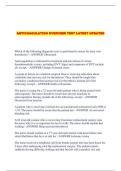
Which of the following diagnostic tests is performed to assess for deep vein
thrombosis? - ANSWER Ultrasound
Anticoagulation is indicated for treatment and prevention of certain
thromboembolic events, including DVT. Signs and symptoms of DVT include
all, except: - ANSWER Change in mental status
A group of nurses on a medical-surgical floor is receiving education about
conditions that increase risk for thrombosis. They should be taught that
secondary conditions that increase risk for thrombosis include all of the
following, except: - ANSWER Sickle cell anemia
The nurse is caring for a 72-year-old male patient who is being treated with
anticoagulant. The nurse should be aware that adverse reactions to
anticoagulation therapy include all of the following, except: - ANSWER
Decreased liver enzyme
A patient who is receiving warfarin has an international normalized ratio INR of
>3.0. The nurse should be aware that the patient has - ANSWER An increased
bleeding risk
A 62 year old woman who is recovering from knee replacement surgery asks
the nurse why it is so important for her to walk. The nurse should explain that
walking - ANSWER Helps prevent thrombosis
The nurse should explain to a 77 year old male patient with heart failure and
atrial fibrillation that he is at risk for - ANSWER Ischemic stroke
The nurse received a telephone call from female patient who has been home for
2 days after undergoing total hip replacement surgery. The patient reports
suddenly having difficulty walking and that her left calf is painful, red, and
Which of the following diagnostic tests is performed to assess for deep vein
thrombosis? - ANSWER Ultrasound
Anticoagulation is indicated for treatment and prevention of certain
thromboembolic events, including DVT. Signs and symptoms of DVT include
all, except: - ANSWER Change in mental status
A group of nurses on a medical-surgical floor is receiving education about
conditions that increase risk for thrombosis. They should be taught that
secondary conditions that increase risk for thrombosis include all of the
following, except: - ANSWER Sickle cell anemia
The nurse is caring for a 72-year-old male patient who is being treated with
anticoagulant. The nurse should be aware that adverse reactions to
anticoagulation therapy include all of the following, except: - ANSWER
Decreased liver enzyme
A patient who is receiving warfarin has an international normalized ratio INR of
>3.0. The nurse should be aware that the patient has - ANSWER An increased
bleeding risk
A 62 year old woman who is recovering from knee replacement surgery asks
the nurse why it is so important for her to walk. The nurse should explain that
walking - ANSWER Helps prevent thrombosis
The nurse should explain to a 77 year old male patient with heart failure and
atrial fibrillation that he is at risk for - ANSWER Ischemic stroke
The nurse received a telephone call from female patient who has been home for
2 days after undergoing total hip replacement surgery. The patient reports
suddenly having difficulty walking and that her left calf is painful, red, and