Page | 1
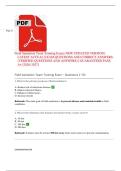
Field Sanitation Team Training Exam (NEW UPDATED VERSION)
LATEST ACTUAL EXAM QUESTIONS AND CORRECT ANSWERS
(VERIFIED QUESTIONS AND ANSWERS) | GUARANTEED PASS
A+ [2026-2027]
Field Sanitation Team Training Exam – Questions 1–50
1. What is the primary purpose of field sanitation?
A. Reduce risk of infectious diseases
B. Improve physical fitness
C. Enhance combat tactics
D. Increase morale
Rationale: The main goal of field sanitation is to prevent disease and maintain health in field
conditions.
2. What is the minimum safe distance for latrines from a water source?
A. 10 feet
B. 50 feet
C. 100 feet
D. 500 feet
Rationale: Latrines must be at least 100 feet away from water sources to prevent contamination.
EXAMPREPMASTER
, 3. Which method is recommended for handwashing in the field when soap and water are
available?
A. Use hand sanitizer only
B. Wash hands with soap and clean water for at least 20 seconds
Page | 2 C. Rinse with water only
D. Wipe with a cloth
Rationale: Soap and water for at least 20 seconds is the most effective way to remove pathogens.
4. How should human waste be disposed of in temporary field operations?
A. Buried in shallow trenches
B. Dumped into nearby streams
C. Burned openly
D. Left in open areas
Rationale: Human waste should be buried in cat holes or trenches to prevent contamination of
water sources.
5. What is the proper method for storing potable water in field conditions?
A. In open containers
B. In sealed, clean containers
C. In metal cans exposed to sun
D. In buckets near latrines
Rationale: Water must be stored in clean, sealed containers to prevent contamination.
6. Which of the following diseases is most commonly transmitted through contaminated food
and water?
A. Malaria
B. Typhoid fever
C. Influenza
D. Tetanus
Rationale: Typhoid fever is spread primarily through ingesting contaminated food and water.
EXAMPREPMASTER
, 7. What is the minimum safe distance from a kitchen or food prep area to a latrine?
A. 10 feet
B. 25 feet
C. 50 feet
Page | 3 D. 100 feet
Rationale: Latrines must be at least 50 feet from food prep areas to reduce contamination risk.
8. Which is the most effective way to purify water in the field?
A. Boiling
B. Adding salt
C. Letting it sit in sunlight
D. Using cloth to filter
Rationale: Boiling water for 1–3 minutes kills most bacteria, viruses, and parasites.
9. How often should field sanitation inspections be conducted?
A. Weekly
B. Daily
C. Monthly
D. Only when illness occurs
Rationale: Daily inspections help identify hazards and prevent outbreaks.
10. Which vector is responsible for transmitting malaria?
A. Mosquito
B. Tick
C. Fly
D. Rodent
Rationale: Malaria is transmitted by female Anopheles mosquitoes.
11. What is the best method to prevent insect-borne diseases in the field?
A. Wear protective clothing and use insect repellent
B. Avoid drinking water
C. Exercise frequently
D. Use antibiotics
EXAMPREPMASTER
, Rationale: Protective clothing and repellents reduce the risk of bites from disease-carrying
insects.
12. Which of the following is an acceptable field method for rodent control?
Page | 4
A. Leaving food scraps uncovered
B. Traps and rodenticides
C. Using only natural predators
D. Ignoring rodent presence
Rationale: Traps and rodenticides help reduce rodent populations and prevent disease spread.
13. How should garbage be handled in field conditions?
A. Buried, burned, or containerized
B. Left in open areas
C. Dumped in streams
D. Thrown near tents
Rationale: Proper disposal prevents pests and contamination.
14. What is the recommended minimum distance for garbage pits from water sources?
A. 10 feet
B. 50 feet
C. 100 feet
D. 500 feet
Rationale: Garbage pits should be at least 100 feet away from water sources.
15. Which of the following is a waterborne disease commonly found in field conditions?
A. Dengue
B. Cholera
C. Influenza
D. Tetanus
Rationale: Cholera spreads through contaminated water.
EXAMPREPMASTER
Field Sanitation Team Training Exam (NEW UPDATED VERSION)
LATEST ACTUAL EXAM QUESTIONS AND CORRECT ANSWERS
(VERIFIED QUESTIONS AND ANSWERS) | GUARANTEED PASS
A+ [2026-2027]
Field Sanitation Team Training Exam – Questions 1–50
1. What is the primary purpose of field sanitation?
A. Reduce risk of infectious diseases
B. Improve physical fitness
C. Enhance combat tactics
D. Increase morale
Rationale: The main goal of field sanitation is to prevent disease and maintain health in field
conditions.
2. What is the minimum safe distance for latrines from a water source?
A. 10 feet
B. 50 feet
C. 100 feet
D. 500 feet
Rationale: Latrines must be at least 100 feet away from water sources to prevent contamination.
EXAMPREPMASTER
, 3. Which method is recommended for handwashing in the field when soap and water are
available?
A. Use hand sanitizer only
B. Wash hands with soap and clean water for at least 20 seconds
Page | 2 C. Rinse with water only
D. Wipe with a cloth
Rationale: Soap and water for at least 20 seconds is the most effective way to remove pathogens.
4. How should human waste be disposed of in temporary field operations?
A. Buried in shallow trenches
B. Dumped into nearby streams
C. Burned openly
D. Left in open areas
Rationale: Human waste should be buried in cat holes or trenches to prevent contamination of
water sources.
5. What is the proper method for storing potable water in field conditions?
A. In open containers
B. In sealed, clean containers
C. In metal cans exposed to sun
D. In buckets near latrines
Rationale: Water must be stored in clean, sealed containers to prevent contamination.
6. Which of the following diseases is most commonly transmitted through contaminated food
and water?
A. Malaria
B. Typhoid fever
C. Influenza
D. Tetanus
Rationale: Typhoid fever is spread primarily through ingesting contaminated food and water.
EXAMPREPMASTER
, 7. What is the minimum safe distance from a kitchen or food prep area to a latrine?
A. 10 feet
B. 25 feet
C. 50 feet
Page | 3 D. 100 feet
Rationale: Latrines must be at least 50 feet from food prep areas to reduce contamination risk.
8. Which is the most effective way to purify water in the field?
A. Boiling
B. Adding salt
C. Letting it sit in sunlight
D. Using cloth to filter
Rationale: Boiling water for 1–3 minutes kills most bacteria, viruses, and parasites.
9. How often should field sanitation inspections be conducted?
A. Weekly
B. Daily
C. Monthly
D. Only when illness occurs
Rationale: Daily inspections help identify hazards and prevent outbreaks.
10. Which vector is responsible for transmitting malaria?
A. Mosquito
B. Tick
C. Fly
D. Rodent
Rationale: Malaria is transmitted by female Anopheles mosquitoes.
11. What is the best method to prevent insect-borne diseases in the field?
A. Wear protective clothing and use insect repellent
B. Avoid drinking water
C. Exercise frequently
D. Use antibiotics
EXAMPREPMASTER
, Rationale: Protective clothing and repellents reduce the risk of bites from disease-carrying
insects.
12. Which of the following is an acceptable field method for rodent control?
Page | 4
A. Leaving food scraps uncovered
B. Traps and rodenticides
C. Using only natural predators
D. Ignoring rodent presence
Rationale: Traps and rodenticides help reduce rodent populations and prevent disease spread.
13. How should garbage be handled in field conditions?
A. Buried, burned, or containerized
B. Left in open areas
C. Dumped in streams
D. Thrown near tents
Rationale: Proper disposal prevents pests and contamination.
14. What is the recommended minimum distance for garbage pits from water sources?
A. 10 feet
B. 50 feet
C. 100 feet
D. 500 feet
Rationale: Garbage pits should be at least 100 feet away from water sources.
15. Which of the following is a waterborne disease commonly found in field conditions?
A. Dengue
B. Cholera
C. Influenza
D. Tetanus
Rationale: Cholera spreads through contaminated water.
EXAMPREPMASTER