Wu Ming
Created @11 februari 2024 21:28
Class CI
Type Reading
Subject Media
Reviewed
Deadline @15 februari 2024
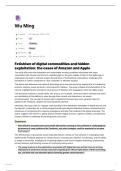
Fetishism of digital commodities and hidden
exploitation: the cases of Amazon and Apple
The essay discusses the exploitation and unfavorable working conditions associated with major
corporations like Amazon and Foxconn, shedding light on the grim realities of labor in the digital age. It
emphasizes the need to critically analyze the practices of multinational corporations, challenging the
perception of certain companies as "less corporate" or ethically superior.
The author also addresses the notion of technology as an autonomous force, arguing that it is shaped by
property relations, power dynamics, and production relations. The essay critiques the fetishization of the
internet, highlighting the coexistence of practices of liberation and subjugation within the digital realm.
The discussion extends to social media, with a focus on Facebook, where the author contends that users
are contributing to the platform's value through their content and interactions, yet remain
uncompensated. The concept of surplus labor is applied to illustrate how users generate value for
platforms like Facebook, despite not receiving direct payment.
Ultimately, the essay calls for a deeper understanding of the exploitation embedded in digital devices and
the internet. It advocates for a critical perspective that goes beyond individual choices, emphasizing the
importance of recognizing the collective intelligence and labor that underpins the digital landscape. The
author suggests the need for a global alliance between digital activists, cognitive workers, and electronic
industry workers to challenge the existing power structures.
Questions:
How effective are grassroots social media alternatives running on free software in challenging the
dominance of major platforms like Facebook, and what strategies could be employed to increase
their impact?
The effectiveness of grassroots social media alternatives running on free software in challenging major
platforms like Facebook depends on various factors, including user adoption, functionality, and the ability
to create a community. Strategies for increasing impact could involve targeted marketing, emphasizing
privacy features, and fostering a sense of community among users.
The essay touches on the exploitation associated with digital devices and the internet, but how
widespread is awareness among consumers regarding the ethical implications of their technology
use, and what role can education play in fostering greater consciousness?
Wu Ming 1
Created @11 februari 2024 21:28
Class CI
Type Reading
Subject Media
Reviewed
Deadline @15 februari 2024
Fetishism of digital commodities and hidden
exploitation: the cases of Amazon and Apple
The essay discusses the exploitation and unfavorable working conditions associated with major
corporations like Amazon and Foxconn, shedding light on the grim realities of labor in the digital age. It
emphasizes the need to critically analyze the practices of multinational corporations, challenging the
perception of certain companies as "less corporate" or ethically superior.
The author also addresses the notion of technology as an autonomous force, arguing that it is shaped by
property relations, power dynamics, and production relations. The essay critiques the fetishization of the
internet, highlighting the coexistence of practices of liberation and subjugation within the digital realm.
The discussion extends to social media, with a focus on Facebook, where the author contends that users
are contributing to the platform's value through their content and interactions, yet remain
uncompensated. The concept of surplus labor is applied to illustrate how users generate value for
platforms like Facebook, despite not receiving direct payment.
Ultimately, the essay calls for a deeper understanding of the exploitation embedded in digital devices and
the internet. It advocates for a critical perspective that goes beyond individual choices, emphasizing the
importance of recognizing the collective intelligence and labor that underpins the digital landscape. The
author suggests the need for a global alliance between digital activists, cognitive workers, and electronic
industry workers to challenge the existing power structures.
Questions:
How effective are grassroots social media alternatives running on free software in challenging the
dominance of major platforms like Facebook, and what strategies could be employed to increase
their impact?
The effectiveness of grassroots social media alternatives running on free software in challenging major
platforms like Facebook depends on various factors, including user adoption, functionality, and the ability
to create a community. Strategies for increasing impact could involve targeted marketing, emphasizing
privacy features, and fostering a sense of community among users.
The essay touches on the exploitation associated with digital devices and the internet, but how
widespread is awareness among consumers regarding the ethical implications of their technology
use, and what role can education play in fostering greater consciousness?
Wu Ming 1