Economic History of Spain
INTRODUCTION: The Spanish economy growth in the long run (19 th and 20th
centuries)
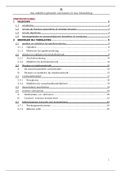
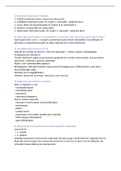
TOPIC 1: RESOURCES, INSTITUTIONS, INTERNATIONAL CONTEXT (1789-1890)
1. Population, urbanization, human capital
2. Natural conditions and the limits of agrarian growth
3. State reform: economic liberalization and disentailments
4. Problems of the first industrialization: textile, iron, mining sector
5. Domestic and foreign trade. The transport system: railways and cabotage
6. Banking and Treasury
Introduction: The Spanish economy growth in the long run (19 th and 20th centuries)
Population, urbanization, human capital
Basic concepts
- GDP
- GDP per capita (country´s economic output per person and is calculated by
dividing the GDP of a country by its population)
- Nominal GDP vs Real GDP
Economic growth and measurement
Is GDP enough to measure the economy of a country?
- GDP is not a measure of “wealth”.
- GDP is born of the manufacturing age: service, internet?
- GDP says nothing about distribution
- Bigger is always better? (USA)
Living standard
Human Development Index (HDI)
The Growth Delusion (David Piling)
Spanish economic performance in the long run: four phases
Average cumulative growth rate of 2.4%
1. 1850-1950 (with a shift to a lower level during the Civil War)
2. 1950-1974 (phase of fastest growth, the Golden Age (GDP grew at 6.3% annually)
3. 1974-2007
, 4. 2007-2015 (the Great Recession represented a fall in real GDP between 2007
and 2013, and the 2007 level had not been recovered until 2015.
GDP per capita Spain
19th century: Slow growth
20th century: Profund structural change that we can call economic development, the
transition to industrialization and modernity.
The principal economics events of Spain 19 th century can be reduced to the removal of
certain obstacles, to clearing the way for 20 th century industrialization.
Public Debt
Other indicators in the long run: Stature, HDI, price, exchange rate.
Natural conditions and the limits of agrarian growth
Environment (soil, climate, rivers)
• Cereals, olives tree, vines (Crops that form the Mediterranean trilogy)
• Not an absolute determinant of economic growth.
• Important conditioning factor (urbanization, trade).
• Geostrategic position of the Iberian Peninsula.
• Comparative advantages.
• Climate was extreme and mostly dry (difficult for agricultural production). Costly
investments to increase production.
• High isolation is however a source of wealth today for tourism and as a source of
solar energy production.
• Crossed by huge rivers that facilitate trade and transportation (Danube, Rhine).
Most rivers in mediterranean are torrential and obstacle to transportation. Rivers
have been used in Spain as sources of hydraulic energy and hydroelectricity.
, • Main agricultural export in 19th century?
- 1820s: Wine, olive oil, wool, brandy
- 1850s: Wine, flour, olive oil, raisings, wheat, wood
- 1870s: Wine, raisins, flour
- 1910: Wine, oranges, cotton
Mountains and transportation
• Massive mountain chains (leads to high transportation and high costs of
infrastructure construction)
• Obstacle to internal trade (make difficult a national integrated market)
• High transportation costs = less competitive goods
• High costs of infrastructure construction (roads, bridges, high speed train)
• Most trade was coastal maritime (cabotage) = high comparative advantage of
coastal areas (faster urbanization, population growth, investment attraction).
Underground mineral reserves
→ Importance of metallic minerals in Lineares, sulphur and copper in Rio tinto
(Huelva) and iron in Santander and Vizcaya.
→ Coal in Asturias and Leon but poor quality: low calorific value= high energy costs
for industrialization, required imports (from UK)
→ Very poor provision of Second Industrialization minerals (oil, nickel, bauxite,
silicon)
→ Due to topography (very profound deposits), high costs of mineral exploitation.
Population density = 92.3 per km 2
Castilla y Leon: 18,6% total surface of Spain, 4.8 GDP, 5% population, causes: lack of
investment in infrastructures.
Role of institutions in economic growth
❑ Main determinant of economic behaviour is the way nations organize
themselves, its institutions. Inclusive institutions create incentives and pave the
way to prosperity.
❑ Good quality political institutions are those that allow citizens to control
politicians and prevent minorities from appropriating the nation's wealth.
❑ Prosperity is based on the flight against privileges. Backwardness is explained to
a large extent by power concentration in hands of elites.
❑ Unequality is not compatible with sustained growth.
Context of Spanish economy in 19th century
, From Empire to Peripheral Economy
▪ Wars with France (1793,1808) and England (1796, 1805)
▪ Lost of entire continental American colonies (1810-1826)
▪ Breakdown of colonial trade
▪ The Crisis of the Old Regime and the Liberal Revolution
▪ Industrial Revolution in other European countries
Problems of 19th century Spanish economy
1. Insufficient agricultural growth
❖ Low diversification: 3 crops dominate: grain, vine, olives. Low production of
vegetables, fruits, industrial crops, forestry, fodder-forage plants.
❖ Slow growth of agricultural productivity (land, yields and labour)
❖ Causes: lack of agrarian reforms, lack of credit and capital for mechanization
and toa void decreasing returns and environmental restrictions: scarce
rainfall, mountains and large distances.
❖ Consequences: Slow growth of pc GDP (Total GDP/ population); weak
internal market (internal demand).
2. Weak industrial growth: Very concentrated (textile in Barcelona, mining and iron-
steel in Vizcaya), less intensive than in main European industrial regions,
dependent on protectionist policies (tariffs + exchange rates)
Causes:
- Low capital and credit
- Technological dependence of foreign countries
- Lack of key raw materials (cotton and coal) = imported = higher prices
- Weakness of internal market (low pc income of rural population), not
compensated by foreign demand (X) = Protectionism
3. Strong income inequality between classes and regions = weak internal demand
4. Deficit in balance of payments (BoP)
- Huge deficit in balance of capitals: dependence of private and public sectors
of foreign investment (purchase of national debt)
- Low commercial deficit (balance of trade): Low X + needed m. imports very
limited by protectionism and exchange rates
5. A backwards financial and banking system: Low national savings rate. Banks fail
to accomplish their function of financing growth (in agriculture and industry,
private consumption). Private capitals go to fix income investments and
speculative or sumptuary investments.
6. Chronic budget deficit: Due to lack of modernization of the fiscal system; most
public expenditure improductive (military); state obligated to constant issues of
bonds (national debt) to finance deficit. Public bonds absorbed private capitals
= crowding-out. Political implications: Spanish governments depended on
INTRODUCTION: The Spanish economy growth in the long run (19 th and 20th
centuries)
TOPIC 1: RESOURCES, INSTITUTIONS, INTERNATIONAL CONTEXT (1789-1890)
1. Population, urbanization, human capital
2. Natural conditions and the limits of agrarian growth
3. State reform: economic liberalization and disentailments
4. Problems of the first industrialization: textile, iron, mining sector
5. Domestic and foreign trade. The transport system: railways and cabotage
6. Banking and Treasury
Introduction: The Spanish economy growth in the long run (19 th and 20th centuries)
Population, urbanization, human capital
Basic concepts
- GDP
- GDP per capita (country´s economic output per person and is calculated by
dividing the GDP of a country by its population)
- Nominal GDP vs Real GDP
Economic growth and measurement
Is GDP enough to measure the economy of a country?
- GDP is not a measure of “wealth”.
- GDP is born of the manufacturing age: service, internet?
- GDP says nothing about distribution
- Bigger is always better? (USA)
Living standard
Human Development Index (HDI)
The Growth Delusion (David Piling)
Spanish economic performance in the long run: four phases
Average cumulative growth rate of 2.4%
1. 1850-1950 (with a shift to a lower level during the Civil War)
2. 1950-1974 (phase of fastest growth, the Golden Age (GDP grew at 6.3% annually)
3. 1974-2007
, 4. 2007-2015 (the Great Recession represented a fall in real GDP between 2007
and 2013, and the 2007 level had not been recovered until 2015.
GDP per capita Spain
19th century: Slow growth
20th century: Profund structural change that we can call economic development, the
transition to industrialization and modernity.
The principal economics events of Spain 19 th century can be reduced to the removal of
certain obstacles, to clearing the way for 20 th century industrialization.
Public Debt
Other indicators in the long run: Stature, HDI, price, exchange rate.
Natural conditions and the limits of agrarian growth
Environment (soil, climate, rivers)
• Cereals, olives tree, vines (Crops that form the Mediterranean trilogy)
• Not an absolute determinant of economic growth.
• Important conditioning factor (urbanization, trade).
• Geostrategic position of the Iberian Peninsula.
• Comparative advantages.
• Climate was extreme and mostly dry (difficult for agricultural production). Costly
investments to increase production.
• High isolation is however a source of wealth today for tourism and as a source of
solar energy production.
• Crossed by huge rivers that facilitate trade and transportation (Danube, Rhine).
Most rivers in mediterranean are torrential and obstacle to transportation. Rivers
have been used in Spain as sources of hydraulic energy and hydroelectricity.
, • Main agricultural export in 19th century?
- 1820s: Wine, olive oil, wool, brandy
- 1850s: Wine, flour, olive oil, raisings, wheat, wood
- 1870s: Wine, raisins, flour
- 1910: Wine, oranges, cotton
Mountains and transportation
• Massive mountain chains (leads to high transportation and high costs of
infrastructure construction)
• Obstacle to internal trade (make difficult a national integrated market)
• High transportation costs = less competitive goods
• High costs of infrastructure construction (roads, bridges, high speed train)
• Most trade was coastal maritime (cabotage) = high comparative advantage of
coastal areas (faster urbanization, population growth, investment attraction).
Underground mineral reserves
→ Importance of metallic minerals in Lineares, sulphur and copper in Rio tinto
(Huelva) and iron in Santander and Vizcaya.
→ Coal in Asturias and Leon but poor quality: low calorific value= high energy costs
for industrialization, required imports (from UK)
→ Very poor provision of Second Industrialization minerals (oil, nickel, bauxite,
silicon)
→ Due to topography (very profound deposits), high costs of mineral exploitation.
Population density = 92.3 per km 2
Castilla y Leon: 18,6% total surface of Spain, 4.8 GDP, 5% population, causes: lack of
investment in infrastructures.
Role of institutions in economic growth
❑ Main determinant of economic behaviour is the way nations organize
themselves, its institutions. Inclusive institutions create incentives and pave the
way to prosperity.
❑ Good quality political institutions are those that allow citizens to control
politicians and prevent minorities from appropriating the nation's wealth.
❑ Prosperity is based on the flight against privileges. Backwardness is explained to
a large extent by power concentration in hands of elites.
❑ Unequality is not compatible with sustained growth.
Context of Spanish economy in 19th century
, From Empire to Peripheral Economy
▪ Wars with France (1793,1808) and England (1796, 1805)
▪ Lost of entire continental American colonies (1810-1826)
▪ Breakdown of colonial trade
▪ The Crisis of the Old Regime and the Liberal Revolution
▪ Industrial Revolution in other European countries
Problems of 19th century Spanish economy
1. Insufficient agricultural growth
❖ Low diversification: 3 crops dominate: grain, vine, olives. Low production of
vegetables, fruits, industrial crops, forestry, fodder-forage plants.
❖ Slow growth of agricultural productivity (land, yields and labour)
❖ Causes: lack of agrarian reforms, lack of credit and capital for mechanization
and toa void decreasing returns and environmental restrictions: scarce
rainfall, mountains and large distances.
❖ Consequences: Slow growth of pc GDP (Total GDP/ population); weak
internal market (internal demand).
2. Weak industrial growth: Very concentrated (textile in Barcelona, mining and iron-
steel in Vizcaya), less intensive than in main European industrial regions,
dependent on protectionist policies (tariffs + exchange rates)
Causes:
- Low capital and credit
- Technological dependence of foreign countries
- Lack of key raw materials (cotton and coal) = imported = higher prices
- Weakness of internal market (low pc income of rural population), not
compensated by foreign demand (X) = Protectionism
3. Strong income inequality between classes and regions = weak internal demand
4. Deficit in balance of payments (BoP)
- Huge deficit in balance of capitals: dependence of private and public sectors
of foreign investment (purchase of national debt)
- Low commercial deficit (balance of trade): Low X + needed m. imports very
limited by protectionism and exchange rates
5. A backwards financial and banking system: Low national savings rate. Banks fail
to accomplish their function of financing growth (in agriculture and industry,
private consumption). Private capitals go to fix income investments and
speculative or sumptuary investments.
6. Chronic budget deficit: Due to lack of modernization of the fiscal system; most
public expenditure improductive (military); state obligated to constant issues of
bonds (national debt) to finance deficit. Public bonds absorbed private capitals
= crowding-out. Political implications: Spanish governments depended on