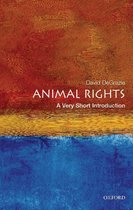
David DeGrazia – Animal Rights: A very short introduction
Chapter 1 – introduction
Historical sketch of both traditional thinking about animals and of the emergence of the animal rights
movement
Chief sources of traditional thinking about animals’ moral statues have been religion and philosophy,
both of which have interacted with science in shaping conceptions of what sorts of beings animals
are.
In the West, Aristotle influentially argued that animals, having sense perception but lacking reason,
fall below humans in a natural hierarchy and are therefore appropriate resources for human
purposes. – because animals lack rational souls, our dealings with them are not a matter of justice.
Among the ancient Greeks, like Pythagoras, who believed that animals may be former humans
reincarnated, and Theophrastus, who thought animals were capable of some degree of reasoning.
The Bible largely reinforced the Aristotelian view of animals by asserting that God created humans in
his own image, and that we are free to use natural resources for our own purposes.
Western modern philosophy – the era stemming from Descartes in the 17th century through the late
19th century – largely upheld the view of human supremacy, reflecting the influence of its dominant
religion, Christianity.
Hobbes, Locke, Kant, and other attributed perception and feelings to animals while denying that they
had some property that was allegedly necessary for significant moral status.
While the assertion of human superiority clearly dominated modern philosophy, the possibility of
alternative perspectives was also evident.
Hume – who noted that sympathy can extend to sensitive creatures other than humans.
Bentham – who held that right conduct was a matter of maximizing the balance of pleasure over pain
in those affected by one’s action; he castigated the routine infliction of suffering on animals as
human tyranny.
Mill – human-typical pleasures carried greater weight in the calculation of utility than did common
sensuous pleasures; this theoretical move back in the direction of human superiority did not blind
Mill to the tension between everyday animal-using practices and an impartial moral standpoint that
takes animals’ interests into account.
Schopenhauer – rejected reason, autonomy, self-consciousness, and power as primary determinants
of moral statues.
Darwin – wo demonstrated that humans evolved from other animal species – the theory of
evolution.
Non-Western traditions, which provide interesting contrasts with Western thought.
Indian traditions of Jainism, Hinduism, and Buddhism all accept, the doctrine of ahimsa, which
advocates non-injury to all living things and reverence for all life.
Chapter 1 – introduction
Historical sketch of both traditional thinking about animals and of the emergence of the animal rights
movement
Chief sources of traditional thinking about animals’ moral statues have been religion and philosophy,
both of which have interacted with science in shaping conceptions of what sorts of beings animals
are.
In the West, Aristotle influentially argued that animals, having sense perception but lacking reason,
fall below humans in a natural hierarchy and are therefore appropriate resources for human
purposes. – because animals lack rational souls, our dealings with them are not a matter of justice.
Among the ancient Greeks, like Pythagoras, who believed that animals may be former humans
reincarnated, and Theophrastus, who thought animals were capable of some degree of reasoning.
The Bible largely reinforced the Aristotelian view of animals by asserting that God created humans in
his own image, and that we are free to use natural resources for our own purposes.
Western modern philosophy – the era stemming from Descartes in the 17th century through the late
19th century – largely upheld the view of human supremacy, reflecting the influence of its dominant
religion, Christianity.
Hobbes, Locke, Kant, and other attributed perception and feelings to animals while denying that they
had some property that was allegedly necessary for significant moral status.
While the assertion of human superiority clearly dominated modern philosophy, the possibility of
alternative perspectives was also evident.
Hume – who noted that sympathy can extend to sensitive creatures other than humans.
Bentham – who held that right conduct was a matter of maximizing the balance of pleasure over pain
in those affected by one’s action; he castigated the routine infliction of suffering on animals as
human tyranny.
Mill – human-typical pleasures carried greater weight in the calculation of utility than did common
sensuous pleasures; this theoretical move back in the direction of human superiority did not blind
Mill to the tension between everyday animal-using practices and an impartial moral standpoint that
takes animals’ interests into account.
Schopenhauer – rejected reason, autonomy, self-consciousness, and power as primary determinants
of moral statues.
Darwin – wo demonstrated that humans evolved from other animal species – the theory of
evolution.
Non-Western traditions, which provide interesting contrasts with Western thought.
Indian traditions of Jainism, Hinduism, and Buddhism all accept, the doctrine of ahimsa, which
advocates non-injury to all living things and reverence for all life.