Tentamen stof – Developmental psychopathology
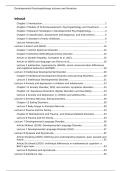
Inhoudsopgave
Week 1 ......................................................................................................................................... 3
Lecture 1 – Fundamentals of developmental psychopathology .......................................................... 3
Literature lecture 1 .........................................................................................................................12
Chapter 1 – introduction ............................................................................................................. 12
Chapter 2 – Models of Child development, Psychopathology, and treatment ................................. 14
Chapter 3 – principles and practices of developmental psychopathology ...................................... 16
Chapter 4 – classification, assessment, and diagnosis and intervention ....................................... 20
Chapter 5 – Disorders of Early Childhood .................................................................................... 24
Week 2 ........................................................................................................................................ 30
Lecture 2 – ADHD & Autism .............................................................................................................30
Literature lecture 2 .........................................................................................................................36
Chapter 7 – Autism Spectrum Disorder ....................................................................................... 36
Chapter 9 – Attention-Deficit/Hyperactivity Disorder .................................................................... 42
Double empathy: Why autistic people are often misunderstood. .................................................. 47
The power of words: Respectful language in ADHD-research. ....................................................... 48
Week 3 ........................................................................................................................................ 49
Lecture 3: Intellectual development disorder ...................................................................................49
Literature - lecture 3........................................................................................................................52
Chapter 6: Intellectual Developmental Disorder and Learning Disorders....................................... 52
Lecture 4: anxiety and depression in children and adolescents .........................................................60
Literature - lecture 4........................................................................................................................71
Chapter 11 – Anxiety disorders, Obsessive-Compulsive Disorder, and Somatic Symptom Disorders
................................................................................................................................................. 71
Chapter 12 – Depressive disorder, bipolar disorders and Suicidality .............................................. 79
Week 4 ........................................................................................................................................ 87
Lecture 5 – Body image in Anorexia nervosa .....................................................................................87
Literature lecture 5 .........................................................................................................................93
Chapter 13 – Eating disorders ..................................................................................................... 93
Lecture 6 – Trauma and the family.................................................................................................. 100
Literature lecture 6 ....................................................................................................................... 106
Chapter 8 – Maltreatment and Trauma- and Stressor-Related Disorders ...................................... 106
Week 5 ...................................................................................................................................... 116
Lecture 7 – Developmental Language Disorder ............................................................................... 116
Literature lecture 7 ....................................................................................................................... 123
, Developmental language disorder............................................................................................. 123
Lecture 8 – Dyslexia & Dyscalculia ................................................................................................. 125
Literature lecture 8 ....................................................................................................................... 133
Individual diWerences in mathematical cognition: a Bert’s eye view ............................................ 133
Defining and understanding dyslexia: past, present and future ................................................... 135
Lecture 9 – Substance use ............................................................................................................ 137
Literature lecture 9 ....................................................................................................................... 143
Chapter 14 – Substance-Related Disorders, Personality Disorders and Psychotic disorders ......... 143
Week 6 ...................................................................................................................................... 155
Lecture 10 – Oppositional defiant disorder & Conduct disorder ....................................................... 155
Literature lecture 10...................................................................................................................... 163
Chapter 10 – Oppositional Defiant Disorder and Conduct disorder ............................................. 163
,Week 1
Lecture 1 – Fundamentals of developmental psychopathology
Stathis Grapsas
What is developmental psychopathology?
• Intense, diverse patterns of emotion, cognition and behavior – in the context of
development
• That interfere with happiness and or development
Why is it important to learn about developmental psychopathology?
• Describe and di;erentiate between typical and atypical development, di;erent
psychopathological disorders and risk and protective factors involved in these
disorders. In other words: understanding how disorders are identified, emerge and
can be prevented
• Important: do symptoms fit youths’ age or context? Or is support required to
prevent escalating problems? Examples of “normal” problems vs age/context-
inappropriate problems?
What is developmental psychopathology?
• Psychopathology – intense, frequent and/or persistent maladaptive patterns of
emotion, cognition, behavior
• Developmental psychopathology – emphasizes that these maladaptive patterns
occur in the context of typical development and result in the current and potential
impairment of infants, children and adolescents.
à problems arise as the child grows up
Recently from normal/abnormal (negative connotations) to typical/atypical (less
judgmental more descriptive)
Psychopathology in the context of typical development
1. Dynamic appreciation of children’s strengths and weaknesses as they
experience salient, age-related challenges.
Age Major issue Additional issues
Infancy Formation of an a7ective Basic state and arousal regulation
attachment Development of reciprocity
Dyadic regulation of emotion
Toddler period Guided self-regulation Increased autonomy
Increased awareness of self and others
Awareness of standards for behavior
Self-conscious emotions
Preschool period Self-regulation Self-resilience with support (agency)
Self-management
Expanding social world
Internalization of rules and values
School years Competence Personal e7icacy
Self-integration
Competence with peers
, Competence in school
Adolescence Individualization Autonomy with connectedness
Identity
Peer network competence
Coordinating school, work and social life
Transition to Emancipation Launching a life course
adulthood Financial responsibility
Adult social competence
Coordinating work, training, career and
life
2. Individual, familial, ethnic, cultural, societal beliefs about desirable vs.
undesirable outcomes (= definitions of normality)
Defining typical vs. atypical
- Statistical deviance: how di;erently the person feels/thinks/acts compared to
others
Issue: where is the cuto;? Which side of the spectrum is concerning?
- Sociocultural norms: how the person is expected to think/feel/act
Issues: group values are not universal truths
- Mental health definition: what experts consider as mental health/illness
Issues: experts’ subjectivity and values steer the definition.
Absence of psychopathology vs. flourishing
How does it emerge?
Disorders in the context of development
1. Delay à kids do not develop a skill they should have already developed
Dysfunction à not putting the skills to use
2. Typical vs. atypical development as a process:
adjustment & maladjustment are points along a
lifelong map
Pathways
Multifinality – similar starting points lead to di;erent
outcomes
Equifinality – di;erent starting points lead to similar
outcomes
Continuity & stability
Inhoudsopgave
Week 1 ......................................................................................................................................... 3
Lecture 1 – Fundamentals of developmental psychopathology .......................................................... 3
Literature lecture 1 .........................................................................................................................12
Chapter 1 – introduction ............................................................................................................. 12
Chapter 2 – Models of Child development, Psychopathology, and treatment ................................. 14
Chapter 3 – principles and practices of developmental psychopathology ...................................... 16
Chapter 4 – classification, assessment, and diagnosis and intervention ....................................... 20
Chapter 5 – Disorders of Early Childhood .................................................................................... 24
Week 2 ........................................................................................................................................ 30
Lecture 2 – ADHD & Autism .............................................................................................................30
Literature lecture 2 .........................................................................................................................36
Chapter 7 – Autism Spectrum Disorder ....................................................................................... 36
Chapter 9 – Attention-Deficit/Hyperactivity Disorder .................................................................... 42
Double empathy: Why autistic people are often misunderstood. .................................................. 47
The power of words: Respectful language in ADHD-research. ....................................................... 48
Week 3 ........................................................................................................................................ 49
Lecture 3: Intellectual development disorder ...................................................................................49
Literature - lecture 3........................................................................................................................52
Chapter 6: Intellectual Developmental Disorder and Learning Disorders....................................... 52
Lecture 4: anxiety and depression in children and adolescents .........................................................60
Literature - lecture 4........................................................................................................................71
Chapter 11 – Anxiety disorders, Obsessive-Compulsive Disorder, and Somatic Symptom Disorders
................................................................................................................................................. 71
Chapter 12 – Depressive disorder, bipolar disorders and Suicidality .............................................. 79
Week 4 ........................................................................................................................................ 87
Lecture 5 – Body image in Anorexia nervosa .....................................................................................87
Literature lecture 5 .........................................................................................................................93
Chapter 13 – Eating disorders ..................................................................................................... 93
Lecture 6 – Trauma and the family.................................................................................................. 100
Literature lecture 6 ....................................................................................................................... 106
Chapter 8 – Maltreatment and Trauma- and Stressor-Related Disorders ...................................... 106
Week 5 ...................................................................................................................................... 116
Lecture 7 – Developmental Language Disorder ............................................................................... 116
Literature lecture 7 ....................................................................................................................... 123
, Developmental language disorder............................................................................................. 123
Lecture 8 – Dyslexia & Dyscalculia ................................................................................................. 125
Literature lecture 8 ....................................................................................................................... 133
Individual diWerences in mathematical cognition: a Bert’s eye view ............................................ 133
Defining and understanding dyslexia: past, present and future ................................................... 135
Lecture 9 – Substance use ............................................................................................................ 137
Literature lecture 9 ....................................................................................................................... 143
Chapter 14 – Substance-Related Disorders, Personality Disorders and Psychotic disorders ......... 143
Week 6 ...................................................................................................................................... 155
Lecture 10 – Oppositional defiant disorder & Conduct disorder ....................................................... 155
Literature lecture 10...................................................................................................................... 163
Chapter 10 – Oppositional Defiant Disorder and Conduct disorder ............................................. 163
,Week 1
Lecture 1 – Fundamentals of developmental psychopathology
Stathis Grapsas
What is developmental psychopathology?
• Intense, diverse patterns of emotion, cognition and behavior – in the context of
development
• That interfere with happiness and or development
Why is it important to learn about developmental psychopathology?
• Describe and di;erentiate between typical and atypical development, di;erent
psychopathological disorders and risk and protective factors involved in these
disorders. In other words: understanding how disorders are identified, emerge and
can be prevented
• Important: do symptoms fit youths’ age or context? Or is support required to
prevent escalating problems? Examples of “normal” problems vs age/context-
inappropriate problems?
What is developmental psychopathology?
• Psychopathology – intense, frequent and/or persistent maladaptive patterns of
emotion, cognition, behavior
• Developmental psychopathology – emphasizes that these maladaptive patterns
occur in the context of typical development and result in the current and potential
impairment of infants, children and adolescents.
à problems arise as the child grows up
Recently from normal/abnormal (negative connotations) to typical/atypical (less
judgmental more descriptive)
Psychopathology in the context of typical development
1. Dynamic appreciation of children’s strengths and weaknesses as they
experience salient, age-related challenges.
Age Major issue Additional issues
Infancy Formation of an a7ective Basic state and arousal regulation
attachment Development of reciprocity
Dyadic regulation of emotion
Toddler period Guided self-regulation Increased autonomy
Increased awareness of self and others
Awareness of standards for behavior
Self-conscious emotions
Preschool period Self-regulation Self-resilience with support (agency)
Self-management
Expanding social world
Internalization of rules and values
School years Competence Personal e7icacy
Self-integration
Competence with peers
, Competence in school
Adolescence Individualization Autonomy with connectedness
Identity
Peer network competence
Coordinating school, work and social life
Transition to Emancipation Launching a life course
adulthood Financial responsibility
Adult social competence
Coordinating work, training, career and
life
2. Individual, familial, ethnic, cultural, societal beliefs about desirable vs.
undesirable outcomes (= definitions of normality)
Defining typical vs. atypical
- Statistical deviance: how di;erently the person feels/thinks/acts compared to
others
Issue: where is the cuto;? Which side of the spectrum is concerning?
- Sociocultural norms: how the person is expected to think/feel/act
Issues: group values are not universal truths
- Mental health definition: what experts consider as mental health/illness
Issues: experts’ subjectivity and values steer the definition.
Absence of psychopathology vs. flourishing
How does it emerge?
Disorders in the context of development
1. Delay à kids do not develop a skill they should have already developed
Dysfunction à not putting the skills to use
2. Typical vs. atypical development as a process:
adjustment & maladjustment are points along a
lifelong map
Pathways
Multifinality – similar starting points lead to di;erent
outcomes
Equifinality – di;erent starting points lead to similar
outcomes
Continuity & stability