TOPICS IN PUBLIC ECONOMICS 24-25
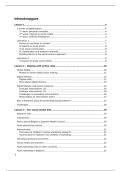
INHOUDSOPGAVE
LECTURE 1: INTRODUCTION AND MICRO REFRESHER ................................................................................... 3
INTRODUCTION ......................................................................................................................................................... 3
MICRO REFRESHER ..................................................................................................................................................... 4
LECTURE 2: EQUILIBRIUM AND EFFICIENCY ................................................................................................ 13
INTRODUCTION ....................................................................................................................................................... 13
PARETO EFFICIENCY .................................................................................................................................................. 14
COMPETITIVE ECONOMIES ......................................................................................................................................... 15
CRITICAL DISCUSSION................................................................................................................................................ 20
LECTURE 3: PUBLIC GOODS ....................................................................................................................... 21
PUBLIC GOODS ........................................................................................................................................................ 21
PRIVATE PROVISION.................................................................................................................................................. 23
EFFICIENT PROVISION................................................................................................................................................ 29
MECHANISM DESIGN ................................................................................................................................................ 31
FURTHER DISCUSSION ON PRIVATE PROVISION ............................................................................................................... 37
EMPIRICAL EVIDENCE ................................................................................................................................................ 40
CONCLUSION .......................................................................................................................................................... 40
LECTURE 4: CLUB GOODS AND EXTERNALITIES ........................................................................................... 41
CLUB GOODS........................................................................................................................................................... 41
EXTERNALITIES ........................................................................................................................................................ 44
WELFARE COST OF EXTERNALITIES ............................................................................................................................... 50
SOLUTIONS TO EXTERNALITIES .................................................................................................................................... 52
LECTURE 5: SOCIAL AND ECONOMIC NETWORKS ....................................................................................... 56
INTRODUCTION AND EXAMPLES .................................................................................................................................. 56
TERMS AND DEFINITIONS ........................................................................................................................................... 57
MEASURES AND PROPERTIES OF NETWORKS .................................................................................................................. 58
STRATEGIC NETWORK FORMATION .............................................................................................................................. 58
APPLICATION: INFORMAL INSURANCE NETWORKS........................................................................................................... 59
LECTURE 6: ASYMMETRIC INFORMATION .................................................................................................. 61
INTRODUCTION........................................................................................................................................................ 62
A CHOICE UNDER RISK ............................................................................................................................................... 62
AVDERSE SELECTION ................................................................................................................................................. 64
MORAL HAZARD ...................................................................................................................................................... 77
ACTIONS OR TYPES ................................................................................................................................................... 78
CONCLUSION .......................................................................................................................................................... 78
1
,LECTURE 7: OPTIMALITY AND COMPARABILITY .......................................................................................... 79
INTRODUCTION ....................................................................................................................................................... 79
PARETO OPTIMALITY (RECAP) ..................................................................................................................................... 79
SOCIAL WELFARE FUNCTIONS (SWFS).......................................................................................................................... 81
INTERPERSONAL INCOMPARABILITY ............................................................................................................................. 84
INTERPERSONAL (IN)COMPARABILITY ........................................................................................................................... 86
INTERPERSONAL COMPARABILITY ................................................................................................................................ 86
SWFS AND COMPARABILITY ....................................................................................................................................... 89
LUMP-SUM TAXES .................................................................................................................................................... 93
LECTURE 8: INEQUALITY AND POVERTY ..................................................................................................... 95
INTRODUCTION ....................................................................................................................................................... 95
FACTS AND FIGURES ................................................................................................................................................. 95
EQUIVALENCE SCALES ............................................................................................................................................... 97
DISTRIBUTIONS........................................................................................................................................................ 98
INEQUALITY .......................................................................................................................................................... 100
POVERTY .............................................................................................................................................................. 105
UNEQUAL OPPORTUNITIES VERSUS OUTCOMES ............................................................................................................ 108
LECTURE 9, PART 1: COMMODITY TAXATION ........................................................................................... 109
OVERVIEW ........................................................................................................................................................... 109
INTRODUCTION ..................................................................................................................................................... 109
DEADWEIGHT LOSS ................................................................................................................................................ 110
OPTIMAL TAXATION ............................................................................................................................................... 114
PRODUCTION EFFICIENCY......................................................................................................................................... 117
TAX RULES ............................................................................................................................................................ 118
EQUITY CONSIDERATIONS ........................................................................................................................................ 121
LECTURE 9, PART 2: INCOME TAXATION .................................................................................................. 122
TAXATION AND LABOR SUPPLY ................................................................................................................................. 122
EMPIRICAL EVIDENCE ON LABOR SUPPLY RESPONSES ..................................................................................................... 125
OPTIMAL INCOME TAXATION .................................................................................................................................... 127
LECTURE 10: TAX EVASION & BEHAVIORAL ASPECTS ................................................................................ 130
OVERVIEW ........................................................................................................................................................... 130
INTRODUCTION ..................................................................................................................................................... 130
THE EXTENT OF EVASION ......................................................................................................................................... 130
THE EVASION OF DECISION ....................................................................................................................................... 131
AUDITING AND PUNISHMENT ................................................................................................................................... 132
COMPLIANCE AND SOCIAL INTERACTION ..................................................................................................................... 133
CONCLUSION ........................................................................................................................................................ 134
SALIENCE AND TAXATION: THEORY AND EVIDENCE ........................................................................................................ 135
DO TAXPAYERS BUNCH AT KINK POINTS? .................................................................................................................... 136
2
,LECTURE 1: INTRODUCTION AND MICRO REFRESHER
INTRODUCTION
Definition for public economics
“The study of the public economy, i.e., of economic questions which are not purely market, intra-household or
intra-firm, with emphasis on logic-intensive (scientific) analysis and on ethical-normative questions.”
➢ Scope (what we study)
o Economic phenomena which are not purely market, intra-household, or intra-firm
o Not purely market means there is a role for the government to play
➢ Method (how we study it) = mostly scientific
o Positive analysis (“what is…”)
o Normative analysis (“what ought to be”)
o Conditional prescription: “if you believe this, then you need to do this and this” ultimately
remains a political choice
Questions
In this class, we will provide answers to the following questions:
1. Equilibrium and efficiency
How should one organize markets? What is the link between competition and efficiency? Do
competitive markets always lead to good outcomes?
2. Public goods and externalities
When and why do competitive market provide too little or too much of goods and services? How can
this be rectified? Why do governments tax smoking/pollution and subsidize education/innovation?
3. Asymmetric information
Why can markets unravel under asymmetric information?
4. Equity and distribution
a. When and how can policy makers trade off the interests of very different individuals? Can these
preferences be aggregated into a collective preference?
b. How to measure inequality and poverty?
5. Taxation
How should we tax consumption and labor? Is there a tension between efficiency and equity?
6. Political economy
How does the outcome of an election depend on the voting system? What are the properties of
different voting systems?
Economic models
Why do we use economic models?
The primary reason for economists is to understand reality, but reality is super complex. Therefore, we will
make a useful abstraction of reality that will give us insight into some sides of reality, even though this will still
be a simplification that only allows us to capture the essential aspects and not full reality. Furthermore, it is
hard to construct large-scale experiments since they are often costly and unethical.
→ Simplification & clarification = formal modeling ensures that arguments are logically consistent with all the
underlying assumptions exposed
3
, What and how?
What is an economic model exactly, and how is it set up?
Typical structure of a model:
➢ Inputs: exogenous (not determined within the models, outside the scope of the model)
➢ Modeling: constrained optimization (e.g., utlity or profit maximization)
➢ Outputs: endogenous (functions of the exogenous variables)
Scope:
➢ Partial equilibrium: only a single market is studied
o More useful and simple; keep all the other markets fixed
➢ General equilibrium: many markets are studies simultaneously
o Very complicated, but useful for getting strong results in simple contexts
MICRO REFRESHER
Consumer demand
A consumer decides optimally given their preferences and budget constraint (determined by prices and
income).
Rationality
Microeconomics starts from the premise of rational behavior:
➢ Preferences are complete: 𝑎 ≻ 𝑏 or 𝑎 ≺ 𝑏 or a ∼ 𝑏
o If you say you cannot rank them, you are irrational
o If you can rank your preferences, you show rational behavior
o Last statement means you are indifferent; both are equally fine for you
➢ Preferences are transitive: if 𝑎 ≻ 𝑏 and 𝑏 ≻ 𝑐 than 𝑎 ≻ 𝑐
➢ Preferences are non-satiable: more is better
➢ Preferences are convex: mixed bundles are preferred over extreme bundles
Indifference curve (IC)
An indifference curve is the collection of goods between which the consumer is indifferent.
We can identify four quadrants:
➢ Quadrant I
o Better than a because there is more of each good
(preferences are non-satiable)
➢ Quadrant III
o Worse than a because there is less of each good
➢ Quadrant II and IV (ambiguous)
o Indifference between a and b;
o c is better than a;
o a is better than d
4
INHOUDSOPGAVE
LECTURE 1: INTRODUCTION AND MICRO REFRESHER ................................................................................... 3
INTRODUCTION ......................................................................................................................................................... 3
MICRO REFRESHER ..................................................................................................................................................... 4
LECTURE 2: EQUILIBRIUM AND EFFICIENCY ................................................................................................ 13
INTRODUCTION ....................................................................................................................................................... 13
PARETO EFFICIENCY .................................................................................................................................................. 14
COMPETITIVE ECONOMIES ......................................................................................................................................... 15
CRITICAL DISCUSSION................................................................................................................................................ 20
LECTURE 3: PUBLIC GOODS ....................................................................................................................... 21
PUBLIC GOODS ........................................................................................................................................................ 21
PRIVATE PROVISION.................................................................................................................................................. 23
EFFICIENT PROVISION................................................................................................................................................ 29
MECHANISM DESIGN ................................................................................................................................................ 31
FURTHER DISCUSSION ON PRIVATE PROVISION ............................................................................................................... 37
EMPIRICAL EVIDENCE ................................................................................................................................................ 40
CONCLUSION .......................................................................................................................................................... 40
LECTURE 4: CLUB GOODS AND EXTERNALITIES ........................................................................................... 41
CLUB GOODS........................................................................................................................................................... 41
EXTERNALITIES ........................................................................................................................................................ 44
WELFARE COST OF EXTERNALITIES ............................................................................................................................... 50
SOLUTIONS TO EXTERNALITIES .................................................................................................................................... 52
LECTURE 5: SOCIAL AND ECONOMIC NETWORKS ....................................................................................... 56
INTRODUCTION AND EXAMPLES .................................................................................................................................. 56
TERMS AND DEFINITIONS ........................................................................................................................................... 57
MEASURES AND PROPERTIES OF NETWORKS .................................................................................................................. 58
STRATEGIC NETWORK FORMATION .............................................................................................................................. 58
APPLICATION: INFORMAL INSURANCE NETWORKS........................................................................................................... 59
LECTURE 6: ASYMMETRIC INFORMATION .................................................................................................. 61
INTRODUCTION........................................................................................................................................................ 62
A CHOICE UNDER RISK ............................................................................................................................................... 62
AVDERSE SELECTION ................................................................................................................................................. 64
MORAL HAZARD ...................................................................................................................................................... 77
ACTIONS OR TYPES ................................................................................................................................................... 78
CONCLUSION .......................................................................................................................................................... 78
1
,LECTURE 7: OPTIMALITY AND COMPARABILITY .......................................................................................... 79
INTRODUCTION ....................................................................................................................................................... 79
PARETO OPTIMALITY (RECAP) ..................................................................................................................................... 79
SOCIAL WELFARE FUNCTIONS (SWFS).......................................................................................................................... 81
INTERPERSONAL INCOMPARABILITY ............................................................................................................................. 84
INTERPERSONAL (IN)COMPARABILITY ........................................................................................................................... 86
INTERPERSONAL COMPARABILITY ................................................................................................................................ 86
SWFS AND COMPARABILITY ....................................................................................................................................... 89
LUMP-SUM TAXES .................................................................................................................................................... 93
LECTURE 8: INEQUALITY AND POVERTY ..................................................................................................... 95
INTRODUCTION ....................................................................................................................................................... 95
FACTS AND FIGURES ................................................................................................................................................. 95
EQUIVALENCE SCALES ............................................................................................................................................... 97
DISTRIBUTIONS........................................................................................................................................................ 98
INEQUALITY .......................................................................................................................................................... 100
POVERTY .............................................................................................................................................................. 105
UNEQUAL OPPORTUNITIES VERSUS OUTCOMES ............................................................................................................ 108
LECTURE 9, PART 1: COMMODITY TAXATION ........................................................................................... 109
OVERVIEW ........................................................................................................................................................... 109
INTRODUCTION ..................................................................................................................................................... 109
DEADWEIGHT LOSS ................................................................................................................................................ 110
OPTIMAL TAXATION ............................................................................................................................................... 114
PRODUCTION EFFICIENCY......................................................................................................................................... 117
TAX RULES ............................................................................................................................................................ 118
EQUITY CONSIDERATIONS ........................................................................................................................................ 121
LECTURE 9, PART 2: INCOME TAXATION .................................................................................................. 122
TAXATION AND LABOR SUPPLY ................................................................................................................................. 122
EMPIRICAL EVIDENCE ON LABOR SUPPLY RESPONSES ..................................................................................................... 125
OPTIMAL INCOME TAXATION .................................................................................................................................... 127
LECTURE 10: TAX EVASION & BEHAVIORAL ASPECTS ................................................................................ 130
OVERVIEW ........................................................................................................................................................... 130
INTRODUCTION ..................................................................................................................................................... 130
THE EXTENT OF EVASION ......................................................................................................................................... 130
THE EVASION OF DECISION ....................................................................................................................................... 131
AUDITING AND PUNISHMENT ................................................................................................................................... 132
COMPLIANCE AND SOCIAL INTERACTION ..................................................................................................................... 133
CONCLUSION ........................................................................................................................................................ 134
SALIENCE AND TAXATION: THEORY AND EVIDENCE ........................................................................................................ 135
DO TAXPAYERS BUNCH AT KINK POINTS? .................................................................................................................... 136
2
,LECTURE 1: INTRODUCTION AND MICRO REFRESHER
INTRODUCTION
Definition for public economics
“The study of the public economy, i.e., of economic questions which are not purely market, intra-household or
intra-firm, with emphasis on logic-intensive (scientific) analysis and on ethical-normative questions.”
➢ Scope (what we study)
o Economic phenomena which are not purely market, intra-household, or intra-firm
o Not purely market means there is a role for the government to play
➢ Method (how we study it) = mostly scientific
o Positive analysis (“what is…”)
o Normative analysis (“what ought to be”)
o Conditional prescription: “if you believe this, then you need to do this and this” ultimately
remains a political choice
Questions
In this class, we will provide answers to the following questions:
1. Equilibrium and efficiency
How should one organize markets? What is the link between competition and efficiency? Do
competitive markets always lead to good outcomes?
2. Public goods and externalities
When and why do competitive market provide too little or too much of goods and services? How can
this be rectified? Why do governments tax smoking/pollution and subsidize education/innovation?
3. Asymmetric information
Why can markets unravel under asymmetric information?
4. Equity and distribution
a. When and how can policy makers trade off the interests of very different individuals? Can these
preferences be aggregated into a collective preference?
b. How to measure inequality and poverty?
5. Taxation
How should we tax consumption and labor? Is there a tension between efficiency and equity?
6. Political economy
How does the outcome of an election depend on the voting system? What are the properties of
different voting systems?
Economic models
Why do we use economic models?
The primary reason for economists is to understand reality, but reality is super complex. Therefore, we will
make a useful abstraction of reality that will give us insight into some sides of reality, even though this will still
be a simplification that only allows us to capture the essential aspects and not full reality. Furthermore, it is
hard to construct large-scale experiments since they are often costly and unethical.
→ Simplification & clarification = formal modeling ensures that arguments are logically consistent with all the
underlying assumptions exposed
3
, What and how?
What is an economic model exactly, and how is it set up?
Typical structure of a model:
➢ Inputs: exogenous (not determined within the models, outside the scope of the model)
➢ Modeling: constrained optimization (e.g., utlity or profit maximization)
➢ Outputs: endogenous (functions of the exogenous variables)
Scope:
➢ Partial equilibrium: only a single market is studied
o More useful and simple; keep all the other markets fixed
➢ General equilibrium: many markets are studies simultaneously
o Very complicated, but useful for getting strong results in simple contexts
MICRO REFRESHER
Consumer demand
A consumer decides optimally given their preferences and budget constraint (determined by prices and
income).
Rationality
Microeconomics starts from the premise of rational behavior:
➢ Preferences are complete: 𝑎 ≻ 𝑏 or 𝑎 ≺ 𝑏 or a ∼ 𝑏
o If you say you cannot rank them, you are irrational
o If you can rank your preferences, you show rational behavior
o Last statement means you are indifferent; both are equally fine for you
➢ Preferences are transitive: if 𝑎 ≻ 𝑏 and 𝑏 ≻ 𝑐 than 𝑎 ≻ 𝑐
➢ Preferences are non-satiable: more is better
➢ Preferences are convex: mixed bundles are preferred over extreme bundles
Indifference curve (IC)
An indifference curve is the collection of goods between which the consumer is indifferent.
We can identify four quadrants:
➢ Quadrant I
o Better than a because there is more of each good
(preferences are non-satiable)
➢ Quadrant III
o Worse than a because there is less of each good
➢ Quadrant II and IV (ambiguous)
o Indifference between a and b;
o c is better than a;
o a is better than d
4