SPECS
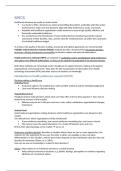
Healthcare decisions are made at various levels:
In a doctor's office, decisions are aimed at benefiting the patient, preferably with their active
involvement to make sure that decisions align with their preferences, wants, and needs.
Hospitals and healthcare organizations make decisions to ensure high-quality, efficient, and
financially sustainable healthcare.
At a societal level, the introduction of new medical devices and pharmaceuticals requires
assessment of their benefits, risks, and the need for reimbursement, all within the constraints
of a limited healthcare budget.
To enhance the quality of decision-making, structured and explicit approaches are recommended.
Multiple Criteria Decision Analysis (MCDA) methods provide a framework for structuring decision
processes, offering transparency and validity to decision makers and external stakeholders.
Health preference methods (HPM) are methods to qualitative and/or quantitatively elicit preferences
and values from different stakeholders, so they can be explicitly incorporated in the decision process.
Both these methods are increasingly used in healthcare to support decision-making at the patient,
organizational, and societal levels. They allow for the incorporation of information from health
technology assessment (HTA) and other sources of evidence or knowledge
Introduction to health preference research (03/09)
Decision making in health care
Individual level
Treatment options: the medical team with scientific evidence and the individual judgement
Costs may influence decision making
Organizational level
Hospitals need to make decisions about what care they offer and how they organize it. Also, how to
improve the services of the hospital.
Different ways to do it with pros and cons: costs, safety, satisfaction, organizational changes,
importance.
Societal level
(Inter)national organizations making decisions which healthcare organizations are allowed on the
market.
On national level: which organizations will be reimbursed?
If you reimburse something, you cannot reimburse something else; you have to choose
The money cannot be spend elsewhere; it’s a trade-off between pros and cons
EMA & FDA: allowing drugs on the market yes or no
Preference-sensitive decision: describes a situation where there are two or more approaches, the
evidence for the superiority of one over the other is either not available or does not allow
differentiation; in this situation, and the best choice depends on how individuals value the risks and
benefits of treatments (Elwyn, et al. 2009).
How can we use our knowledge to make the best decisions?
Values: what matters to an individual relevant to a health decision
Values directly relevant to decisions: e.g. beliefs, feelings, perceptions or evidence regarding
attributes of a treatment option
, Values indirectly relevant to decisions: e.g. goals, worldview, family, religious or cultural
beliefs.
Three essential elements of decision making
1. Judgement: predicting the outcomes of choosing possible options
2. Preference: weighing the importance of those outcomes
a. Qualitative or quantitative assessments of the relative desirability or acceptability of
specified alternatives or choices among outcomes or other attributes that differ
among alternative health interventions
i. Qualitative preferences: what do you prefer (e.g., I prefer apples over peers)
ii. Quantitative preferences: how much do you prefer something (e.g., I prefer
apples 8 times more than peers)
iii. Attributes: (e.g., I prefer the color of apples over the color of peers)
3. Choice: combining judgments and preferences to make decisions
Knowledge of the first 2 will help make decisions (> 3. Choice)
Recap decision making (in health care)
Health Preference Research (= HPR)
Health Preference Research (HPR) is research that is focused on measurement of preferences
for (aspects of) health, health policies, health services and health products
The aim of HPR is to understand the value of health and health related “goods” and services
The information gathered by HPR (“preference information”) is to inform decisions made by
patients, providers, regulators and policy makers, and thus to provide patient centred care.
Classification of health preference methods
Different classifications exist:
o Stated and Revealed Preference methods
Revealed preferences: Preferences inferred from observed market choices
Stated preferences: Preferences inferred from hypothetical choices
o Preference exploration and preference elicitation methods
Methods that collect descriptive about what matters to patients through
observation and examining the subjective experiences and decisions made by
participants.
Qualitative preference information, gathered with preference
exploration methods is useful in identifying which outcomes,
endpoints, or attributes matter to stakeholders and why.
, Methods that elicit preferences that collect quantifiable data for hypothesis
testing about the extent to which things matter to patients.
Quantitative information, gathered with preference elicitation
methods can provide estimates of how much different attributes
matter to and the trade-offs that stakeholders are willing to make
among them.
o Rating, ranking, indifference and choice-based methods
o Structured weighting, health state utility, stated preference, and revealed preference
methods
, Ranking methods
Healthcare decisions are made at various levels:
In a doctor's office, decisions are aimed at benefiting the patient, preferably with their active
involvement to make sure that decisions align with their preferences, wants, and needs.
Hospitals and healthcare organizations make decisions to ensure high-quality, efficient, and
financially sustainable healthcare.
At a societal level, the introduction of new medical devices and pharmaceuticals requires
assessment of their benefits, risks, and the need for reimbursement, all within the constraints
of a limited healthcare budget.
To enhance the quality of decision-making, structured and explicit approaches are recommended.
Multiple Criteria Decision Analysis (MCDA) methods provide a framework for structuring decision
processes, offering transparency and validity to decision makers and external stakeholders.
Health preference methods (HPM) are methods to qualitative and/or quantitatively elicit preferences
and values from different stakeholders, so they can be explicitly incorporated in the decision process.
Both these methods are increasingly used in healthcare to support decision-making at the patient,
organizational, and societal levels. They allow for the incorporation of information from health
technology assessment (HTA) and other sources of evidence or knowledge
Introduction to health preference research (03/09)
Decision making in health care
Individual level
Treatment options: the medical team with scientific evidence and the individual judgement
Costs may influence decision making
Organizational level
Hospitals need to make decisions about what care they offer and how they organize it. Also, how to
improve the services of the hospital.
Different ways to do it with pros and cons: costs, safety, satisfaction, organizational changes,
importance.
Societal level
(Inter)national organizations making decisions which healthcare organizations are allowed on the
market.
On national level: which organizations will be reimbursed?
If you reimburse something, you cannot reimburse something else; you have to choose
The money cannot be spend elsewhere; it’s a trade-off between pros and cons
EMA & FDA: allowing drugs on the market yes or no
Preference-sensitive decision: describes a situation where there are two or more approaches, the
evidence for the superiority of one over the other is either not available or does not allow
differentiation; in this situation, and the best choice depends on how individuals value the risks and
benefits of treatments (Elwyn, et al. 2009).
How can we use our knowledge to make the best decisions?
Values: what matters to an individual relevant to a health decision
Values directly relevant to decisions: e.g. beliefs, feelings, perceptions or evidence regarding
attributes of a treatment option
, Values indirectly relevant to decisions: e.g. goals, worldview, family, religious or cultural
beliefs.
Three essential elements of decision making
1. Judgement: predicting the outcomes of choosing possible options
2. Preference: weighing the importance of those outcomes
a. Qualitative or quantitative assessments of the relative desirability or acceptability of
specified alternatives or choices among outcomes or other attributes that differ
among alternative health interventions
i. Qualitative preferences: what do you prefer (e.g., I prefer apples over peers)
ii. Quantitative preferences: how much do you prefer something (e.g., I prefer
apples 8 times more than peers)
iii. Attributes: (e.g., I prefer the color of apples over the color of peers)
3. Choice: combining judgments and preferences to make decisions
Knowledge of the first 2 will help make decisions (> 3. Choice)
Recap decision making (in health care)
Health Preference Research (= HPR)
Health Preference Research (HPR) is research that is focused on measurement of preferences
for (aspects of) health, health policies, health services and health products
The aim of HPR is to understand the value of health and health related “goods” and services
The information gathered by HPR (“preference information”) is to inform decisions made by
patients, providers, regulators and policy makers, and thus to provide patient centred care.
Classification of health preference methods
Different classifications exist:
o Stated and Revealed Preference methods
Revealed preferences: Preferences inferred from observed market choices
Stated preferences: Preferences inferred from hypothetical choices
o Preference exploration and preference elicitation methods
Methods that collect descriptive about what matters to patients through
observation and examining the subjective experiences and decisions made by
participants.
Qualitative preference information, gathered with preference
exploration methods is useful in identifying which outcomes,
endpoints, or attributes matter to stakeholders and why.
, Methods that elicit preferences that collect quantifiable data for hypothesis
testing about the extent to which things matter to patients.
Quantitative information, gathered with preference elicitation
methods can provide estimates of how much different attributes
matter to and the trade-offs that stakeholders are willing to make
among them.
o Rating, ranking, indifference and choice-based methods
o Structured weighting, health state utility, stated preference, and revealed preference
methods
, Ranking methods