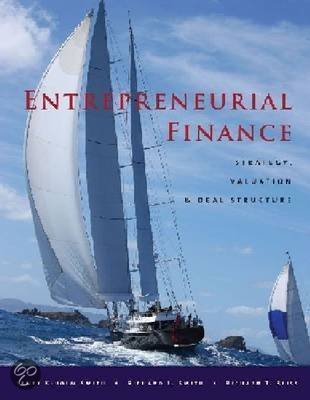
SOLUTION MANUAL
Entrepreneurial Finance, 7th Edition
J. Chris Leach, Ronald W. Melicher
Chapters 1 - 16 With CAPSTONE CASES
,TABLE OF CONTENTS
Part 1: THE ENTREPRENEURIAL ENVIRONMENT.
1. Introduction to Finance for Entrepreneurs.
2. Developing the Business Idea.
Part 2: ORGANIZING AND OPERATING THE VENTURE.
3. Organizing and Financing a New Venture.
4. Preparing and Using Financial Statements.
5. Evaluating Operating and Financial Performance. Part
3: PLANNING FOR THE FUTURE.
6. Managing Cash Flow.
7. Types and Costs of Financial Capital.
8. Securities Law Considerations When Obtaining Venture Financing. Part 4:
CREATING AND RECOGNIZING VENTURE VALUE.
9. Projecting Financial Statements.
10. Valuing Early-Stage Ventures.
11. Venture Capital Valuation Methods.
Part 5: STRUCTURING FINANCING FOR THE GROWING VENTURE.
12. Professional Venture Capital.
13. Other Financing Alternatives.
14. Security Structures and Determining Enterprise Values. Part 6:
EXIT AND TURNAROUND STRATEGIES.
15. Harvesting the Business Venture Investment.
16. Financially Troubled Ventures: Turnaround Opportunities? Part 7:
CAPSTONE CASES.
Case 1. Eco-Products, Inc. Case
2. Spatial Technology,
,Chapter 1
INTRODUCTION TO FINANCE FOR ENTREPRENEURS FOCUS
The purpose of this first chapter is to present an overview of what entrepreneurial finance is
about. In doing so we hope to convey to you the importance of understanding and applying
entrepreneurial finance methods and tools to help ensure an entrepreneurial venture is
successful.We present a life cycle approach to the teaching of entrepreneurial finance where we
cover venture operating and financial decisions faced by the entrepreneur as a venture
progresses from an idea through to harvesting the venture.
LEARNING OBJECTIVES
LO 1.1: Characterize the entrepreneurial process.
LO 1.2: Describe entrepreneurship and some characteristics of entrepreneurs. LO
1.3: Indicate several megatrends providing waves of entrepreneurial
opportunities.LO 1.4: List and describe the seven principles of entrepreneurial
finance.
LO 1.5: Discuss entrepreneurial finance and the role of the financial manager.LO
1.6: Describe the various stages of a successful venture‘s life cycle.
LO 1.7: Identify, by life cycle stage, the relevant types of financing and
investors.LO 1.8: Understand the life cycle approach used in this book.
CHAPTER OUTLINE
1.1 THE fENTREPRENEURIAL fPROCESS
1.2 ENTREPRENEURSHIP fFUNDAMENTALS
A. Who fis fan fEntrepreneur?
B. Basic fDefinitions
C. Entrepreneurial fTraits for fCharacteristics
D. Opportunities fExist fBut fNot fWithout fRisks
1.3 SOURCES fOF fENTREPRENEURIAL fOPPORTUNITIES
A. Societal fChanges
B. Demographic fChanges
C. Technological fChanges
D. Emerging fEconomies fand fGlobal fChanges
E. Crises fand f ―Bubbles‖
F. Disruptive fInnovation
1
, 1.4 PRINCIPLES fOF fENTREPRENEURIAL fFINANCE
A. Real, fHuman, fand fFinancial fCapital fmust fbe fRented ffrom fOwners f(Principle f#1)
B. Risk fand fExpected fReward fgo fHand fin fHand f(Principle f#2)
C. While fAccounting fis fthe fLanguage fof fBusiness, fCash fis fthe fCurrency f(Principle f#3)
D. New fVenture fFinancing fInvolves fSearch, fNegotiation, fand fPrivacy f(Principle f#4)
E. A fVenture‘s fFinancial fObjective fis fto fIncrease fValue f(Principle f#5)
F. It fis fDangerous fto fAssume fthat fPeople fAct fAgainst fTheir fOwn fSelf-
f Interests(Principle f#6)
G. Venture fCharacter fand fReputation fcan fbe fAssets for fLiabilities f(Principle f#7)
1.5 ROLE fOF fENTREPRENEURIAL fFINANCE
1.6 THE fSUCCESSFUL fVENTURE fLIFE fCYCLE
A. Development fStage
B. Startup fStage
C. Survival fStage
D. Rapid-Growth fStage
E. Early-Maturity fStage
F. Life fCycle fStages fand fthe fEntrepreneurial fProcess
1.7 FINANCING fTHROUGH fTHE fVENTURE fLIFE fCYCLE
A. Seed fFinancing
B. Startup fFinancing
C. First-Round fFinancing
D. Second-Round fFinancing
E. Mezzanine fFinancing
F. Liquidity-Stage fFinancing
G. Seasoned fFinancing
1.8 LIFE fCYCLE fAPPROACH fFOR fTEACHING fENTREPRENEURIAL fFINANCE
f SUMMARY
DISCUSSION fQUESTIONS fAND fANSWERS
1. What fis fthe fentrepreneurial fprocess?
The fentrepreneurial fprocess fcomprises: fdeveloping fopportunities, fgathering fresources,
f andmanaging fand fbuilding foperations fwith fthe fgoal fof fcreating fvalue.
2. What fis fentrepreneurship? fWhat fare fsome fbasic fcharacteristics fof fentrepreneurs?
Entrepreneurship fis fthe fprocess fof fchanging fideas finto fcommercial fopportunities fand
f creatingvalue. f fWhile fthere fis fno fprototypical fentrepreneur, fmany fare fgood fat
frecognizing f commercial fopportunities, ftend fto fbe foptimistic, fand fenvision fa fplan ffor fthe
ffuture.
3. Why fdo fbusinesses fclose for fcease foperating? fWhat fare fthe fprimary freasons fwhy
fbusinesses f fail?
Entrepreneurial Finance, 7th Edition
J. Chris Leach, Ronald W. Melicher
Chapters 1 - 16 With CAPSTONE CASES
,TABLE OF CONTENTS
Part 1: THE ENTREPRENEURIAL ENVIRONMENT.
1. Introduction to Finance for Entrepreneurs.
2. Developing the Business Idea.
Part 2: ORGANIZING AND OPERATING THE VENTURE.
3. Organizing and Financing a New Venture.
4. Preparing and Using Financial Statements.
5. Evaluating Operating and Financial Performance. Part
3: PLANNING FOR THE FUTURE.
6. Managing Cash Flow.
7. Types and Costs of Financial Capital.
8. Securities Law Considerations When Obtaining Venture Financing. Part 4:
CREATING AND RECOGNIZING VENTURE VALUE.
9. Projecting Financial Statements.
10. Valuing Early-Stage Ventures.
11. Venture Capital Valuation Methods.
Part 5: STRUCTURING FINANCING FOR THE GROWING VENTURE.
12. Professional Venture Capital.
13. Other Financing Alternatives.
14. Security Structures and Determining Enterprise Values. Part 6:
EXIT AND TURNAROUND STRATEGIES.
15. Harvesting the Business Venture Investment.
16. Financially Troubled Ventures: Turnaround Opportunities? Part 7:
CAPSTONE CASES.
Case 1. Eco-Products, Inc. Case
2. Spatial Technology,
,Chapter 1
INTRODUCTION TO FINANCE FOR ENTREPRENEURS FOCUS
The purpose of this first chapter is to present an overview of what entrepreneurial finance is
about. In doing so we hope to convey to you the importance of understanding and applying
entrepreneurial finance methods and tools to help ensure an entrepreneurial venture is
successful.We present a life cycle approach to the teaching of entrepreneurial finance where we
cover venture operating and financial decisions faced by the entrepreneur as a venture
progresses from an idea through to harvesting the venture.
LEARNING OBJECTIVES
LO 1.1: Characterize the entrepreneurial process.
LO 1.2: Describe entrepreneurship and some characteristics of entrepreneurs. LO
1.3: Indicate several megatrends providing waves of entrepreneurial
opportunities.LO 1.4: List and describe the seven principles of entrepreneurial
finance.
LO 1.5: Discuss entrepreneurial finance and the role of the financial manager.LO
1.6: Describe the various stages of a successful venture‘s life cycle.
LO 1.7: Identify, by life cycle stage, the relevant types of financing and
investors.LO 1.8: Understand the life cycle approach used in this book.
CHAPTER OUTLINE
1.1 THE fENTREPRENEURIAL fPROCESS
1.2 ENTREPRENEURSHIP fFUNDAMENTALS
A. Who fis fan fEntrepreneur?
B. Basic fDefinitions
C. Entrepreneurial fTraits for fCharacteristics
D. Opportunities fExist fBut fNot fWithout fRisks
1.3 SOURCES fOF fENTREPRENEURIAL fOPPORTUNITIES
A. Societal fChanges
B. Demographic fChanges
C. Technological fChanges
D. Emerging fEconomies fand fGlobal fChanges
E. Crises fand f ―Bubbles‖
F. Disruptive fInnovation
1
, 1.4 PRINCIPLES fOF fENTREPRENEURIAL fFINANCE
A. Real, fHuman, fand fFinancial fCapital fmust fbe fRented ffrom fOwners f(Principle f#1)
B. Risk fand fExpected fReward fgo fHand fin fHand f(Principle f#2)
C. While fAccounting fis fthe fLanguage fof fBusiness, fCash fis fthe fCurrency f(Principle f#3)
D. New fVenture fFinancing fInvolves fSearch, fNegotiation, fand fPrivacy f(Principle f#4)
E. A fVenture‘s fFinancial fObjective fis fto fIncrease fValue f(Principle f#5)
F. It fis fDangerous fto fAssume fthat fPeople fAct fAgainst fTheir fOwn fSelf-
f Interests(Principle f#6)
G. Venture fCharacter fand fReputation fcan fbe fAssets for fLiabilities f(Principle f#7)
1.5 ROLE fOF fENTREPRENEURIAL fFINANCE
1.6 THE fSUCCESSFUL fVENTURE fLIFE fCYCLE
A. Development fStage
B. Startup fStage
C. Survival fStage
D. Rapid-Growth fStage
E. Early-Maturity fStage
F. Life fCycle fStages fand fthe fEntrepreneurial fProcess
1.7 FINANCING fTHROUGH fTHE fVENTURE fLIFE fCYCLE
A. Seed fFinancing
B. Startup fFinancing
C. First-Round fFinancing
D. Second-Round fFinancing
E. Mezzanine fFinancing
F. Liquidity-Stage fFinancing
G. Seasoned fFinancing
1.8 LIFE fCYCLE fAPPROACH fFOR fTEACHING fENTREPRENEURIAL fFINANCE
f SUMMARY
DISCUSSION fQUESTIONS fAND fANSWERS
1. What fis fthe fentrepreneurial fprocess?
The fentrepreneurial fprocess fcomprises: fdeveloping fopportunities, fgathering fresources,
f andmanaging fand fbuilding foperations fwith fthe fgoal fof fcreating fvalue.
2. What fis fentrepreneurship? fWhat fare fsome fbasic fcharacteristics fof fentrepreneurs?
Entrepreneurship fis fthe fprocess fof fchanging fideas finto fcommercial fopportunities fand
f creatingvalue. f fWhile fthere fis fno fprototypical fentrepreneur, fmany fare fgood fat
frecognizing f commercial fopportunities, ftend fto fbe foptimistic, fand fenvision fa fplan ffor fthe
ffuture.
3. Why fdo fbusinesses fclose for fcease foperating? fWhat fare fthe fprimary freasons fwhy
fbusinesses f fail?