Private Nuisance
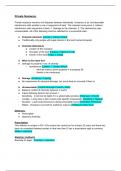
Private nuisance involves civil disputes between individuals. Nuisance is an ‘unreasonable
interference with another’s use or enjoyment of land’. The claimant must prove 1. Indirect
interference with enjoyment of land, 2. Damage to the claimant, 3. The interference was
unreasonable. All of the following must be satisfied for a successful claim.
1. Potential claimants (Hunter v Canary Wharf)
● Traditionally only people with legal interest in the land (owner/occupier)
2. Potential defendants
● Creator of the nuisance
● Occupier of the land (Leakey v National Trust)
● Owner of the land (Tetley v Chitty)
3. What is the claim for?
● Damage to property / loss of amenity
○ Interference (Leakey / Canary Wharf)
- Must be indirect (from property A to property B)
- Needs to be continuous
4. Damage (Smelting v Tipping)
● No requirement for physical damage, but more likely to succeed if there is
5. Unreasonable (London Borough Council v Mills)
● Balance conflict of interests between C and D
● Takes following factors into account =
- Sensitivity - D will not be liable if C is abnormally sensitive (Robinson v Kilvert)
- Locality - Living near a farm comes with specific noise/smells (Smelting v Tipping)
- Duration - Lasts long time/occurs during unsociable hours (Kimbolton Fireworks)
- Malice - Nuisance occurred for malicious reasons (Hollywood Silver Fox)
Defences:
● Prescription
● Statutory Authority
Prescription
This defence is unique to PN. If the action has carried on for at least 20 years and there has
been no complaint between parties in that time then D has a prescriptive right to continue
(Miller v Jackson)
Statutory Authority
Basically its legal - Coventry v Lawrence
Private nuisance involves civil disputes between individuals. Nuisance is an ‘unreasonable
interference with another’s use or enjoyment of land’. The claimant must prove 1. Indirect
interference with enjoyment of land, 2. Damage to the claimant, 3. The interference was
unreasonable. All of the following must be satisfied for a successful claim.
1. Potential claimants (Hunter v Canary Wharf)
● Traditionally only people with legal interest in the land (owner/occupier)
2. Potential defendants
● Creator of the nuisance
● Occupier of the land (Leakey v National Trust)
● Owner of the land (Tetley v Chitty)
3. What is the claim for?
● Damage to property / loss of amenity
○ Interference (Leakey / Canary Wharf)
- Must be indirect (from property A to property B)
- Needs to be continuous
4. Damage (Smelting v Tipping)
● No requirement for physical damage, but more likely to succeed if there is
5. Unreasonable (London Borough Council v Mills)
● Balance conflict of interests between C and D
● Takes following factors into account =
- Sensitivity - D will not be liable if C is abnormally sensitive (Robinson v Kilvert)
- Locality - Living near a farm comes with specific noise/smells (Smelting v Tipping)
- Duration - Lasts long time/occurs during unsociable hours (Kimbolton Fireworks)
- Malice - Nuisance occurred for malicious reasons (Hollywood Silver Fox)
Defences:
● Prescription
● Statutory Authority
Prescription
This defence is unique to PN. If the action has carried on for at least 20 years and there has
been no complaint between parties in that time then D has a prescriptive right to continue
(Miller v Jackson)
Statutory Authority
Basically its legal - Coventry v Lawrence