MANACC: FM ONE PAGE SUMMARIES
SS Summaries
,
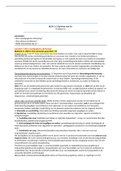
, MANACC – SOURCES OF FINANCE ONE PAGE SUMMARY
Cost Return for investors Control Risk / Obligation
Retained Earnings cheapest form of financing no dilution of control
DEBT cheaper than equity due to tax no dilution of control ◦ Has fixed repayment terms & fixed
shield (reduction in interest interest payments (could put a
payments company into financial distress)
◦ Have to report to lenders
à REDUCES cost of capital ◦ Reduced flexibility à foregone
investment opportunities
• Loan usually cheaper (interest is tax lower return compared to pref. no dilution of control ◦ interest is capitalised à big debt
deductible) shares (promise of compulsory obligation
interest payments)
• Debentures usually cheaper (interest is tax lower return compared to pref. no dilution of control (no ◦ high interest burden (contractually
deductible) shares (lower risk for voting rights) obligated to make payments)
debenture holders as interest ◦ fixed payments
NB: if the company has pmts are contractually ◦ comply with JSE requirements
accumulated losses, the tax determined) Convertible into ordinary ◦ requires security
deduction has little value shares à dilutes control
debt cannot be utilised if a company is expected to have low income (cannot carry a high interest burden)
• Benefits from increased leverage if a company has NB: company does not want TOO much debt (increases the costs of financial distress)
LOW gearing ◦ direct costs à liquidation & admin costs, costs to sell assets quickly
• Shareholders will benefit if the ROA > Kd ◦ indirect costs à lose customers / employees resign
◦ EQUITY
Preference shares more expensive higher return (carry more risk no dilution of control (no
- bears a fixed charge & for investors) voting rights)
additional issue costs
- dividends are not tax Convertible into ordinary
deductible shares à dilutes control
NB: If a company is highly geared: adding preference shares funding will reduce the risk of bankruptcy as the company is not legally obliged to meet the dividend
payments
• Cumulative ◦ company cannot avoid the obligation of paying a dividend
• Non- ◦ company can avoid dividends and can use the available cash flow for other purposes
cumulative
• Redeemable
• Non- ◦ issuer is contractually bound to pay dividends in perpetuity
redeemable ◦ longer-term commitment to cash flows but less risky than debentures in terms of the capital needed at redemption
Ordinary Shares most expensive option return in the form of capital dilutes control
(listing fees, bank fees, growth & dividend pay-outs
professional fees)
NB: if the returns are higher
than debt instruments = higher
risk
◦
RIGHTS ISSUE ◦
• Renounceable more expensive (right to be sold dilutes control (sold to BUT: ensures that the entire rights issue is
in secondary market) outsiders) taken up
• Non- less expensive no dilution of control the rights issue might not be fully taken
renounceable up & funding may be limited
, NO OPTIMAL CAPITAL STRUCTURE
Argument against Why Not appliable
M&M under certain assumptions, Assets determine the company’s value not how the assets
without tax capital structure is irrelevant are financed Under this theory, a company’s proposed capital structure does not have any
(WACC is independent of value) impact on shareholder wealth
Pecking Capital structure is a side- ORDER: Company example:
order effect of choosing financing 1 RETAINED EARNINGS If Kd and Kp (after tax cost of debt and the cost of the preference shares) is
in order ◦ lowest cost alternative significantly cheaper than the preferred financing through retained earnings as
theory
◦ no dilution of control (does not dilute control of sh) first option
Funds will be raised in order ◦ no compliance issues
of a preferred hierarchy in \ The pecking order approach will result in unnecessary high cost of financing
terms of cost, flexibility and 2 DEBT \ utilise debt (low-gearing so can support it)
control ◦ Cost is still lower than issuing new equity (due to tax
shields)
Hierachy: ◦ Lower risk for investors
◦ Retained Earnings Company example: NEW company
◦ Debt but only as second option as: A relatively new company with strong growth
◦ Hybrid instruments ◦ result in covenants
(convertible debt & ◦ reporting to the lenders à retained earnings not available
pref shares) \ utilise debt as much as possible
◦ lastly: issue new 3 EQUITY
equity. ◦ dilutes control of existing s/h
◦ most expensive
◦ ONLY as a last resort
◦
Signalling Financing sends a signal to the market for a private company or would have a sole shareholder post- acquisition
theory Capital structure is a side- • Equity issue: share price is over-valued
effect of choosing financing
according to the signal it • Share-buy back: share price is under-valued
sends • Debt: company has good growth prospects
OPTIMAL CAPITAL STRUCTURE EXISTS
Argument for Why Shareholder wealth / WACC downside
M&M with debt becomes cheaper because this theory relaxes the assumption that shareholder wealth will increase infinitely as This ignores the risk of having too
tax of the tax shield and the value of there is no tax, resulting in shareholder debt increases and therefore a higher-than- much debt in capital structure
the entity therefore increases as wealth increasing as the present value average debt ratio is beneficial this could
the amount of debt increases of the interest tax shield increases ◦ Increase the cost of debt
(the more debt, the better) ◦ Increase the cost of
Tax shield provided by debt financial distress
creates value ◦ Incur agency costs
with taxes, the WACC falls when
the debt ratio increases
Traditional Exists but is dependent on the Debt is usually a cheaper form of Increasing the level of debt in the capital WACC will initially decrease as cheap
theory level of gearing finance than equity because the lender structure should therefore reduce WACC. debt is introduced (through savings
Shareholder’s wealth can only requires a lower return because of the from the interest tax shield), however,
be maximised at optimal WACC reduced risk. However, increasing the debt levels will that a turning point will be reached
increase the financial risk, and the potential where WACC would later increase as
The optimal capital structure will The interest on debt is also tax for financial distress and resulting bankruptcy the negative consequences of financial
be at the point where WACC is deductible for the company, creating a costs. distress increases
minimised, because at the point tax shield that will increase the value of
the value of the company the company (due to the increased cash Where there is a high risk of financial distress,
maximised flow from the decreased tax expense). both lenders and shareholders will demand
increased returns to compensate for the
higher levels of risk.
This will in turn result in an increase in WACC,
and a decrease in company value.
Trade-off Companies trade-off the This implies that there is not just one Too much debt may increase the company’s risk of incurring financial distress and
theory advantages of debt financing ideal capital structure, but a range of bankruptcy costs
and the cost of financial distress possible optimal structures where which may include:
WACC is minimised and shareholder
There is not just 1 optimal wealth maximised Direct costs:
capital structure - The legal and accounting costs of winding up the company;
Look at the scenario, if the proposed - Costs associated with the sale of assets under distressed prices
debt ratio falls within that range
Indirect costs:
- Customers do not purchase products since à uncertain whether the
company will be able to support product warrantees
- Employees may resign if the company’s prospects seem weak;
- Banks may call up their loans / increase interest rates, as their risk exposure
to default increases;
- Lucrative investment opportunities may be missed due to limited financing
options
SS Summaries
,
, MANACC – SOURCES OF FINANCE ONE PAGE SUMMARY
Cost Return for investors Control Risk / Obligation
Retained Earnings cheapest form of financing no dilution of control
DEBT cheaper than equity due to tax no dilution of control ◦ Has fixed repayment terms & fixed
shield (reduction in interest interest payments (could put a
payments company into financial distress)
◦ Have to report to lenders
à REDUCES cost of capital ◦ Reduced flexibility à foregone
investment opportunities
• Loan usually cheaper (interest is tax lower return compared to pref. no dilution of control ◦ interest is capitalised à big debt
deductible) shares (promise of compulsory obligation
interest payments)
• Debentures usually cheaper (interest is tax lower return compared to pref. no dilution of control (no ◦ high interest burden (contractually
deductible) shares (lower risk for voting rights) obligated to make payments)
debenture holders as interest ◦ fixed payments
NB: if the company has pmts are contractually ◦ comply with JSE requirements
accumulated losses, the tax determined) Convertible into ordinary ◦ requires security
deduction has little value shares à dilutes control
debt cannot be utilised if a company is expected to have low income (cannot carry a high interest burden)
• Benefits from increased leverage if a company has NB: company does not want TOO much debt (increases the costs of financial distress)
LOW gearing ◦ direct costs à liquidation & admin costs, costs to sell assets quickly
• Shareholders will benefit if the ROA > Kd ◦ indirect costs à lose customers / employees resign
◦ EQUITY
Preference shares more expensive higher return (carry more risk no dilution of control (no
- bears a fixed charge & for investors) voting rights)
additional issue costs
- dividends are not tax Convertible into ordinary
deductible shares à dilutes control
NB: If a company is highly geared: adding preference shares funding will reduce the risk of bankruptcy as the company is not legally obliged to meet the dividend
payments
• Cumulative ◦ company cannot avoid the obligation of paying a dividend
• Non- ◦ company can avoid dividends and can use the available cash flow for other purposes
cumulative
• Redeemable
• Non- ◦ issuer is contractually bound to pay dividends in perpetuity
redeemable ◦ longer-term commitment to cash flows but less risky than debentures in terms of the capital needed at redemption
Ordinary Shares most expensive option return in the form of capital dilutes control
(listing fees, bank fees, growth & dividend pay-outs
professional fees)
NB: if the returns are higher
than debt instruments = higher
risk
◦
RIGHTS ISSUE ◦
• Renounceable more expensive (right to be sold dilutes control (sold to BUT: ensures that the entire rights issue is
in secondary market) outsiders) taken up
• Non- less expensive no dilution of control the rights issue might not be fully taken
renounceable up & funding may be limited
, NO OPTIMAL CAPITAL STRUCTURE
Argument against Why Not appliable
M&M under certain assumptions, Assets determine the company’s value not how the assets
without tax capital structure is irrelevant are financed Under this theory, a company’s proposed capital structure does not have any
(WACC is independent of value) impact on shareholder wealth
Pecking Capital structure is a side- ORDER: Company example:
order effect of choosing financing 1 RETAINED EARNINGS If Kd and Kp (after tax cost of debt and the cost of the preference shares) is
in order ◦ lowest cost alternative significantly cheaper than the preferred financing through retained earnings as
theory
◦ no dilution of control (does not dilute control of sh) first option
Funds will be raised in order ◦ no compliance issues
of a preferred hierarchy in \ The pecking order approach will result in unnecessary high cost of financing
terms of cost, flexibility and 2 DEBT \ utilise debt (low-gearing so can support it)
control ◦ Cost is still lower than issuing new equity (due to tax
shields)
Hierachy: ◦ Lower risk for investors
◦ Retained Earnings Company example: NEW company
◦ Debt but only as second option as: A relatively new company with strong growth
◦ Hybrid instruments ◦ result in covenants
(convertible debt & ◦ reporting to the lenders à retained earnings not available
pref shares) \ utilise debt as much as possible
◦ lastly: issue new 3 EQUITY
equity. ◦ dilutes control of existing s/h
◦ most expensive
◦ ONLY as a last resort
◦
Signalling Financing sends a signal to the market for a private company or would have a sole shareholder post- acquisition
theory Capital structure is a side- • Equity issue: share price is over-valued
effect of choosing financing
according to the signal it • Share-buy back: share price is under-valued
sends • Debt: company has good growth prospects
OPTIMAL CAPITAL STRUCTURE EXISTS
Argument for Why Shareholder wealth / WACC downside
M&M with debt becomes cheaper because this theory relaxes the assumption that shareholder wealth will increase infinitely as This ignores the risk of having too
tax of the tax shield and the value of there is no tax, resulting in shareholder debt increases and therefore a higher-than- much debt in capital structure
the entity therefore increases as wealth increasing as the present value average debt ratio is beneficial this could
the amount of debt increases of the interest tax shield increases ◦ Increase the cost of debt
(the more debt, the better) ◦ Increase the cost of
Tax shield provided by debt financial distress
creates value ◦ Incur agency costs
with taxes, the WACC falls when
the debt ratio increases
Traditional Exists but is dependent on the Debt is usually a cheaper form of Increasing the level of debt in the capital WACC will initially decrease as cheap
theory level of gearing finance than equity because the lender structure should therefore reduce WACC. debt is introduced (through savings
Shareholder’s wealth can only requires a lower return because of the from the interest tax shield), however,
be maximised at optimal WACC reduced risk. However, increasing the debt levels will that a turning point will be reached
increase the financial risk, and the potential where WACC would later increase as
The optimal capital structure will The interest on debt is also tax for financial distress and resulting bankruptcy the negative consequences of financial
be at the point where WACC is deductible for the company, creating a costs. distress increases
minimised, because at the point tax shield that will increase the value of
the value of the company the company (due to the increased cash Where there is a high risk of financial distress,
maximised flow from the decreased tax expense). both lenders and shareholders will demand
increased returns to compensate for the
higher levels of risk.
This will in turn result in an increase in WACC,
and a decrease in company value.
Trade-off Companies trade-off the This implies that there is not just one Too much debt may increase the company’s risk of incurring financial distress and
theory advantages of debt financing ideal capital structure, but a range of bankruptcy costs
and the cost of financial distress possible optimal structures where which may include:
WACC is minimised and shareholder
There is not just 1 optimal wealth maximised Direct costs:
capital structure - The legal and accounting costs of winding up the company;
Look at the scenario, if the proposed - Costs associated with the sale of assets under distressed prices
debt ratio falls within that range
Indirect costs:
- Customers do not purchase products since à uncertain whether the
company will be able to support product warrantees
- Employees may resign if the company’s prospects seem weak;
- Banks may call up their loans / increase interest rates, as their risk exposure
to default increases;
- Lucrative investment opportunities may be missed due to limited financing
options