Chapter 18 – Acid-Base Equilibria and Solubility Equilibria
Section 18.1 – The Common Ion Effect
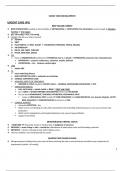
Read through page 851, and use Le Châtelier’s principle to explain what happens in an
aqueous solution of acetic acid (CH3COOH) when sodium acetate (CH3COONa) is added to the
solution: Sodium acetate dissociates completely in aqueous solution to give sodium ions + actations .
increased the concentration of acetate ion addition of the acetate
-
by adding sodium acetate ,
we ,
so the in
causes equilibrium to shift left.
-
net result is a decrease in the % ionization of acetic acid
Work through Worked Example 18.1. This is a great way to apply what you have already
learned about acid-base chemistry and Le Châtelier’s principle. Once you understand the steps
needed to solve this type of problem, challenge yourself with the 3 Practice Problems (Attempt,
Build, Conceptualize).
What is meant by the common ion effect?
the decrease in solubility of an ionic
precipitate
addition to the solution of a soluble
by the
compound w/an ion in common with the precipitate
Section 18.2 – Buffer Solutions
What is a buffer? What two components are required to make a buffer?
·
Is a solution that contains a weak acid & its
conongate base
·
They resist changes in pl upon additions of small amounts of an alid or base
weakacid conjugateese
Consider a buffer that contains 0.250 M HF and 0.200 M F–.
What component in the buffer neutralizes any added base (OH−)? HF
What component in the buffer neutralizes any added acid (H3O+)? F-
1
, For buffer solutions, an ICE table may be used to determine equilibrium concentrations.
Complete the ICE table for a buffer that is 0.250 M HF and 0.200 M F–. The initial line has
already been filled in for you.
HF (aq) + H2O (l) F– (aq) + H3O+ (aq)
I 0.250 -- 0.200 0
C -
X -- + X + X
E 0 250
.
-
X -- 0 200 + X
. X
Q1: Use your ICE table to calculate the pH of this buffered solution. The Ka of HF is 3.5 x 10⁻⁴.
"
[Hz0 ]
+
=
X
=
4 .
375x10-
3 .
5x10⁻⁴ -
Ix pH
= -
10g(4 .
373x10
-
4)
X =
17 .
35x10" smal # 3 36
.
The pH of buffered solutions can also be calculated using the Henderson-Hasselbalch
equation. Write this equation below.
Conjugate base]
pH = pKa +
109 (weakacid]
Work through Worked Example 18.2. Once you understand the steps needed to solve this type
of problem, challenge yourself with the 3 Practice Problems (Attempt, Build, Conceptualize).
2
Section 18.1 – The Common Ion Effect
Read through page 851, and use Le Châtelier’s principle to explain what happens in an
aqueous solution of acetic acid (CH3COOH) when sodium acetate (CH3COONa) is added to the
solution: Sodium acetate dissociates completely in aqueous solution to give sodium ions + actations .
increased the concentration of acetate ion addition of the acetate
-
by adding sodium acetate ,
we ,
so the in
causes equilibrium to shift left.
-
net result is a decrease in the % ionization of acetic acid
Work through Worked Example 18.1. This is a great way to apply what you have already
learned about acid-base chemistry and Le Châtelier’s principle. Once you understand the steps
needed to solve this type of problem, challenge yourself with the 3 Practice Problems (Attempt,
Build, Conceptualize).
What is meant by the common ion effect?
the decrease in solubility of an ionic
precipitate
addition to the solution of a soluble
by the
compound w/an ion in common with the precipitate
Section 18.2 – Buffer Solutions
What is a buffer? What two components are required to make a buffer?
·
Is a solution that contains a weak acid & its
conongate base
·
They resist changes in pl upon additions of small amounts of an alid or base
weakacid conjugateese
Consider a buffer that contains 0.250 M HF and 0.200 M F–.
What component in the buffer neutralizes any added base (OH−)? HF
What component in the buffer neutralizes any added acid (H3O+)? F-
1
, For buffer solutions, an ICE table may be used to determine equilibrium concentrations.
Complete the ICE table for a buffer that is 0.250 M HF and 0.200 M F–. The initial line has
already been filled in for you.
HF (aq) + H2O (l) F– (aq) + H3O+ (aq)
I 0.250 -- 0.200 0
C -
X -- + X + X
E 0 250
.
-
X -- 0 200 + X
. X
Q1: Use your ICE table to calculate the pH of this buffered solution. The Ka of HF is 3.5 x 10⁻⁴.
"
[Hz0 ]
+
=
X
=
4 .
375x10-
3 .
5x10⁻⁴ -
Ix pH
= -
10g(4 .
373x10
-
4)
X =
17 .
35x10" smal # 3 36
.
The pH of buffered solutions can also be calculated using the Henderson-Hasselbalch
equation. Write this equation below.
Conjugate base]
pH = pKa +
109 (weakacid]
Work through Worked Example 18.2. Once you understand the steps needed to solve this type
of problem, challenge yourself with the 3 Practice Problems (Attempt, Build, Conceptualize).
2