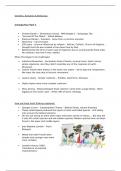
Addiction – Session 1
Literature:
Part 1
- Moss, A. C., & Dyer, K. R. (2010). Psychology of Addictive Behaviour. New York: Palgrave
MacMillan. Chapter 1. What is addictive Behavior?
- Galanter, M., Kleber, H. D., & Brady, K. T. (Eds.). (2015). Textbook of substance abuse
treatment. Arlington: American Psychiatric Publishing. Chapter 3. Epidemiology of addiction.
- Hser, Y.I., Evans, E., Grella, C., Ling, W., & Anglin, D. (2015). Long-Term Course of Opioid
Addiction. Harvard Review of Psychiatry, 23(2), 76–89. doi:10.1097/HRP.0000000000000052
- Vaillant, G. E. (2003). A 60-year follow-up of alcoholic men. Addiction, 98(8), 1043–1051.
doi:10.1046/j.1360-0443.2003.00422.x
Part 2: Vulnerability”Environment and Genetics:
- Galanter, M., Kleber, H. D., & Brady, K. T. (Eds.). (2015). Textbook of substance abuse
treatment. Arlington: American Psychiatric Publishing. Chapter 2 Genetics of addiction.
- Zwaluw, C. S., van der, & Engels, R. C. (2009). Gene environment interactions and alcohol
use and dependence: current status and future challenges. Addiction, 104(6), 907–914.
doi:10.1111/j.1360-0443.2009.02563.x
- Dube, S. R., Felitti, V. J., Dong, M., Chapman, D. P., Giles, W. H., & Anda, R. F. (2003).
Childhood Abuse, Neglect, and Household Dysfunction and the Risk of Illicit Drug Use: The
Adverse Childhood Experiences Study. Pediatrics, 111(3), 564–572.
doi:10.1542/peds.111.3.564
- Whitesell, M., Bachand, A., Peel, J., & Brown, M. (2013). Familial, Social, and Individual
Factors Contributing to Risk for Adolescent Substance Use. Journal of Addiction, 2013, 1–9.
doi:10.1155/2013/579310
Part 3: Conditioning and Craving:
- Moss, A. C., & Dyer, K. R. (2010). Psychology of Addictive Behaviour. New York: Palgrave
MacMillan. Chapter 3 Understanding Addictive behaviours as a learned phenomenon
Part 4: Automatic processes:
- Moss, A. C., & Dyer, K. R. (2010). Psychology of Addictive Behaviour. New York: Palgrave
MacMillan. Chapter 5 Understanding the automaticity of addictive behaviours
Part One:
Moss, A. C., & Dyer, K. R. (2010). Psychology of Addictive Behaviour. New York: Palgrave
MacMillan. Chapter 1. What is addictive Behavior?
Introduction:
- Addictive behaviours: behaviours that people become dependent upon
,- Difficult to make a definition that is specific enough to be useful but broad enough to
incorporate this diverse range of behaviours
- DSM-IV-TR does not speak of addiction as it implies a medical illness and does nt adequately
incorporate the biological, psychological , and social components o the disorder. Therefore
the DSM-IV-TR uses the term Substance dependence disorder. Key symptoms:
o A maladaptive pattern of substance use, leading to clinically significant impairment
or distress, as manifested by three (or more) of the following, occurring at any time
in the same 12-month period:
Tolerance, as defined by either of the following:
A need for markedly increased amounts of the substance to achieve
intoxication or desired effect
Markedly diminished effect with continued use of the same amount
of substance
Withdrawal, as manifested by either of the following:
The characteristic withdrawal syndrome for the substance
The same (or a closely related) substance is taken to relieve or avoid
withdrawal symptoms
The substance is often taken in larger amounts or over a longer period than
was intended
There is a persistent desire or unsuccessful efforts to cut down or control
substance use
A great deal of time is spent in activities necessary to obtain the substance,
use the substance, or recover from its effects
Important social, occupational, or recreational activities are given up or
reduced because of substance use
The substance use is continued despite knowledge of having a persistent or
recurrent physical or psychological problem that is likely to have been
caused or exacerbated by the substance
Specify if: with physiological dependence: evidence of tolerance or withdrawal (that
is, either Item 1 or 2 is present)
Without Physiological Dependence: no evidence of tolerance or withdrawal (that is,
neither Item 1 nor 2 is present)
- Tolerance to e.g. a drug means that, over time and with repeated use, larger doses are
required to achieve the initial experience.
- Withdrawal: a negative state that occurs when we cease using a substance. Taking the
substance will immediately lead to a reduction in withdrawal symptoms, and this can
motivate continued use.
- Tolerance and withdrawal together represent physical dependence and the neuroadaptation
that occurs in response to a drug
- Addictive behaviours develop slowly, progressive increase in consumption over time, until
consumption has reached levels that most social drinkers would find quite astonishing. This is
linked to tolerance and withdrawal.
- Preoccupation with obtaining and using, and giving up other interests: the tendency to value
the dependence over other things may often end up well out of any reasonable proportion
such that personal relationships, employment, and even family commitments may be
neglected in favour of obtaining and using a drug, or recovering from its effects. Neglect of
important areas of life will eventually lead to problems. These problems may even cause
people to do more of the addictive behaviour. The problems in terms become motivators,
, strengthening the addictive behaviour. These problems are not always easy to deal with and
may affect not only the individuals but also those close to them and the wider community
- Continued use despite obvious harm; their life is focussed on obtaining and using their
substance of abuse, despite the obvious fact that it is causing significant harm to their health
and general wellbeing.
- Physical vs. Psychological dependence DSM-IV-TR allows to diagnose the addictive behaviour
without either tolerance or withdrawal, which is important as therefore it may include
addictive behaviours such as problem gambling or eating disorders.
o Key distinction between dependence on behaviours such as problem gambling,
internet or sex, and substances, such as heroin, alcohol or cocaine, is the absence of
withdrawal and tolerance. Biologische?
- Psychological is much harder to treat and more long lasting in comparison to physical
dependence, which represents physical neuroadaptation, which is often short term, and is
somewhat easier to treat.
Is addictive behaviour a disease?
- Important implications upon how we judge the person, and what treatments or sanctions
society might utilize in response to it.
- Disease: an abnormal condition that impairs bodily function and has specific signs and
symptoms
o If it is a disease, what does this say about the role of the individual who has the
disease? To what extent can you chose to not have the flu? Therefore someone has
an illness and cannot simply decide not to have any more.
- Jellinek: The Disease Concept of Alcoholism. Distinction between functioning alcoholics (still
have control over drinking( and diseased alcoholics (no control).
o Con: addictive behaviour never has a total loss of control.
- The individual will always have a role in the development of their addictive behaviours and
also their treatment and recovery from it. The stigma of it being a disease can lead to
individuals feeling like unwilling victims of their conditions, for which they rely on others to
overcome.
- The role of the individual and the environment play in the development and the
maintenance of the addictive behaviours is important. Is the person in control or not?
- Leshner (1996): Addition is a brain disease as all forms of drug dependence involve structural
and functional changes in ta common region, the reward pathways.
- Orford (2001): too many similarities between non-drug-related addictive behaviours , for us
to meaningfully conclude that there is a common underlying biological pathway
- None of these views suggest that biology is totally unimportant, nor do they suggest that
social or psychological factors should be side-lined.
The cultural dependence of dependence and use:
- The effects of drugs on behaviour and the way in which they are used are highly dependent
on social influence. Alcohol-related behavioural change is more appropriately understood as
being the result of locally defined customs, norms and expectations as cultures differ in their
response to alcohol.
Is addictive behaviour a choice?
- Disease perspective: The disease made them do it underestimate own influence on
dependency and recovery
Literature:
Part 1
- Moss, A. C., & Dyer, K. R. (2010). Psychology of Addictive Behaviour. New York: Palgrave
MacMillan. Chapter 1. What is addictive Behavior?
- Galanter, M., Kleber, H. D., & Brady, K. T. (Eds.). (2015). Textbook of substance abuse
treatment. Arlington: American Psychiatric Publishing. Chapter 3. Epidemiology of addiction.
- Hser, Y.I., Evans, E., Grella, C., Ling, W., & Anglin, D. (2015). Long-Term Course of Opioid
Addiction. Harvard Review of Psychiatry, 23(2), 76–89. doi:10.1097/HRP.0000000000000052
- Vaillant, G. E. (2003). A 60-year follow-up of alcoholic men. Addiction, 98(8), 1043–1051.
doi:10.1046/j.1360-0443.2003.00422.x
Part 2: Vulnerability”Environment and Genetics:
- Galanter, M., Kleber, H. D., & Brady, K. T. (Eds.). (2015). Textbook of substance abuse
treatment. Arlington: American Psychiatric Publishing. Chapter 2 Genetics of addiction.
- Zwaluw, C. S., van der, & Engels, R. C. (2009). Gene environment interactions and alcohol
use and dependence: current status and future challenges. Addiction, 104(6), 907–914.
doi:10.1111/j.1360-0443.2009.02563.x
- Dube, S. R., Felitti, V. J., Dong, M., Chapman, D. P., Giles, W. H., & Anda, R. F. (2003).
Childhood Abuse, Neglect, and Household Dysfunction and the Risk of Illicit Drug Use: The
Adverse Childhood Experiences Study. Pediatrics, 111(3), 564–572.
doi:10.1542/peds.111.3.564
- Whitesell, M., Bachand, A., Peel, J., & Brown, M. (2013). Familial, Social, and Individual
Factors Contributing to Risk for Adolescent Substance Use. Journal of Addiction, 2013, 1–9.
doi:10.1155/2013/579310
Part 3: Conditioning and Craving:
- Moss, A. C., & Dyer, K. R. (2010). Psychology of Addictive Behaviour. New York: Palgrave
MacMillan. Chapter 3 Understanding Addictive behaviours as a learned phenomenon
Part 4: Automatic processes:
- Moss, A. C., & Dyer, K. R. (2010). Psychology of Addictive Behaviour. New York: Palgrave
MacMillan. Chapter 5 Understanding the automaticity of addictive behaviours
Part One:
Moss, A. C., & Dyer, K. R. (2010). Psychology of Addictive Behaviour. New York: Palgrave
MacMillan. Chapter 1. What is addictive Behavior?
Introduction:
- Addictive behaviours: behaviours that people become dependent upon
,- Difficult to make a definition that is specific enough to be useful but broad enough to
incorporate this diverse range of behaviours
- DSM-IV-TR does not speak of addiction as it implies a medical illness and does nt adequately
incorporate the biological, psychological , and social components o the disorder. Therefore
the DSM-IV-TR uses the term Substance dependence disorder. Key symptoms:
o A maladaptive pattern of substance use, leading to clinically significant impairment
or distress, as manifested by three (or more) of the following, occurring at any time
in the same 12-month period:
Tolerance, as defined by either of the following:
A need for markedly increased amounts of the substance to achieve
intoxication or desired effect
Markedly diminished effect with continued use of the same amount
of substance
Withdrawal, as manifested by either of the following:
The characteristic withdrawal syndrome for the substance
The same (or a closely related) substance is taken to relieve or avoid
withdrawal symptoms
The substance is often taken in larger amounts or over a longer period than
was intended
There is a persistent desire or unsuccessful efforts to cut down or control
substance use
A great deal of time is spent in activities necessary to obtain the substance,
use the substance, or recover from its effects
Important social, occupational, or recreational activities are given up or
reduced because of substance use
The substance use is continued despite knowledge of having a persistent or
recurrent physical or psychological problem that is likely to have been
caused or exacerbated by the substance
Specify if: with physiological dependence: evidence of tolerance or withdrawal (that
is, either Item 1 or 2 is present)
Without Physiological Dependence: no evidence of tolerance or withdrawal (that is,
neither Item 1 nor 2 is present)
- Tolerance to e.g. a drug means that, over time and with repeated use, larger doses are
required to achieve the initial experience.
- Withdrawal: a negative state that occurs when we cease using a substance. Taking the
substance will immediately lead to a reduction in withdrawal symptoms, and this can
motivate continued use.
- Tolerance and withdrawal together represent physical dependence and the neuroadaptation
that occurs in response to a drug
- Addictive behaviours develop slowly, progressive increase in consumption over time, until
consumption has reached levels that most social drinkers would find quite astonishing. This is
linked to tolerance and withdrawal.
- Preoccupation with obtaining and using, and giving up other interests: the tendency to value
the dependence over other things may often end up well out of any reasonable proportion
such that personal relationships, employment, and even family commitments may be
neglected in favour of obtaining and using a drug, or recovering from its effects. Neglect of
important areas of life will eventually lead to problems. These problems may even cause
people to do more of the addictive behaviour. The problems in terms become motivators,
, strengthening the addictive behaviour. These problems are not always easy to deal with and
may affect not only the individuals but also those close to them and the wider community
- Continued use despite obvious harm; their life is focussed on obtaining and using their
substance of abuse, despite the obvious fact that it is causing significant harm to their health
and general wellbeing.
- Physical vs. Psychological dependence DSM-IV-TR allows to diagnose the addictive behaviour
without either tolerance or withdrawal, which is important as therefore it may include
addictive behaviours such as problem gambling or eating disorders.
o Key distinction between dependence on behaviours such as problem gambling,
internet or sex, and substances, such as heroin, alcohol or cocaine, is the absence of
withdrawal and tolerance. Biologische?
- Psychological is much harder to treat and more long lasting in comparison to physical
dependence, which represents physical neuroadaptation, which is often short term, and is
somewhat easier to treat.
Is addictive behaviour a disease?
- Important implications upon how we judge the person, and what treatments or sanctions
society might utilize in response to it.
- Disease: an abnormal condition that impairs bodily function and has specific signs and
symptoms
o If it is a disease, what does this say about the role of the individual who has the
disease? To what extent can you chose to not have the flu? Therefore someone has
an illness and cannot simply decide not to have any more.
- Jellinek: The Disease Concept of Alcoholism. Distinction between functioning alcoholics (still
have control over drinking( and diseased alcoholics (no control).
o Con: addictive behaviour never has a total loss of control.
- The individual will always have a role in the development of their addictive behaviours and
also their treatment and recovery from it. The stigma of it being a disease can lead to
individuals feeling like unwilling victims of their conditions, for which they rely on others to
overcome.
- The role of the individual and the environment play in the development and the
maintenance of the addictive behaviours is important. Is the person in control or not?
- Leshner (1996): Addition is a brain disease as all forms of drug dependence involve structural
and functional changes in ta common region, the reward pathways.
- Orford (2001): too many similarities between non-drug-related addictive behaviours , for us
to meaningfully conclude that there is a common underlying biological pathway
- None of these views suggest that biology is totally unimportant, nor do they suggest that
social or psychological factors should be side-lined.
The cultural dependence of dependence and use:
- The effects of drugs on behaviour and the way in which they are used are highly dependent
on social influence. Alcohol-related behavioural change is more appropriately understood as
being the result of locally defined customs, norms and expectations as cultures differ in their
response to alcohol.
Is addictive behaviour a choice?
- Disease perspective: The disease made them do it underestimate own influence on
dependency and recovery