Exam Overview
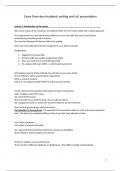
Ethics in contemporary ethnographic research
Lecture 1: Contemporary Ethnography & the Ethics Regime
Readings
Reading 1: “The ones who walk away from Omelas” – Le Guin
The narrator depicts a summer festival in the utopian city of Omelas whose happiness depends on
the perpetual misery of a single child.
That is the social contract in Omelas. One child suffers horribly so that the rest can be happy. If the
child were let free or comforted, Omelas would be destroyed. Most people feel horrible for the child,
and some parents hold their kids tighter, and then they return to their happiness.
Leaving Omelas is an ultimate act of individualism, as it requires one to reject the comfort of society
in a stand for one's own sense of morality.
Reading 2: “Conducting anthropological fieldwork in northern Ghana: emerging ethical dilemmas”
– Mutaru 2018
the right of accessing data during fieldwork (example 1)
multiple representation / respondent (example 2)
Example 1: The researcher already did interviews and collected data in a specific village in Ghana,
without the permission of the chief. She had her ‘illegal’ data, but decided to ‘purify’ it by checking in
with him afterwards.
Example 2: The researcher had to pay for an interview with an informant. Is that ethical if you have to
pay for your data? Do you want participant to participate in your research, only because they are
desperate for income?
“The informed consent guidelines in anthropological ethical documents had not prepared me for
these challenges that were particular to the cultural context.” (p.191)
“Many of the ethical debates and guidelines to which I was exposed as doctoral student at a South
African university were therefore concerned with this historical context: a heavily racialised one in
which power relations were at the forefront.” (p.194)
Conclusion:
“While this requirement is necessary, it does not resolve all ethical challenges anthropologists
encounter during fieldwork.” (p.196)
1
,Outline of lecture 1:
Ethics paradigm
History of research ethics
Digital and data shifts
Contemporary ethnography
Critique of ´research´ and ethnography
The role of research and the researcher
Western ethics
Most research on ethics comes from a Western way of thinking, but decolonizing studies ask us to
think differently.
They make us ask:
Whose knowledge matters?
Who is really helped by this research?
The word "fieldwork" can be a problem too. It sounds like you can go to a place, take information,
and leave. This can be disrespectful.
Instead, we should:
Think about our role as researchers
Respect local voices
Not treat people like data
Ethics paradigm
Ethics paradigm = a way of thinking about what is right, fair, and responsible in research. It connects
many different parts—your own values, your role, and how your work affects groups and society.
It’s not about giving you all the answers. It’s about helping you think more deeply. Practice reflexivity
on your choices, actions and impacts as a researcher.
Words you often hear when you think about ethics are:
Positionality – Who are you? Where do you stand in relation to the people you study?
Environment – What kind of setting are you working in?
Guidelines – What ethical rules do you follow?
Role of the researcher – What is your responsibility?
Ethnography – How do you study cultures and communities?
Ethics – What’s fair and respectful?
Group/community/people – Who are you working with?
Institutional – What does your university or organization expect?
Value system – What beliefs shape your decisions?
Culture – What norms are important to the people involved?
Condition – What is the situation or context?
2
, Participants/interlocutors – Who are the people sharing knowledge with you?
Ask yourself:
How do these parts connect?
How do they shape your approach to research?
What does ethical research look like to you?
History of research ethics
Ethics in research has changed over time. Today, it’s more institutionalized: there are official rules
and guidelines. But originally, it came from medical and biological research, especially on how to treat
human bodies during experiments. Because of harmful experiments done in the past on real people,
without care or consent.
Example 1: Nuremberg Code (1947, after Nazi Germany)
The code was created after the Holocaust. Nazis did horrific experiments on people without their
consent and under horrific condition, so they created a code to prevent this from happening again.
The Code said: research on humans must be ethical, voluntary, and with consent.
Race is an instrument of control!
Under the Nazi regime (but also under colonialism), race was treated as a biological fact used to
classify, dehumanize, and justify violence.
This way of thinking turned race into a measuring system, a way to divide, dominate, and
dehumanize. It helped justify colonization, slavery, and violence by pretending some groups were
"naturally" superior.
But in reality, race is a social construct: an idea created to divide and dominate people based on
physical features.
Why is “race” problematic in research?
It reduces people to physical traits and ignores their lived experience.
It’s used to draw lines between people, even when there are no clear differences.
Some scholars argue that using “race” reinforces old colonial ideas, even when we try to
study or fight racism.
Instead, many researchers now prefer the term ethnicity, which includes:
Culture
Language
Religion
Shared history
But even ethnicity is not perfect, because it can still involve labelling people in ways they don’t
choose for themselves.
3
, Example 2: Tuskegee Syphilis Study (USA, 1932–1972)
African American men were misled by researchers. They were told they were receiving medical
treatment for syphilis (=geslachtsziekte), but in reality, no real treatment was given. The goal of the study
was to observe the long-term effects of untreated syphilis, without informing the participants.
These men never gave informed consent to be left untreated. They trusted the doctors, but that trust
was betrayed. They were basically lab-rats. Many of them suffered serious health problems, passed
the disease to their partners or children, and even died.
Medical knowledge often takes priority over ethical consent, especially with new advancements.
Ethics change as society's values evolve. What was once okay, like doing procedures without
consent, is now wrong. History helps us learn how to balance progress with respecting people’s
rights.
The Tuskegee Study ended in 1972 after it was revealed that African American men with syphilis were
denied treatment for research purposes. This led to changes in how research ethics are handled.
In 1974, the U.S. government set up the National Commission for the Protection of Human Subjects
of Biomedical and Behavioral Research to ensure ethical standards in research.
In 1979, this commission released the Belmont Report, which outlined three important ethical
principles:
1. Respect for Persons:
Participants must give informed consent, meaning they understand the risks before agreeing
to take part.
2. Beneficence:
Researchers must do no harm and try to maximize the benefits of the research.
3. Justice:
The benefits and risks of research should be distributed fairly, without unfairly targeting or
excluding any group.
The Belmont Report also led to the creation of Institutional Review Boards (IRBs) in 1974. These
boards review research plans to ensure that studies are ethical and protect participants. They have
become a key part of ensuring research is done responsibly and with respect for people’s rights.
Example 3: Psychological Experiments & Deception
Many famous studies involved deception
Deception= intentionality misled participants about the true purpose of the experiment. Basically
tricking people
These studies were designed to explore human behaviour, but they also raised serious ethical
concerns about consent, emotional harm, and the responsibilities of researchers.
Examples:
1. Solomon Asch (1951) – Conformity Experiment
Participants were placed in a group with actors who deliberately gave wrong answers to simple visual
4
Ethics in contemporary ethnographic research
Lecture 1: Contemporary Ethnography & the Ethics Regime
Readings
Reading 1: “The ones who walk away from Omelas” – Le Guin
The narrator depicts a summer festival in the utopian city of Omelas whose happiness depends on
the perpetual misery of a single child.
That is the social contract in Omelas. One child suffers horribly so that the rest can be happy. If the
child were let free or comforted, Omelas would be destroyed. Most people feel horrible for the child,
and some parents hold their kids tighter, and then they return to their happiness.
Leaving Omelas is an ultimate act of individualism, as it requires one to reject the comfort of society
in a stand for one's own sense of morality.
Reading 2: “Conducting anthropological fieldwork in northern Ghana: emerging ethical dilemmas”
– Mutaru 2018
the right of accessing data during fieldwork (example 1)
multiple representation / respondent (example 2)
Example 1: The researcher already did interviews and collected data in a specific village in Ghana,
without the permission of the chief. She had her ‘illegal’ data, but decided to ‘purify’ it by checking in
with him afterwards.
Example 2: The researcher had to pay for an interview with an informant. Is that ethical if you have to
pay for your data? Do you want participant to participate in your research, only because they are
desperate for income?
“The informed consent guidelines in anthropological ethical documents had not prepared me for
these challenges that were particular to the cultural context.” (p.191)
“Many of the ethical debates and guidelines to which I was exposed as doctoral student at a South
African university were therefore concerned with this historical context: a heavily racialised one in
which power relations were at the forefront.” (p.194)
Conclusion:
“While this requirement is necessary, it does not resolve all ethical challenges anthropologists
encounter during fieldwork.” (p.196)
1
,Outline of lecture 1:
Ethics paradigm
History of research ethics
Digital and data shifts
Contemporary ethnography
Critique of ´research´ and ethnography
The role of research and the researcher
Western ethics
Most research on ethics comes from a Western way of thinking, but decolonizing studies ask us to
think differently.
They make us ask:
Whose knowledge matters?
Who is really helped by this research?
The word "fieldwork" can be a problem too. It sounds like you can go to a place, take information,
and leave. This can be disrespectful.
Instead, we should:
Think about our role as researchers
Respect local voices
Not treat people like data
Ethics paradigm
Ethics paradigm = a way of thinking about what is right, fair, and responsible in research. It connects
many different parts—your own values, your role, and how your work affects groups and society.
It’s not about giving you all the answers. It’s about helping you think more deeply. Practice reflexivity
on your choices, actions and impacts as a researcher.
Words you often hear when you think about ethics are:
Positionality – Who are you? Where do you stand in relation to the people you study?
Environment – What kind of setting are you working in?
Guidelines – What ethical rules do you follow?
Role of the researcher – What is your responsibility?
Ethnography – How do you study cultures and communities?
Ethics – What’s fair and respectful?
Group/community/people – Who are you working with?
Institutional – What does your university or organization expect?
Value system – What beliefs shape your decisions?
Culture – What norms are important to the people involved?
Condition – What is the situation or context?
2
, Participants/interlocutors – Who are the people sharing knowledge with you?
Ask yourself:
How do these parts connect?
How do they shape your approach to research?
What does ethical research look like to you?
History of research ethics
Ethics in research has changed over time. Today, it’s more institutionalized: there are official rules
and guidelines. But originally, it came from medical and biological research, especially on how to treat
human bodies during experiments. Because of harmful experiments done in the past on real people,
without care or consent.
Example 1: Nuremberg Code (1947, after Nazi Germany)
The code was created after the Holocaust. Nazis did horrific experiments on people without their
consent and under horrific condition, so they created a code to prevent this from happening again.
The Code said: research on humans must be ethical, voluntary, and with consent.
Race is an instrument of control!
Under the Nazi regime (but also under colonialism), race was treated as a biological fact used to
classify, dehumanize, and justify violence.
This way of thinking turned race into a measuring system, a way to divide, dominate, and
dehumanize. It helped justify colonization, slavery, and violence by pretending some groups were
"naturally" superior.
But in reality, race is a social construct: an idea created to divide and dominate people based on
physical features.
Why is “race” problematic in research?
It reduces people to physical traits and ignores their lived experience.
It’s used to draw lines between people, even when there are no clear differences.
Some scholars argue that using “race” reinforces old colonial ideas, even when we try to
study or fight racism.
Instead, many researchers now prefer the term ethnicity, which includes:
Culture
Language
Religion
Shared history
But even ethnicity is not perfect, because it can still involve labelling people in ways they don’t
choose for themselves.
3
, Example 2: Tuskegee Syphilis Study (USA, 1932–1972)
African American men were misled by researchers. They were told they were receiving medical
treatment for syphilis (=geslachtsziekte), but in reality, no real treatment was given. The goal of the study
was to observe the long-term effects of untreated syphilis, without informing the participants.
These men never gave informed consent to be left untreated. They trusted the doctors, but that trust
was betrayed. They were basically lab-rats. Many of them suffered serious health problems, passed
the disease to their partners or children, and even died.
Medical knowledge often takes priority over ethical consent, especially with new advancements.
Ethics change as society's values evolve. What was once okay, like doing procedures without
consent, is now wrong. History helps us learn how to balance progress with respecting people’s
rights.
The Tuskegee Study ended in 1972 after it was revealed that African American men with syphilis were
denied treatment for research purposes. This led to changes in how research ethics are handled.
In 1974, the U.S. government set up the National Commission for the Protection of Human Subjects
of Biomedical and Behavioral Research to ensure ethical standards in research.
In 1979, this commission released the Belmont Report, which outlined three important ethical
principles:
1. Respect for Persons:
Participants must give informed consent, meaning they understand the risks before agreeing
to take part.
2. Beneficence:
Researchers must do no harm and try to maximize the benefits of the research.
3. Justice:
The benefits and risks of research should be distributed fairly, without unfairly targeting or
excluding any group.
The Belmont Report also led to the creation of Institutional Review Boards (IRBs) in 1974. These
boards review research plans to ensure that studies are ethical and protect participants. They have
become a key part of ensuring research is done responsibly and with respect for people’s rights.
Example 3: Psychological Experiments & Deception
Many famous studies involved deception
Deception= intentionality misled participants about the true purpose of the experiment. Basically
tricking people
These studies were designed to explore human behaviour, but they also raised serious ethical
concerns about consent, emotional harm, and the responsibilities of researchers.
Examples:
1. Solomon Asch (1951) – Conformity Experiment
Participants were placed in a group with actors who deliberately gave wrong answers to simple visual
4