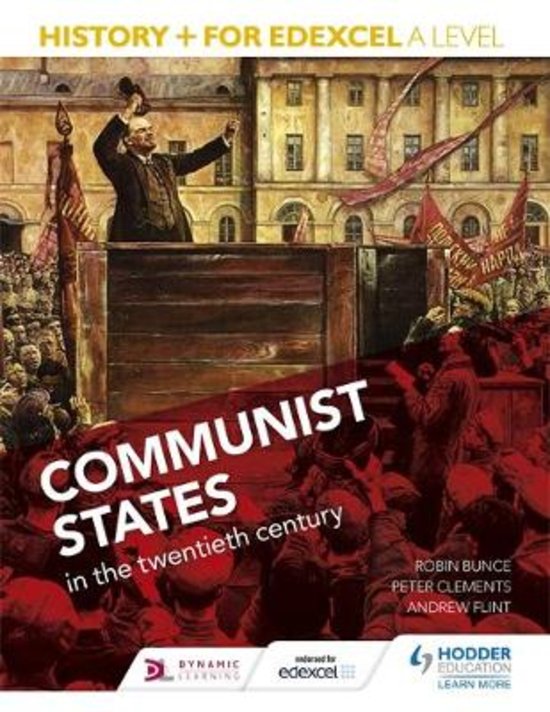
Communist Govt in the USSR, 1917-85
Creation of a one-party state 1917-24
• Faced numerous political opponents
• Won war due to superior organisation, policy and public support (largely bc of Land Decree in
1917)
Civil War 1918-21 • Conscription
• War communism – nationalisation of industry & food requisitioning
• Resulted in a highly centralised state
Result of Civil war
• Massive party growth - 300,000 in 1917 -> 730,000 in 1921
• Kronstadt mutiny & Tambov uprising proved Bolsheviks did not have full & secure power
10th Party Congress, 1921 •
Ban on factions in the party
• War communism
• Red Terror
State
• Headed by Sovnarkom (made decisions)
o Congress of Soviets was supposed to be a body of elected reps but was really just a
rubber stamp
Party
• Headed by Politburo -> Central committee (all of their power went to the Politburo in 1919) ->
How did the Structure of Government
Party Congress (declining influence after 1921)
Bolsheviks establish -
a one-party state • Party mirrored state, however party made most of the decisions & was dominated by Politburo
between • Lenin did not define the relationship btwn the two clearly
1917-1924? • Based on democratic centralism – gave the illusion of democracy whilst ruling from the top
down
• Lenin had leading roles in both State (Chairman of Sovnarkon) and Party (member of Politburo)
• Discussion about policy was allowed, but Lenin would use his influence (eg by threatening to
resign) to direct decisions – NEP & Treaty of Brest-Litovsk
Growing centralisation of • Nomenklatura System 1921
power o Led to growth of govt bureaucracy
o Party positions now reliant on approval from party leadership (membership in 1924
1mil)
• Soviet Constitution 1924 => confirmed power of party
• Lenin dissolved the constituent assembly bc Bolsheviks gained just 175 seats compared to the
SR’s who gained 410
Dealing with Opposition • Bourgeois classes not allowed to vote
• Alternative political parties banned by 1921
1
, • Red Terror, 1921-22 - 5000 Mensheviks arrested btwn Jan.-March 1921
• 200,000 executed btwn 1917-23
Use of Terror • 1/3rd of the party was purged under Lenin
• Cheka formed in Dec. 1917
Stalin
• Became General Secretary in 1922 = head of party & state
• Only person with full overview of the party
Personal power & • Launched Lenin enrolment 1923-25 -> created a generation of members who owed their
influence positions to Stalin => increased Stalin’s powerbase
• Right to appoint positions – promoted supporters & dismissed opponents
• Exploited Lenin’s unclear definition of the relationship btwn the party & the state
• Left wing – wanted permanent revolution & didn’t like the NEP (eg Trotsky, Zinoviev &
Kamenev)
• 15th Party Congress, 1926 – accused left wing (above mentioned) of forming factions &
Elimination of Political
expelled them from party
rivals • Right wing – opposed 1st 5YP in 1928 & wanted to keep NEP (eg Bukharin, Tomsky & Rykov)
• Stalin undermined them bby saying they were anti-Leninist -> CC supported Stalin so
opposition was removed from their posts
• Chistka 1932-35 – used to support & enforced 1st 5YP (collectivisation), 22% of party removed
(non-violently)
• Great Purge – catalysed by murder of Kirov in 1934, removed large sections of party (Stalin set
quotas)
How did Stalin
• Show Trials; Trial of the 16 (inc Zinoviev & Kamenev) – intimidation tactic, enforced conformity
exercise power over & created a climate of fear
Purges of the 1930s
the Communist
• Officials were critical of unrealistic targets of the 1st 5YP
o 17th Party Congress 1934 – Kirov critical of plan w/ much support => murdered
party and the Soviet
state, 1924-53?
• Red army purged – 14/16 army commanders & all naval admirals
• Secret police purged – Yagoda removed, 3000 members purged by Yezhov in his 1st 6 months
• Stalin used terror to eliminate opposition & replace the dictatorship of the proletariat w/ his
own personal dictatorship
• Power of the Politburo decreased – met less often -> power split up to other groups that Stalin
had more control over
Control over Party • Filled the Party w/ supporters, eg. Molotov
• Soviet Constitution 1936 – right to vote & civil rights given, appeared democratic BUT only
Party members could stand for election
• Minor opposition w/in Politburo – 2nd 5YP forced to have lower targets
Limitations • Kirov got more votes than Stalin in CC elections at 1934 Party congress
• Purges often got out of control at lower levels
2
, • Emerged as hero of WW2- allowed him to maintain his power even w/ declining health
• Control quickly reasserted after the war
WW2 & High Stalinism, • New era gave rise to a new generation of Politburo members (eg. Beria & Malenkov)
1941-53 • Stalin still maintained some power - Mingrelian affair took out many of Beria’s supporters
• Politburo becomes presidium and members go from 10 to 36
• Doctor’s plot represents Stalin’s loss of power
Change in nature post-Stalin
• Collective leadership - Beria initially took control but was arrested & executed in June ->
presidium felt it necessary to restore ‘socialist legality’
• Khrushchev became First Secretary in Sept. - placed his allies in presidium, CC now had more
De-Stalinisation power
• 20th Party Congress- made speech denouncing Stalin
• Aimed to rejuvenate Leninism- decision making decentralised to regional level, secret police
brought under party control, 2mil political prisoners released 1953-1960
• De-Stalinisation - decentralised power, given to regional councils => threatened power of party
leaders
• Attempt to remove him in 1957, however supported by CC who voted against it
• Limited use of terror – opponents simply demoted
To what extent did Khrushchev • Became PM 1958 - power still subject to CC
the nature of the • Introduced reforms- major purge of local secretaries, divided party into industrial and
Communist Party agricultural departments and introduced 3-year limit on party positions
change after the • Sacked in 1954 - showed change w/in party bc he wasn’t killed/died
death of Stalin,
1953-85? • Reversed de-Stalinisation – agriculture/industry divide, limits for posts removed, membership
grew 6.9mil 1953 to 17mil 1980
Return to stability under • Brezhnev was ‘first among equals’ – politburo power increased, key in decision making
Brezhnev, 1964-82 • Kept opponents around – Kosygin as Prime Minister
• Soviet Constitution 1977 asserted position of party over the state
• Party structures developed under Stalin were so entrenched reform was almost impossible
• Oligarchy formed due to patronage
• At Stalin’s last party congress only 56% of the central committee was retained in office, this
Growing Stagnation had risen to 79% by 1976
• 1984, 7/11 politburo members were 70yrs+ -> gerontocracy
• Corruption prospered under Brezhnev
• Andropov attempted to deal with this but failed
3
Creation of a one-party state 1917-24
• Faced numerous political opponents
• Won war due to superior organisation, policy and public support (largely bc of Land Decree in
1917)
Civil War 1918-21 • Conscription
• War communism – nationalisation of industry & food requisitioning
• Resulted in a highly centralised state
Result of Civil war
• Massive party growth - 300,000 in 1917 -> 730,000 in 1921
• Kronstadt mutiny & Tambov uprising proved Bolsheviks did not have full & secure power
10th Party Congress, 1921 •
Ban on factions in the party
• War communism
• Red Terror
State
• Headed by Sovnarkom (made decisions)
o Congress of Soviets was supposed to be a body of elected reps but was really just a
rubber stamp
Party
• Headed by Politburo -> Central committee (all of their power went to the Politburo in 1919) ->
How did the Structure of Government
Party Congress (declining influence after 1921)
Bolsheviks establish -
a one-party state • Party mirrored state, however party made most of the decisions & was dominated by Politburo
between • Lenin did not define the relationship btwn the two clearly
1917-1924? • Based on democratic centralism – gave the illusion of democracy whilst ruling from the top
down
• Lenin had leading roles in both State (Chairman of Sovnarkon) and Party (member of Politburo)
• Discussion about policy was allowed, but Lenin would use his influence (eg by threatening to
resign) to direct decisions – NEP & Treaty of Brest-Litovsk
Growing centralisation of • Nomenklatura System 1921
power o Led to growth of govt bureaucracy
o Party positions now reliant on approval from party leadership (membership in 1924
1mil)
• Soviet Constitution 1924 => confirmed power of party
• Lenin dissolved the constituent assembly bc Bolsheviks gained just 175 seats compared to the
SR’s who gained 410
Dealing with Opposition • Bourgeois classes not allowed to vote
• Alternative political parties banned by 1921
1
, • Red Terror, 1921-22 - 5000 Mensheviks arrested btwn Jan.-March 1921
• 200,000 executed btwn 1917-23
Use of Terror • 1/3rd of the party was purged under Lenin
• Cheka formed in Dec. 1917
Stalin
• Became General Secretary in 1922 = head of party & state
• Only person with full overview of the party
Personal power & • Launched Lenin enrolment 1923-25 -> created a generation of members who owed their
influence positions to Stalin => increased Stalin’s powerbase
• Right to appoint positions – promoted supporters & dismissed opponents
• Exploited Lenin’s unclear definition of the relationship btwn the party & the state
• Left wing – wanted permanent revolution & didn’t like the NEP (eg Trotsky, Zinoviev &
Kamenev)
• 15th Party Congress, 1926 – accused left wing (above mentioned) of forming factions &
Elimination of Political
expelled them from party
rivals • Right wing – opposed 1st 5YP in 1928 & wanted to keep NEP (eg Bukharin, Tomsky & Rykov)
• Stalin undermined them bby saying they were anti-Leninist -> CC supported Stalin so
opposition was removed from their posts
• Chistka 1932-35 – used to support & enforced 1st 5YP (collectivisation), 22% of party removed
(non-violently)
• Great Purge – catalysed by murder of Kirov in 1934, removed large sections of party (Stalin set
quotas)
How did Stalin
• Show Trials; Trial of the 16 (inc Zinoviev & Kamenev) – intimidation tactic, enforced conformity
exercise power over & created a climate of fear
Purges of the 1930s
the Communist
• Officials were critical of unrealistic targets of the 1st 5YP
o 17th Party Congress 1934 – Kirov critical of plan w/ much support => murdered
party and the Soviet
state, 1924-53?
• Red army purged – 14/16 army commanders & all naval admirals
• Secret police purged – Yagoda removed, 3000 members purged by Yezhov in his 1st 6 months
• Stalin used terror to eliminate opposition & replace the dictatorship of the proletariat w/ his
own personal dictatorship
• Power of the Politburo decreased – met less often -> power split up to other groups that Stalin
had more control over
Control over Party • Filled the Party w/ supporters, eg. Molotov
• Soviet Constitution 1936 – right to vote & civil rights given, appeared democratic BUT only
Party members could stand for election
• Minor opposition w/in Politburo – 2nd 5YP forced to have lower targets
Limitations • Kirov got more votes than Stalin in CC elections at 1934 Party congress
• Purges often got out of control at lower levels
2
, • Emerged as hero of WW2- allowed him to maintain his power even w/ declining health
• Control quickly reasserted after the war
WW2 & High Stalinism, • New era gave rise to a new generation of Politburo members (eg. Beria & Malenkov)
1941-53 • Stalin still maintained some power - Mingrelian affair took out many of Beria’s supporters
• Politburo becomes presidium and members go from 10 to 36
• Doctor’s plot represents Stalin’s loss of power
Change in nature post-Stalin
• Collective leadership - Beria initially took control but was arrested & executed in June ->
presidium felt it necessary to restore ‘socialist legality’
• Khrushchev became First Secretary in Sept. - placed his allies in presidium, CC now had more
De-Stalinisation power
• 20th Party Congress- made speech denouncing Stalin
• Aimed to rejuvenate Leninism- decision making decentralised to regional level, secret police
brought under party control, 2mil political prisoners released 1953-1960
• De-Stalinisation - decentralised power, given to regional councils => threatened power of party
leaders
• Attempt to remove him in 1957, however supported by CC who voted against it
• Limited use of terror – opponents simply demoted
To what extent did Khrushchev • Became PM 1958 - power still subject to CC
the nature of the • Introduced reforms- major purge of local secretaries, divided party into industrial and
Communist Party agricultural departments and introduced 3-year limit on party positions
change after the • Sacked in 1954 - showed change w/in party bc he wasn’t killed/died
death of Stalin,
1953-85? • Reversed de-Stalinisation – agriculture/industry divide, limits for posts removed, membership
grew 6.9mil 1953 to 17mil 1980
Return to stability under • Brezhnev was ‘first among equals’ – politburo power increased, key in decision making
Brezhnev, 1964-82 • Kept opponents around – Kosygin as Prime Minister
• Soviet Constitution 1977 asserted position of party over the state
• Party structures developed under Stalin were so entrenched reform was almost impossible
• Oligarchy formed due to patronage
• At Stalin’s last party congress only 56% of the central committee was retained in office, this
Growing Stagnation had risen to 79% by 1976
• 1984, 7/11 politburo members were 70yrs+ -> gerontocracy
• Corruption prospered under Brezhnev
• Andropov attempted to deal with this but failed
3