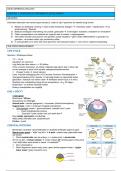
International law & European law – European law: The
basic freedoms
The basic freedoms
The basic freedoms
The Free Movements of Goods, Art. 34 – 37 TFEU
The Free Movements of Workers, Art. 45 – 48 TFEU
The Freedom to Provide Services, Art. 56 – 52 TFEU
The Freedom of Establishment, Art. 49 – 55 TFEU
The Freedom of Capital and Payments, Art. 63 – 66 TFEU
o Designed to establish the Internal Market, Art. 26 (2) TFEU
up summing of all the basic freedoms we are going to look at.
they are designed to establish the internal market.
The Free Movements of Goods, Art. 34 – 37 TFEU
These articles aim to eliminate barriers to trade within the EU internal market
by prohibiting restrictions between member states
*Article 34: prohibits quantitative restrictions (like quotas) and measures having
equivalent effect in imports between member states
*Article 35: prohibits the same for export
*Article 36: allows exceptions to protect things like public morality, security,
health, etc.
*Article 37: requires member states to adjust state monopolies that restrict
Structure developed by the courts from the 1970’s to the 1990’s and
subsequently applied to the other basic freedoms
o The court of justice of the EU played a crucial role in interpreting
what counts as a ‘measure having equivalent effect.
This structure influenced other EU freedoms
leading cases:
o Dassonville (case 8/74)
- Belgian law required proof of origin for imported goods
CJEU ruled that all trading rules that could hinder trade are measures
equivalent to quantitative restrictions under Article 34*
(this rule hindered trade, so was overruled by the CJEU)
o Cassis de Dijon (case 120/78)
- A German law banned import of a French fruit liqueur because alcohol content
rules
CJEU said: IF the goods are lawfully produced and sold in one member
state, they should be allowed in others (“mutual recognition”)
this created the rule of reason: a balancing test between free trade and
o Keck (case C-267 and 268/91)
Facts: Keck was brought to trial in France because he was selling product at a
lower price than their initial purchase price. this was not allowed according to
French law
this was to prevent unfair competition
, Find cases at EUR-Lex
Free movement of goods
Trade obstacles
Customs
EU member states cannot charge customs duties or similar charges on
goods traded between them
Quantitative restrictions
EU member states are not allowed to restrict imports from each other –
either by setting limits or by using measures that have the same effect as
restrictions.
Measure having equivalent effect
EU member states are not allowed to restrict imports from each other –
either by setting limits or by using measures that have the same effect as
restrictions.
basic freedoms
The basic freedoms
The basic freedoms
The Free Movements of Goods, Art. 34 – 37 TFEU
The Free Movements of Workers, Art. 45 – 48 TFEU
The Freedom to Provide Services, Art. 56 – 52 TFEU
The Freedom of Establishment, Art. 49 – 55 TFEU
The Freedom of Capital and Payments, Art. 63 – 66 TFEU
o Designed to establish the Internal Market, Art. 26 (2) TFEU
up summing of all the basic freedoms we are going to look at.
they are designed to establish the internal market.
The Free Movements of Goods, Art. 34 – 37 TFEU
These articles aim to eliminate barriers to trade within the EU internal market
by prohibiting restrictions between member states
*Article 34: prohibits quantitative restrictions (like quotas) and measures having
equivalent effect in imports between member states
*Article 35: prohibits the same for export
*Article 36: allows exceptions to protect things like public morality, security,
health, etc.
*Article 37: requires member states to adjust state monopolies that restrict
Structure developed by the courts from the 1970’s to the 1990’s and
subsequently applied to the other basic freedoms
o The court of justice of the EU played a crucial role in interpreting
what counts as a ‘measure having equivalent effect.
This structure influenced other EU freedoms
leading cases:
o Dassonville (case 8/74)
- Belgian law required proof of origin for imported goods
CJEU ruled that all trading rules that could hinder trade are measures
equivalent to quantitative restrictions under Article 34*
(this rule hindered trade, so was overruled by the CJEU)
o Cassis de Dijon (case 120/78)
- A German law banned import of a French fruit liqueur because alcohol content
rules
CJEU said: IF the goods are lawfully produced and sold in one member
state, they should be allowed in others (“mutual recognition”)
this created the rule of reason: a balancing test between free trade and
o Keck (case C-267 and 268/91)
Facts: Keck was brought to trial in France because he was selling product at a
lower price than their initial purchase price. this was not allowed according to
French law
this was to prevent unfair competition
, Find cases at EUR-Lex
Free movement of goods
Trade obstacles
Customs
EU member states cannot charge customs duties or similar charges on
goods traded between them
Quantitative restrictions
EU member states are not allowed to restrict imports from each other –
either by setting limits or by using measures that have the same effect as
restrictions.
Measure having equivalent effect
EU member states are not allowed to restrict imports from each other –
either by setting limits or by using measures that have the same effect as
restrictions.