Tema 4 – profesionales en su día a día (p118-161)
1. Diferentes profesionales
2. gramática
a. Los interrogatives
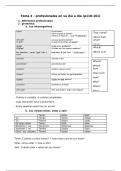
That / what?
About that/
what?
What?
Which?
Which is it?
Where?
Where
from
How much
How?
Who?
When?
Why?
- Cuánto is variable cuántos empleados
- Cuál and Quién have a plural form
- Every question word has an accent
b. Los verbos tener, estar y salir
Tener Estar Salir
Yo Tengo Estoy Salgo
Tú Tienes Estás sales
Él/ ella/ usted Tiene Está Sale
Nosotros / -as Tenemos Estamos Salimos
Vosotros / -as Tenéis Estáis Salís
Ellos/ -as/ ustedes Tienen Están salen
Tener: Cuántos coches tienes? = how many cars do you have?
Estar: cómo está? = how is she?
Salir: Cuándo salís = when do you leave?
, c. Los numerales ordinales
Primero, tercero primer, tercer when they precede a masculine singular noun
El primer piso la primera planta
(segundo, cuarto, quinto, sexto, séptimo, octavo, noveno, décimo)
d. El verbo gustar / interesar / encantar
me gusta (n) (we don’t use me gusto)
- gustar and interesar + indirect object verbs Will be used in the third person
Ex: me gusta viajar = A mí me gusta viajar (I like/love to travel)
- encantar is used intthe same way as ‘Gustar’ (= love/ adore), but it is stronger
- Gustar can be nuanced by ‘mucho’ or ‘bastante’ (a lot or quite)
Me gusta mucho viajar = me encanta viajar
Good to know:
Me gusta trabajar solo (I like working alone) (a positive sentence)
A mí también (me too)
A mí no (me gusta) (I don’t (like it))
No me gusta el francés (I don’t like the french) (a negative sentence)
A mí tampoco (Me neither)
A mí sí (I do)
Mí can be replaced by a name or tú, ellos, …
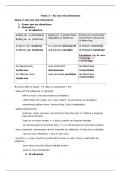
1. Diferentes profesionales
2. gramática
a. Los interrogatives
That / what?
About that/
what?
What?
Which?
Which is it?
Where?
Where
from
How much
How?
Who?
When?
Why?
- Cuánto is variable cuántos empleados
- Cuál and Quién have a plural form
- Every question word has an accent
b. Los verbos tener, estar y salir
Tener Estar Salir
Yo Tengo Estoy Salgo
Tú Tienes Estás sales
Él/ ella/ usted Tiene Está Sale
Nosotros / -as Tenemos Estamos Salimos
Vosotros / -as Tenéis Estáis Salís
Ellos/ -as/ ustedes Tienen Están salen
Tener: Cuántos coches tienes? = how many cars do you have?
Estar: cómo está? = how is she?
Salir: Cuándo salís = when do you leave?
, c. Los numerales ordinales
Primero, tercero primer, tercer when they precede a masculine singular noun
El primer piso la primera planta
(segundo, cuarto, quinto, sexto, séptimo, octavo, noveno, décimo)
d. El verbo gustar / interesar / encantar
me gusta (n) (we don’t use me gusto)
- gustar and interesar + indirect object verbs Will be used in the third person
Ex: me gusta viajar = A mí me gusta viajar (I like/love to travel)
- encantar is used intthe same way as ‘Gustar’ (= love/ adore), but it is stronger
- Gustar can be nuanced by ‘mucho’ or ‘bastante’ (a lot or quite)
Me gusta mucho viajar = me encanta viajar
Good to know:
Me gusta trabajar solo (I like working alone) (a positive sentence)
A mí también (me too)
A mí no (me gusta) (I don’t (like it))
No me gusta el francés (I don’t like the french) (a negative sentence)
A mí tampoco (Me neither)
A mí sí (I do)
Mí can be replaced by a name or tú, ellos, …