Chapter 4 - Extensions of Mendelian Inheritance
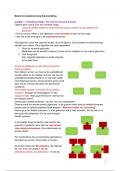
4.1 overview of simple inheritance patterns
- Simple Mendelian: the inheritance of alleles that obey Mendel's laws and follows a
strict dominant/recessive relationship.
- Incomplete penetrance: The dominant allele is present, the protein encoded by the
gene may not exert its effects.
- Incomplete dominance: The heterozygote has a phenotype that is
intermediate between either corresponding homozygote. (red + white
flower → pink flower)
- Overdominance: The heterozygote has a trait that is more beneficial than either
homozygote.
- Codominance: The heterozygote expresses both alleles simultaneously without
forming an intermediate phenotype. (blood types)
- X-linked: The inheritance of genes that are located on the X chromosome.
- Sex-influenced inheritance: the effect of sex on the phenotype of the individual.
Some alleles are recessive in one sex and dominant in the opposite sex.
- Sex-limited inheritance: traits to occur in only one of two sexes.
- Lethal alleles: An allele that has the potential of causing death of an organism.
4.2 Dominant and recessive alleles
Recessive mutant alleles often cause a reduction in the amount or function of the
encoded proteins. Random mutations occur in populations and alter pre existing alleles,
which are called mutant alleles. They are more likely to disrupt gene function, mutant alleles
are often defective in their ability to express functional protein. The idea that recessive
mutant alleles usually cause a substantial decrease in the expression of a functional protein
is supported by the analysis of many human genetic disease (table 4.2)
50% of the functional protein is adequate to provide the wild-type phenotype. Another
explanation is that heterozygote actually produces more than 50% of the functional protein.
Due to gene regulation, the expression of the normal gene may be increased in the
heterozygote to compensate for the lack of function of the defective allele.
Dominant mutant alleles usually exert their effect in one of three ways:
1. Gain-of-function mutations change the gene or the protein encoded by a gene so it
gains a new or abnormal function.
2. Dominant-negative mutations change a protein such that the mutant protein acts
antagonistically to the normal protein.
3. Haploinsufficiency, the dominant mutant allele is loss-of-function allele.
Haploinsufficiency is used to describe patterns of inheritance in which a heterozygote
exhibits an abnormal or disease phenotype.
Traits may skip a generation due to incomplete penetrance and vary in their
expressivity. The phenomenon called incomplete penetrance is a situation in which an
allele that is expected to cause a particular phenotype does not. Expressivity is the degree to
4.1 overview of simple inheritance patterns
- Simple Mendelian: the inheritance of alleles that obey Mendel's laws and follows a
strict dominant/recessive relationship.
- Incomplete penetrance: The dominant allele is present, the protein encoded by the
gene may not exert its effects.
- Incomplete dominance: The heterozygote has a phenotype that is
intermediate between either corresponding homozygote. (red + white
flower → pink flower)
- Overdominance: The heterozygote has a trait that is more beneficial than either
homozygote.
- Codominance: The heterozygote expresses both alleles simultaneously without
forming an intermediate phenotype. (blood types)
- X-linked: The inheritance of genes that are located on the X chromosome.
- Sex-influenced inheritance: the effect of sex on the phenotype of the individual.
Some alleles are recessive in one sex and dominant in the opposite sex.
- Sex-limited inheritance: traits to occur in only one of two sexes.
- Lethal alleles: An allele that has the potential of causing death of an organism.
4.2 Dominant and recessive alleles
Recessive mutant alleles often cause a reduction in the amount or function of the
encoded proteins. Random mutations occur in populations and alter pre existing alleles,
which are called mutant alleles. They are more likely to disrupt gene function, mutant alleles
are often defective in their ability to express functional protein. The idea that recessive
mutant alleles usually cause a substantial decrease in the expression of a functional protein
is supported by the analysis of many human genetic disease (table 4.2)
50% of the functional protein is adequate to provide the wild-type phenotype. Another
explanation is that heterozygote actually produces more than 50% of the functional protein.
Due to gene regulation, the expression of the normal gene may be increased in the
heterozygote to compensate for the lack of function of the defective allele.
Dominant mutant alleles usually exert their effect in one of three ways:
1. Gain-of-function mutations change the gene or the protein encoded by a gene so it
gains a new or abnormal function.
2. Dominant-negative mutations change a protein such that the mutant protein acts
antagonistically to the normal protein.
3. Haploinsufficiency, the dominant mutant allele is loss-of-function allele.
Haploinsufficiency is used to describe patterns of inheritance in which a heterozygote
exhibits an abnormal or disease phenotype.
Traits may skip a generation due to incomplete penetrance and vary in their
expressivity. The phenomenon called incomplete penetrance is a situation in which an
allele that is expected to cause a particular phenotype does not. Expressivity is the degree to