Economics lecture 1
What is economics:
Study of choices and scarcity: economics is the study of how individuals, firms and societies
make choices about how to allocate scarce resources (time, money and labour) to satisfy
unlimited wants and needs.
Microeconomics vs Macroeconomics:
- Microeconomics focuses on individual decision-makers, such as households and firms
and how they interact in specific markets
- Macroeconomics looks at the economy as a whole, analysing large-scale economic
factors such as national income, inflation and unemployment
Core questions of economics:
- What to produce? which goods and services should be produced with the
available resources
- How to produce? what methods and resources should be used to produce these
goods and services (agriculture goods have to be produced with certain technologies)
- For whom to produce? who will receive benefit from the goods and services
produced
The Economic Problem = scarcity of resources
Scarcity: resources (factors of production) are limited while human wants and needs are
virtually limitless.
(as humans we have to consume food, but there is a restricted amount of food of course) (or
limited amount of money)
Choices: economic actors (individuals, firms, governments etc) must make decisions on how
to allocate scarce resources
Trade-offs: scarcity forces individuals and societies to make trade-offs, sacrificing one thing
for another (if we spend money on A, there is less or no money available for B)
Opportunity costs: value of the next best alternative that is forgone
(If you choose to spend $100 on a new pair of shoes, the opportunity cost could be the nice
dinner you didn't have or the savings you didn't make with that $100. It's the most valuable
alternative you didn't choose.)
Efficiency: making the best use of scarce resources to maximise output (i.e. goods and/or
services), with no resources wasted.
Factors of production (resources)
, 1. Land: includes any natural resources. Used for agriculture, or buildings etc.
2. Labour: the effort that human workers contribute.
(is mostly defined by human inhabitants, or available workers)
3. Capital: includes machinery, tools and buildings
4. Entrepreneurship: innovative way to combine these three classic resources.
Combines land, labour and capital in new ways.
Economy as self-organising system
There is no central actor who tells people what to do. The economy is a self-organising
system. (nobody tells a farmer to buy a new cow to produce more milk)
Key features explanation
Individual decision-making Decisions are based on self-interest, without central
authority
Incentives drive behaviour Firms and individuals respond to economic incentives,
such as prices and wages
Flexibility and adaptability The economy can quickly respond to changes in
consumer preferences, technology or external shocks
through price adjustments (remote work during COVID,
platforms had expensive subscriptions before, but
adjusted it to free or cheaper to stay competitive)
Market efficiency Resources are allocated efficiently, contribute to the
overall economy’s well-being.
Adams Smith’s “Invisible Hand” = a metaphor for the unseen forces that move the free
market economy. People do things out of self-interest. (You go to one restaurant because it
is cheaper but same quality. Other restaurant lowers its prices due to this to gain more
customers, you go to that one) market adapts itself due to self-interest of individuals
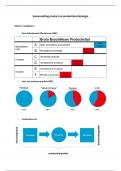
Production-possibility curve: graphical concept to reflect the efficient allocation of scarce
resources across different production alternatives
Blue arrows in second example are the opportunity costs if we want to produce an
additional unit of x
At point W there are no opportunity costs because there are recourses available anyway
,
What is economics:
Study of choices and scarcity: economics is the study of how individuals, firms and societies
make choices about how to allocate scarce resources (time, money and labour) to satisfy
unlimited wants and needs.
Microeconomics vs Macroeconomics:
- Microeconomics focuses on individual decision-makers, such as households and firms
and how they interact in specific markets
- Macroeconomics looks at the economy as a whole, analysing large-scale economic
factors such as national income, inflation and unemployment
Core questions of economics:
- What to produce? which goods and services should be produced with the
available resources
- How to produce? what methods and resources should be used to produce these
goods and services (agriculture goods have to be produced with certain technologies)
- For whom to produce? who will receive benefit from the goods and services
produced
The Economic Problem = scarcity of resources
Scarcity: resources (factors of production) are limited while human wants and needs are
virtually limitless.
(as humans we have to consume food, but there is a restricted amount of food of course) (or
limited amount of money)
Choices: economic actors (individuals, firms, governments etc) must make decisions on how
to allocate scarce resources
Trade-offs: scarcity forces individuals and societies to make trade-offs, sacrificing one thing
for another (if we spend money on A, there is less or no money available for B)
Opportunity costs: value of the next best alternative that is forgone
(If you choose to spend $100 on a new pair of shoes, the opportunity cost could be the nice
dinner you didn't have or the savings you didn't make with that $100. It's the most valuable
alternative you didn't choose.)
Efficiency: making the best use of scarce resources to maximise output (i.e. goods and/or
services), with no resources wasted.
Factors of production (resources)
, 1. Land: includes any natural resources. Used for agriculture, or buildings etc.
2. Labour: the effort that human workers contribute.
(is mostly defined by human inhabitants, or available workers)
3. Capital: includes machinery, tools and buildings
4. Entrepreneurship: innovative way to combine these three classic resources.
Combines land, labour and capital in new ways.
Economy as self-organising system
There is no central actor who tells people what to do. The economy is a self-organising
system. (nobody tells a farmer to buy a new cow to produce more milk)
Key features explanation
Individual decision-making Decisions are based on self-interest, without central
authority
Incentives drive behaviour Firms and individuals respond to economic incentives,
such as prices and wages
Flexibility and adaptability The economy can quickly respond to changes in
consumer preferences, technology or external shocks
through price adjustments (remote work during COVID,
platforms had expensive subscriptions before, but
adjusted it to free or cheaper to stay competitive)
Market efficiency Resources are allocated efficiently, contribute to the
overall economy’s well-being.
Adams Smith’s “Invisible Hand” = a metaphor for the unseen forces that move the free
market economy. People do things out of self-interest. (You go to one restaurant because it
is cheaper but same quality. Other restaurant lowers its prices due to this to gain more
customers, you go to that one) market adapts itself due to self-interest of individuals
Production-possibility curve: graphical concept to reflect the efficient allocation of scarce
resources across different production alternatives
Blue arrows in second example are the opportunity costs if we want to produce an
additional unit of x
At point W there are no opportunity costs because there are recourses available anyway
,