Contents
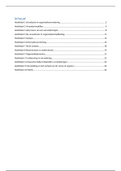
Lecture 1: Introduction Lecture ............................................................................................................... 2
Lecture 2: Securities, Short Selling & Financial Crisis 2008 ................................................................... 3
Lecture 4: Financial Crisis 2008, Investment Companies & Mutual Funds ............................................ 6
Lecture 5: Distributions, Risk (Aversion), Mean Variance & Utility Function ........................................ 11
Lecture 6: Risk Management & Mean Variance Utility Function........................................................... 14
Lecture 7: Mean Variance Utility Function & Markowitz Portfolio Theory ............................................. 17
Lecture 8: Markowitz Portfolio Theory .................................................................................................. 20
Lecture 9: Markowitz Portfolio Theory .................................................................................................. 24
Lecture 10: Markowitz Portfolio Theory, Exogenous Risk & MPT to CAPM ......................................... 25
Lecture 12: Equity Valuation ................................................................................................................. 30
Lecture 13: Q&A-session ...................................................................................................................... 33
Lecture 14: Testing the CAPM & Fama Macbeth ................................................................................. 35
Lecture 15: Multiple Factor Model & Fama French ............................................................................... 37
Lecture 16: Q&A .................................................................................................................................... 39
Lecture 17: Bonds ................................................................................................................................. 40
Lecture 18: Term structure of interest rates .......................................................................................... 43
Lecture 19: Q&A .................................................................................................................................... 45
Lecture 21: Behavioral Finance Part I ................................................................................................... 46
Lecture 22: Behavioral Finance Part II .................................................................................................. 48
,Lecture 1: Introduction Lecture
You do not consume anything right now. You have planned consumption at a later time. The longer time you have
to invest, less you have to ‘put away’.
Can invest in:
- Real Assets
- Financial Assets (what this course is about)
Financial assets in households: pension reserves. Real estate is mostly the house (real asset).
Financial Market has a central role. (If you want to save, the market must have that available). Allocate risk across
large portfolio: expected returns will be higher than investing in a single company.
Investing: typically by stocks or bonds.
Companies have different structures. Majority of stocks is mostly majority of vote (decision making). Not always
(think of Heineken). If someone has been a owner of a long time, some things may not be done in favour for the
company. (Private jet, expensive homes etc.) Leads to agency issues.
There have been a lot of accounting scandals. Also auditing or analyst scandals. Rules of corporate governance
have been tightened: more power to shareholders.
Example
10.000 dollars in period 1 and 2.
Options: consume 10.000 in both periods; save all from first period and consume everything in second; consume
everything now and don’t worry about the rest.
Second case: put away for 5%: results in 10.500. You can consume 20.500 in the second period.
Third case: borrow at 5%, you can consume 19.524 in the first period.
Drawn in a graph, you can see what other decisions you could make. Everyone will pick a point on the line (where
the total is every dollar, nothing is left, all consumption is utilised.)
Indifference Curves = Utility function. These show the preference of an investor for income in the two periods (or
other decisions). Visualisation of the preference.
In the graph: I1 has the highest happiness level, because the
consumption is the highest compared to the other I’s. But for example if
you don’t like risk: the curve could be more steep or more flat. It
depends.
Trade-off when you want to increase the income, in both cases where
you consume less in period 1 and where you already consume a lot in
period 1.
Steepness depends on personal preferences.
Put the indifference curves in the graph of the example where the
consumption is shown. This gives the solution, what is the optimal
consumption?
How to calculate point D? → Check maths notes.
,Security analysis. Top-down approach: asset allocation. Determine how much you put in stocks and the rest in
bonds. For example 70-30.
Bottom up: pick companies where you want to invest in.
First decision is the most important one.
Trade-off between risks and return. Based on research people make their decisions. Fin markets are really quick.
All available information is already in the prices. As an outsider it’s hard to find bargains. There are companies
looking into these mispricings and making a living of these hedge funds, nowadays very difficult.
Active management: continuously looking for bargains and to take advantage of this. Enter the market at the right
time. Is it really profitable? High management fees, trading costs.
Shift to passive management. Not really looking finding undervalues securities. Looking at fundamental financials.
Risk premiums to be found. They form a portfolio around the risk premia. Highly diversified portfolio: lowest fees
as possible. EFT’s becoming more popular. No high return, after fees maybe better off with passive management.
Players in financial market
Firms are net borrowers, Households are savers (in these times maybe not the case, depends on economy),
governments can be borrowers and savers at the same time.
Financial intermediaries: investment companies, pension funds, banks, insurance companies. To help us do
transactions and reduce risk.
Venture capital and private equity: where firms start. If your business grows: mostly you will need to borrow
money. If bank is not possible and family neither: venture capitalist. VC has a return if business turns out successful.
They sell shares if company becomes listed.
Money markets: short term, low-risk products, liquid. Way bigger investors, with the funds they have, instead of
no return they put in the money market and have a small return.
Capital markets: long-term borrowings or debt instruments.
Equity markets: ownership shares, 1 share 1 vote, is the common stock. Board of directors is elected by
shareholders. Managers are working for the firm and should work in the best order for the firm.
Ownership stake becomes more risky: if the firm goes bankrupt, there may be nothing left to be paid. Residual
claim (last in row). You want to have a higher expected compensation because of that fact. Limited liability: you
can only use the money you invested in the company. There are companies that do not pay out dividends.
Other type of stocks: preferred stock for example (no voting power).
Derivative markets: financial contracts where in most cases a stock or bond are contingent. We only consider this
as an asset class. Options: only exercise when it’s profitable. Futures: guaranteed price, but also obligation to
deliver although price is higher (if you sell).
How securities are traded
How can firms raise money: borrow or release stocks or bonds. Once listed on stock market, shares can be traded.
If you want to raise more capital: issue more shares.
Secondary market: once listed, people like us can trade.
Lead underwriter: investment firm in charge. They are helping the issuing firm. Advertise the firm so IPO will be
successful. Potential investors who want to purchase the shares at IPO. Investment bankers help sell these shares
at a good price (get fees for it, not for free ofc). May want to make profit by purchasing not at IPO price but less.
IPO: roadshows, bookbuilding: advertising. Purchase shares of this company and not the competitor because…
Underwriter bears price risk. IPO’s are commonly underpriced, prices go up immediately after IPO. In some cases
they are overpriced and prices go down.
Lecture 2: Securities, Short Selling & Financial Crisis 2008
Initial Public Offerings
The investigation of the impact of IPOs on stock prices is a topic typically covered in more corporate finance
oriented courses. In many cases the empirical analysis involves financial econometric techniques such as Event
Study Analysis and OLS.
For your master thesis: always first decide what question you want to answer, then pick the technique of your data
analysis.
Average Initial Returns for IPOs in Various Countries
IPO: selling your shares for certain amount of money. IPOs are mostly underpriced. Sometimes on purpose. If it’s
a really good success: the price will rise in the future.
, Every first day price rise: not really good for company because
they could have gotten more money. But better in the long term.
Typically: short run outperformance. Median: not really a
outperformance of IPO firms. Non-IPO firms did better (in the
research of J.R. Ritter).
It takes quite a while for a company to issue the IPO, minimal
6 months or so.
Actuality: companies are considering to merge or takeover, instead of busy with IPOs since there’s a lot of
uncertainty. “Save” the company first.
Facebook IPO, first not really a success (overpriced). In the upcoming years the price rose, until 2022.
38 dollars IPO price. First few months it went down with
50%. Pension funds invested in Facebook: are there for
the long run. They expect to earn the premia for the risk
they took.
IPO from Facebook viewpoint: success, they got more
money than what they expected (and then when they got
to the market a few months later).
After 2012, people started to use their mobile phones.
They did not really prepared for that, that’s why the price
got even lower!
A lot of volume in a day: stock price is changing (Yahoo Finance graph). Mostly a drop in the price.
Special Purpose Acquisition Company (SPAC) is a shell company formed to raise capital through an IPO in
order to acquire an existing company. You don’t have to have the syndicate of all the investment firms. A little
smaller: SPAC is an alternative.
At the time of the IPO, SPACs have no existing business operations or stated targets for acquisitions (shell
company). Investors put money into this company and it’s listed in the stock exchange. Investors are not offering
their shares. It’s not a really existing business operation.
SPACs only assets are funds raised through the IPO. Look for companies who want to be publicly listed.
‘Blank Cheque’ company as IPO investors have no idea in what kind of company they ultimately invest in. As soon
as they merge with this new company, they have a business. It’s the business of the overtaken company: which is
now listed at the market!
Investors in SPAC: Private equity firms and/or general public.
Money raised through IPO is placed in interest-bearing trust account.
SPAC founders have generally about 2 years to acquire a company. Not really much research on it.
Money can only be spent on:
1. Acquisition within 2 years;
2. If 1. Is not possible, return money to investors.
After 2. The shell is cancelled. Or another company can buy the shell and try the same thing.
Black Rifle Coffee is an example of a SPAC merger and publicly listed company through this.
Types of Orders
Market – executed immediately
- Bid Price
- Ask Price
Price-contingent
- Investors specify prices to buy/sell. You put in an order: If the market price doesn’t reach it: the order will
be cancelled.
- Limit buy/sell orders
Bid = buying, people want to buy certain amount of shares for x price. Ask = sell, people want to sell c shares for
x price.
Lecture 1: Introduction Lecture ............................................................................................................... 2
Lecture 2: Securities, Short Selling & Financial Crisis 2008 ................................................................... 3
Lecture 4: Financial Crisis 2008, Investment Companies & Mutual Funds ............................................ 6
Lecture 5: Distributions, Risk (Aversion), Mean Variance & Utility Function ........................................ 11
Lecture 6: Risk Management & Mean Variance Utility Function........................................................... 14
Lecture 7: Mean Variance Utility Function & Markowitz Portfolio Theory ............................................. 17
Lecture 8: Markowitz Portfolio Theory .................................................................................................. 20
Lecture 9: Markowitz Portfolio Theory .................................................................................................. 24
Lecture 10: Markowitz Portfolio Theory, Exogenous Risk & MPT to CAPM ......................................... 25
Lecture 12: Equity Valuation ................................................................................................................. 30
Lecture 13: Q&A-session ...................................................................................................................... 33
Lecture 14: Testing the CAPM & Fama Macbeth ................................................................................. 35
Lecture 15: Multiple Factor Model & Fama French ............................................................................... 37
Lecture 16: Q&A .................................................................................................................................... 39
Lecture 17: Bonds ................................................................................................................................. 40
Lecture 18: Term structure of interest rates .......................................................................................... 43
Lecture 19: Q&A .................................................................................................................................... 45
Lecture 21: Behavioral Finance Part I ................................................................................................... 46
Lecture 22: Behavioral Finance Part II .................................................................................................. 48
,Lecture 1: Introduction Lecture
You do not consume anything right now. You have planned consumption at a later time. The longer time you have
to invest, less you have to ‘put away’.
Can invest in:
- Real Assets
- Financial Assets (what this course is about)
Financial assets in households: pension reserves. Real estate is mostly the house (real asset).
Financial Market has a central role. (If you want to save, the market must have that available). Allocate risk across
large portfolio: expected returns will be higher than investing in a single company.
Investing: typically by stocks or bonds.
Companies have different structures. Majority of stocks is mostly majority of vote (decision making). Not always
(think of Heineken). If someone has been a owner of a long time, some things may not be done in favour for the
company. (Private jet, expensive homes etc.) Leads to agency issues.
There have been a lot of accounting scandals. Also auditing or analyst scandals. Rules of corporate governance
have been tightened: more power to shareholders.
Example
10.000 dollars in period 1 and 2.
Options: consume 10.000 in both periods; save all from first period and consume everything in second; consume
everything now and don’t worry about the rest.
Second case: put away for 5%: results in 10.500. You can consume 20.500 in the second period.
Third case: borrow at 5%, you can consume 19.524 in the first period.
Drawn in a graph, you can see what other decisions you could make. Everyone will pick a point on the line (where
the total is every dollar, nothing is left, all consumption is utilised.)
Indifference Curves = Utility function. These show the preference of an investor for income in the two periods (or
other decisions). Visualisation of the preference.
In the graph: I1 has the highest happiness level, because the
consumption is the highest compared to the other I’s. But for example if
you don’t like risk: the curve could be more steep or more flat. It
depends.
Trade-off when you want to increase the income, in both cases where
you consume less in period 1 and where you already consume a lot in
period 1.
Steepness depends on personal preferences.
Put the indifference curves in the graph of the example where the
consumption is shown. This gives the solution, what is the optimal
consumption?
How to calculate point D? → Check maths notes.
,Security analysis. Top-down approach: asset allocation. Determine how much you put in stocks and the rest in
bonds. For example 70-30.
Bottom up: pick companies where you want to invest in.
First decision is the most important one.
Trade-off between risks and return. Based on research people make their decisions. Fin markets are really quick.
All available information is already in the prices. As an outsider it’s hard to find bargains. There are companies
looking into these mispricings and making a living of these hedge funds, nowadays very difficult.
Active management: continuously looking for bargains and to take advantage of this. Enter the market at the right
time. Is it really profitable? High management fees, trading costs.
Shift to passive management. Not really looking finding undervalues securities. Looking at fundamental financials.
Risk premiums to be found. They form a portfolio around the risk premia. Highly diversified portfolio: lowest fees
as possible. EFT’s becoming more popular. No high return, after fees maybe better off with passive management.
Players in financial market
Firms are net borrowers, Households are savers (in these times maybe not the case, depends on economy),
governments can be borrowers and savers at the same time.
Financial intermediaries: investment companies, pension funds, banks, insurance companies. To help us do
transactions and reduce risk.
Venture capital and private equity: where firms start. If your business grows: mostly you will need to borrow
money. If bank is not possible and family neither: venture capitalist. VC has a return if business turns out successful.
They sell shares if company becomes listed.
Money markets: short term, low-risk products, liquid. Way bigger investors, with the funds they have, instead of
no return they put in the money market and have a small return.
Capital markets: long-term borrowings or debt instruments.
Equity markets: ownership shares, 1 share 1 vote, is the common stock. Board of directors is elected by
shareholders. Managers are working for the firm and should work in the best order for the firm.
Ownership stake becomes more risky: if the firm goes bankrupt, there may be nothing left to be paid. Residual
claim (last in row). You want to have a higher expected compensation because of that fact. Limited liability: you
can only use the money you invested in the company. There are companies that do not pay out dividends.
Other type of stocks: preferred stock for example (no voting power).
Derivative markets: financial contracts where in most cases a stock or bond are contingent. We only consider this
as an asset class. Options: only exercise when it’s profitable. Futures: guaranteed price, but also obligation to
deliver although price is higher (if you sell).
How securities are traded
How can firms raise money: borrow or release stocks or bonds. Once listed on stock market, shares can be traded.
If you want to raise more capital: issue more shares.
Secondary market: once listed, people like us can trade.
Lead underwriter: investment firm in charge. They are helping the issuing firm. Advertise the firm so IPO will be
successful. Potential investors who want to purchase the shares at IPO. Investment bankers help sell these shares
at a good price (get fees for it, not for free ofc). May want to make profit by purchasing not at IPO price but less.
IPO: roadshows, bookbuilding: advertising. Purchase shares of this company and not the competitor because…
Underwriter bears price risk. IPO’s are commonly underpriced, prices go up immediately after IPO. In some cases
they are overpriced and prices go down.
Lecture 2: Securities, Short Selling & Financial Crisis 2008
Initial Public Offerings
The investigation of the impact of IPOs on stock prices is a topic typically covered in more corporate finance
oriented courses. In many cases the empirical analysis involves financial econometric techniques such as Event
Study Analysis and OLS.
For your master thesis: always first decide what question you want to answer, then pick the technique of your data
analysis.
Average Initial Returns for IPOs in Various Countries
IPO: selling your shares for certain amount of money. IPOs are mostly underpriced. Sometimes on purpose. If it’s
a really good success: the price will rise in the future.
, Every first day price rise: not really good for company because
they could have gotten more money. But better in the long term.
Typically: short run outperformance. Median: not really a
outperformance of IPO firms. Non-IPO firms did better (in the
research of J.R. Ritter).
It takes quite a while for a company to issue the IPO, minimal
6 months or so.
Actuality: companies are considering to merge or takeover, instead of busy with IPOs since there’s a lot of
uncertainty. “Save” the company first.
Facebook IPO, first not really a success (overpriced). In the upcoming years the price rose, until 2022.
38 dollars IPO price. First few months it went down with
50%. Pension funds invested in Facebook: are there for
the long run. They expect to earn the premia for the risk
they took.
IPO from Facebook viewpoint: success, they got more
money than what they expected (and then when they got
to the market a few months later).
After 2012, people started to use their mobile phones.
They did not really prepared for that, that’s why the price
got even lower!
A lot of volume in a day: stock price is changing (Yahoo Finance graph). Mostly a drop in the price.
Special Purpose Acquisition Company (SPAC) is a shell company formed to raise capital through an IPO in
order to acquire an existing company. You don’t have to have the syndicate of all the investment firms. A little
smaller: SPAC is an alternative.
At the time of the IPO, SPACs have no existing business operations or stated targets for acquisitions (shell
company). Investors put money into this company and it’s listed in the stock exchange. Investors are not offering
their shares. It’s not a really existing business operation.
SPACs only assets are funds raised through the IPO. Look for companies who want to be publicly listed.
‘Blank Cheque’ company as IPO investors have no idea in what kind of company they ultimately invest in. As soon
as they merge with this new company, they have a business. It’s the business of the overtaken company: which is
now listed at the market!
Investors in SPAC: Private equity firms and/or general public.
Money raised through IPO is placed in interest-bearing trust account.
SPAC founders have generally about 2 years to acquire a company. Not really much research on it.
Money can only be spent on:
1. Acquisition within 2 years;
2. If 1. Is not possible, return money to investors.
After 2. The shell is cancelled. Or another company can buy the shell and try the same thing.
Black Rifle Coffee is an example of a SPAC merger and publicly listed company through this.
Types of Orders
Market – executed immediately
- Bid Price
- Ask Price
Price-contingent
- Investors specify prices to buy/sell. You put in an order: If the market price doesn’t reach it: the order will
be cancelled.
- Limit buy/sell orders
Bid = buying, people want to buy certain amount of shares for x price. Ask = sell, people want to sell c shares for
x price.