Academic skills 2
Belief= Sometimes we cannot really tell how we know what we know. We
just know it because we believe it to be true (e.g., self-confirmation
biases)
Ways of knowing:
Authoritative knowledge= An authority figure (e.g., expert; teacher;
religious leader; ...) tells us it is truth
Experiential knowing= We have tried and experienced it in our own live
Theoretical knowing= We observe a problem/target/situation based on a
given theoretical lens
Empirical knowledge= We learn from doing research
Ontological: aard van werkelijkheid
epistemological: kennis verkrijgen over de werkelijkheid
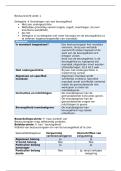
Three ontological views (according to the textbook): what is reality:
Objectivism – (De wereld bestaat zoals die is, ongeacht wat we ervan denken of willen.
Mensen moeten de werkelijkheid begrijpen door middel van logisch en rationeel denken,
niet door emoties of geloof) Reality exists on its own, independently of the social actors
(humans) who are involved in it.
Constructivism – (wat wij zien als realiteit, wordt erg beïnvloed door ervaringen,
perspectieven en interpretatie. Reality is a social construction. It is pointless to think of reality
apart from the meaning ascribed to it by its social actors (humans).
Realism - (Net zoals objectivisme, wereld bestaat ongeacht wat we ervan denken etc maar
door logica, observatie en ervaring kunnen we ook kennis over de werkelijkheid verkrijgen,
objectivisme zegt dat we alleen via rationeel denken werkelijkheid kunnen begrijpen.) Reality
exists independently from the meanings that social actors (humans) ascribe to it, and it can
be (partly) observed. However, there are also (non-observable) structures and mechanisms
that shape the (observable) social reality.
Three epistemological approaches (according to the textbook): How can we know reality?
Positivism – We kunnen alleen kennis verkrijgen door middel van observatie en meting.
wereld is objectief en wordt gemeten door wetenschappelijk, kwantitatief onderzoek. kijkt
vooral naar data etc. (Measurement; hypothesis-testing; generalization and replication;
researcher as an (arguably) external agent; research outputs seen as more “objective”)
Interpretivism – (subjectief, gaat om menselijke ervaringen en betekenissen. mensen geven
zelf betekenis aan de wereld en horen bij kwalitatief onderzoek. (Socially constructed
meanings; rich and detailed descriptions of the social context; researcher seen as social
actor embedded in the process; research outputs seen as more “subjective)
Realism – Mix van positivisme en interpretiviteit, er is een objectieve werkelijkheid maar
mensen kunnen deze op een andere manier waarnemen en begrijpen. (Attempts to
balance/combine a focus on the “objective”, testable and observable reality with the
“subjective”, socially constructed meanings and interpretations) revealing hidden structures
and mechanisms;
,Soorten onderzoek:
Descriptive research
“Who are the young adults advocating for sustainability
transitions?”
Exploratory research
“What is it like to be a young adult advocating for
sustainability transitions?”
Explanatory research
“Why do young adults advocate for sustainability
transitions?”
Evaluation research
“What changes in policy and practice are effective to help
young adults advocate for sustainability transitions?”
Theoretical and Atheoretical approach
Scientific methods:
-Survey research (quantitative)
-Experiments (quantitative)
-Conversation analysis (qualitative)
-Critical discourse analysis (qualitative)
Research quality key aspects:
-dependability: A measure of research quality, meaning, for example, that all data is
included, and that no data is lost through un- reliable audio recorders or inaccurate
transcribers.
-credibility: Of een bron als betrouwbaar wordt beschouwd. The credibility (or believability) of
the re- searcher’s interpretations of the data she has gathered is tested by the analysis and
, interpretation of data being transparent, for example, by testing out the interpretation of the
data with the research partici- pants or by setting the interpretations along- side existing
theory.
generalisability/ transferability Measures of research quality in which the re- searcher asks
‘How far am I able to claim that the results or findings from my research are true for or
relevant to the wider population or a different context?
Ethical practice: Means conducting studies in a way that respects participants' rights, safety,
and dignity, ensuring honesty, transparency, and fairness throughout the process.
Reliability in research means that your method or tool produces consistent and stable results
every time it is used under the same conditions. It's about trustworthiness and repeatability.
Ontology is the science of what is reality, of the kinds and structures of objects, properties,
events, processes and relations in every area of reality
Thinking about what there is to study how can we do that? What ways are there of ‘‘looking’
at the social world – epistemology – that can help us to think about what we want to study
and how we can do it?
Epistemology is the theory of knowledge and how we know things.
5 ways of knowing:
-Belief: Sometimes we hold on to what we know because we believe it to be true. Strong.
Beliefs may not be changed even when there is contrary evidence.
-Authoritative knowledge: We may feel convinced that something is true because an
authority (the Bible, Koran, a leader or teacher) tells us it is true. We perceive such
knowledge to have a higher authority than knowledge gained from our own experience.
-Experiential knowing: Knowledge can be built up from experience over many years. This
can be knowledge we do not realise we have – and it may be difficult to express to others.
-Theoretical knowing: Having a theory or set of ideas helps us to work out a response to a
problem or to explain an aspect of our social world.
-Empirical knowledge: This is knowledge based on available research evidence – data that
have been gathered to answer research questions or test hypotheses which can be checked
through further research.
Natural sciences = The study of the physical world and associated phenomena, including
such disciplines as chemistry, physics, etc.
Social phenomenon = Anything that influences or is influenced by human beings who
interact with and are responsive to each other.
Belief= Sometimes we cannot really tell how we know what we know. We
just know it because we believe it to be true (e.g., self-confirmation
biases)
Ways of knowing:
Authoritative knowledge= An authority figure (e.g., expert; teacher;
religious leader; ...) tells us it is truth
Experiential knowing= We have tried and experienced it in our own live
Theoretical knowing= We observe a problem/target/situation based on a
given theoretical lens
Empirical knowledge= We learn from doing research
Ontological: aard van werkelijkheid
epistemological: kennis verkrijgen over de werkelijkheid
Three ontological views (according to the textbook): what is reality:
Objectivism – (De wereld bestaat zoals die is, ongeacht wat we ervan denken of willen.
Mensen moeten de werkelijkheid begrijpen door middel van logisch en rationeel denken,
niet door emoties of geloof) Reality exists on its own, independently of the social actors
(humans) who are involved in it.
Constructivism – (wat wij zien als realiteit, wordt erg beïnvloed door ervaringen,
perspectieven en interpretatie. Reality is a social construction. It is pointless to think of reality
apart from the meaning ascribed to it by its social actors (humans).
Realism - (Net zoals objectivisme, wereld bestaat ongeacht wat we ervan denken etc maar
door logica, observatie en ervaring kunnen we ook kennis over de werkelijkheid verkrijgen,
objectivisme zegt dat we alleen via rationeel denken werkelijkheid kunnen begrijpen.) Reality
exists independently from the meanings that social actors (humans) ascribe to it, and it can
be (partly) observed. However, there are also (non-observable) structures and mechanisms
that shape the (observable) social reality.
Three epistemological approaches (according to the textbook): How can we know reality?
Positivism – We kunnen alleen kennis verkrijgen door middel van observatie en meting.
wereld is objectief en wordt gemeten door wetenschappelijk, kwantitatief onderzoek. kijkt
vooral naar data etc. (Measurement; hypothesis-testing; generalization and replication;
researcher as an (arguably) external agent; research outputs seen as more “objective”)
Interpretivism – (subjectief, gaat om menselijke ervaringen en betekenissen. mensen geven
zelf betekenis aan de wereld en horen bij kwalitatief onderzoek. (Socially constructed
meanings; rich and detailed descriptions of the social context; researcher seen as social
actor embedded in the process; research outputs seen as more “subjective)
Realism – Mix van positivisme en interpretiviteit, er is een objectieve werkelijkheid maar
mensen kunnen deze op een andere manier waarnemen en begrijpen. (Attempts to
balance/combine a focus on the “objective”, testable and observable reality with the
“subjective”, socially constructed meanings and interpretations) revealing hidden structures
and mechanisms;
,Soorten onderzoek:
Descriptive research
“Who are the young adults advocating for sustainability
transitions?”
Exploratory research
“What is it like to be a young adult advocating for
sustainability transitions?”
Explanatory research
“Why do young adults advocate for sustainability
transitions?”
Evaluation research
“What changes in policy and practice are effective to help
young adults advocate for sustainability transitions?”
Theoretical and Atheoretical approach
Scientific methods:
-Survey research (quantitative)
-Experiments (quantitative)
-Conversation analysis (qualitative)
-Critical discourse analysis (qualitative)
Research quality key aspects:
-dependability: A measure of research quality, meaning, for example, that all data is
included, and that no data is lost through un- reliable audio recorders or inaccurate
transcribers.
-credibility: Of een bron als betrouwbaar wordt beschouwd. The credibility (or believability) of
the re- searcher’s interpretations of the data she has gathered is tested by the analysis and
, interpretation of data being transparent, for example, by testing out the interpretation of the
data with the research partici- pants or by setting the interpretations along- side existing
theory.
generalisability/ transferability Measures of research quality in which the re- searcher asks
‘How far am I able to claim that the results or findings from my research are true for or
relevant to the wider population or a different context?
Ethical practice: Means conducting studies in a way that respects participants' rights, safety,
and dignity, ensuring honesty, transparency, and fairness throughout the process.
Reliability in research means that your method or tool produces consistent and stable results
every time it is used under the same conditions. It's about trustworthiness and repeatability.
Ontology is the science of what is reality, of the kinds and structures of objects, properties,
events, processes and relations in every area of reality
Thinking about what there is to study how can we do that? What ways are there of ‘‘looking’
at the social world – epistemology – that can help us to think about what we want to study
and how we can do it?
Epistemology is the theory of knowledge and how we know things.
5 ways of knowing:
-Belief: Sometimes we hold on to what we know because we believe it to be true. Strong.
Beliefs may not be changed even when there is contrary evidence.
-Authoritative knowledge: We may feel convinced that something is true because an
authority (the Bible, Koran, a leader or teacher) tells us it is true. We perceive such
knowledge to have a higher authority than knowledge gained from our own experience.
-Experiential knowing: Knowledge can be built up from experience over many years. This
can be knowledge we do not realise we have – and it may be difficult to express to others.
-Theoretical knowing: Having a theory or set of ideas helps us to work out a response to a
problem or to explain an aspect of our social world.
-Empirical knowledge: This is knowledge based on available research evidence – data that
have been gathered to answer research questions or test hypotheses which can be checked
through further research.
Natural sciences = The study of the physical world and associated phenomena, including
such disciplines as chemistry, physics, etc.
Social phenomenon = Anything that influences or is influenced by human beings who
interact with and are responsive to each other.