Reading – PSN, 35-41
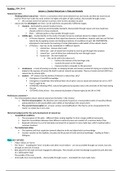
Lecture 1. Classical Natural Law I - Plato and Aristotle
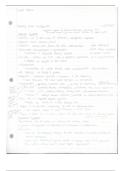
Natural law intro
- Thinking behind natural law – there is a connection which exists between law and morals and that law must be just
and fair THUS man-made law must conform to higher principles of right conduct, discoverable through reason.
this concept varies from person to person, time to time and place to place
- natural law has developed over time. Can be said there are generally 4 different stages;
classical, - dominated by ancient Greeks/romans.
Aristotle – universal and immutable standards, discoverable through reason and man-made law.
should conform to these standards
Plato – ‘ultimate justice is discoverable through reason
middle ages – marked decline in the study of Greeks/romans & emphasis placed on religion and faith
st Thomas Aquinas - considered that unjust law deserves no obedience. Aquinas said man can find out
natural law by applying reason and studying scriptures of revelations of god. HIS CONTRIBTION –
attempted to harmonise the teaching of Greek philosophers with beliefs of the catholic church
st Thomas – says law can be considered in 4 different aspects
1. eternal law – known only to god
2. divine law – part of eternal law revealed to men by god through holy scripture
3. natural law – part of divine law understood by men through reason
4. human law – the man-made law
this can be said to be unjust as it
o furthers the interest of the law finger only
o exceeds the power of the lawgiver
o imposes burdens unequally on the governed
renaissance – revival of leaning as scholars re-studying Greeks and romans; instead of relying on scripture they
looked at the purpose of human life itself to extract natural law principles. Theory of social contract shift from
natural law to natural rights
modern – 19th century saw the decline of interest in natural law. why?
Emergence of scientific knowledge
Emergence of positivists who believed that role of jurist’s area to study and analyse law as It is; NOT
how it ought to be.
HOWEVER, following WW2, natural law gathered acceptance due to the atrocities of the Nazis during
the war
OUTOME of this all was – the universal declaration of human rights by the UN in 1948
Preliminary comments =
- Two misconceptions about classical natural law (hereafter: ‘CNL’) theory:
1. The first misconception: CNL theorists were exclusively focused on a transcendent realm of morality without
paying attention to the practicalities and realities of lawmaking in the actual world
2. The second misconception (or, at least, serious oversimplification): CNL theory can be encapsulated in the
maxim ‘an unjust law is not a law’.
Historical background for the early development of natural law
- Geopolitical conditions
The emergence of the polis – different tribes coming together to form a larger political community.
Need for reconciliation between their different customary laws and creation of a common body of law.
Required reference to a set of principles conceived of as superior to man-made laws, which could provide a
common standard.
- The intellectual milieu
The sophists and their scepticism towards objective truth and objectively true knowledge
Counter-reaction to the Sophists: Socrates and his pursuit of truth and true knowledge – leading to Plato’s
dialogues.
Plato (427-347 BCE)
- Plato’s theory of ‘forms’
- The ‘forms’ – including the ‘form’ of justice and other moral notions – are not accessible through our senses, but only
through an exercise of reason.
- Best placed for this task are those engaged in philosophy. They should use their knowledge to guide the polis (the idea
of a ‘philosopher king’)
The parable of the cave
- Universally true moral standards – discoverable through reason – translated into man-made rules.
Lecture 1. Classical Natural Law I - Plato and Aristotle
Natural law intro
- Thinking behind natural law – there is a connection which exists between law and morals and that law must be just
and fair THUS man-made law must conform to higher principles of right conduct, discoverable through reason.
this concept varies from person to person, time to time and place to place
- natural law has developed over time. Can be said there are generally 4 different stages;
classical, - dominated by ancient Greeks/romans.
Aristotle – universal and immutable standards, discoverable through reason and man-made law.
should conform to these standards
Plato – ‘ultimate justice is discoverable through reason
middle ages – marked decline in the study of Greeks/romans & emphasis placed on religion and faith
st Thomas Aquinas - considered that unjust law deserves no obedience. Aquinas said man can find out
natural law by applying reason and studying scriptures of revelations of god. HIS CONTRIBTION –
attempted to harmonise the teaching of Greek philosophers with beliefs of the catholic church
st Thomas – says law can be considered in 4 different aspects
1. eternal law – known only to god
2. divine law – part of eternal law revealed to men by god through holy scripture
3. natural law – part of divine law understood by men through reason
4. human law – the man-made law
this can be said to be unjust as it
o furthers the interest of the law finger only
o exceeds the power of the lawgiver
o imposes burdens unequally on the governed
renaissance – revival of leaning as scholars re-studying Greeks and romans; instead of relying on scripture they
looked at the purpose of human life itself to extract natural law principles. Theory of social contract shift from
natural law to natural rights
modern – 19th century saw the decline of interest in natural law. why?
Emergence of scientific knowledge
Emergence of positivists who believed that role of jurist’s area to study and analyse law as It is; NOT
how it ought to be.
HOWEVER, following WW2, natural law gathered acceptance due to the atrocities of the Nazis during
the war
OUTOME of this all was – the universal declaration of human rights by the UN in 1948
Preliminary comments =
- Two misconceptions about classical natural law (hereafter: ‘CNL’) theory:
1. The first misconception: CNL theorists were exclusively focused on a transcendent realm of morality without
paying attention to the practicalities and realities of lawmaking in the actual world
2. The second misconception (or, at least, serious oversimplification): CNL theory can be encapsulated in the
maxim ‘an unjust law is not a law’.
Historical background for the early development of natural law
- Geopolitical conditions
The emergence of the polis – different tribes coming together to form a larger political community.
Need for reconciliation between their different customary laws and creation of a common body of law.
Required reference to a set of principles conceived of as superior to man-made laws, which could provide a
common standard.
- The intellectual milieu
The sophists and their scepticism towards objective truth and objectively true knowledge
Counter-reaction to the Sophists: Socrates and his pursuit of truth and true knowledge – leading to Plato’s
dialogues.
Plato (427-347 BCE)
- Plato’s theory of ‘forms’
- The ‘forms’ – including the ‘form’ of justice and other moral notions – are not accessible through our senses, but only
through an exercise of reason.
- Best placed for this task are those engaged in philosophy. They should use their knowledge to guide the polis (the idea
of a ‘philosopher king’)
The parable of the cave
- Universally true moral standards – discoverable through reason – translated into man-made rules.