Contents
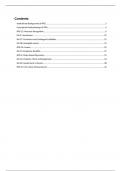
Institutional Background of IFRS.........................................................................................................2
Conceptual Underpinnings of IFRS.....................................................................................................4
IFRS 15: Revenue Recognition............................................................................................................6
IAS 2: Inventories..............................................................................................................................12
IAS 37: Provisions and Contingent Liabilities....................................................................................15
IAS 38: Intangible assets...................................................................................................................19
IFRS 16: Leases..................................................................................................................................22
IAS 19: Employee benefits................................................................................................................27
IFRS 2: Share-based Payments..........................................................................................................31
IAS 16: Property, Plant and Equipment............................................................................................33
IAS 36: Impairment of Assets............................................................................................................38
IFRS 13: Fair Value Measurement.....................................................................................................42
,Institutional Background of IFRS
IFRS adoption in Europe
Individual entities apply national accounting standards in most countries.
Consolidated accounts of publicly traded companies
For each financial year starting on or after 1 January 2005, companies governed by the law of a
Member State shall prepare their consolidated accounts in conformity with the international
accounting standards adopted if, at their balance sheet date, their securities are admitted to trading
on a regulated market of any Member State.
Gives member states the option to:
permit preparation of the individual accounts in conformity with IFRS/IAS
permit non publicly-traded companies to prepare their accounts in conformity with IFRS/IAS
Conditions for the preparation of consolidated accounts
A Member State shall require any undertaking governed by
its national law to draw up consolidated accounts and a
consolidated annual report if that undertaking (parent
undertaking):
(a) Has a majority of the shareholders' or members'
voting rights in another undertaking; or
(b) Has the right to appoint or remove a majority of the
members of the administrative, management or supervisory body of another undertaking and is
at the same time a shareholder in or member of that undertaking; or
(c) Has the right to exercise a dominant influence over an undertaking of which it is a shareholder
or member.
The three pillars of IFRS in Europe
Standard setting by International Accounting Standards Board (IASB): It is a three-tier structure.
The process is as follows:
, Endorsement: The international accounting standards can only be adopted if:
(a) They are not contrary to the [European true and fair view] principle and,
(b) Are conducive to the European public good and,
(c) They meet the criteria of understandability, relevance, reliability and comparability required of
the financial information needed for making economic decisions and assessing the stewardship
of management
Enforcement: In the Netherlands there is the following structure:
, Conceptual Underpinnings of IFRS
Financial reporting can have various purposes:
Distribution
- Distribution of earnings (protection of investors and creditors)
- Determination of taxable income
Information
- Investors (stewardship, valuation)
- Management
- Other stakeholders (employees, customers, suppliers, government)
Other
- Assessment of liability
- Reporting requirements (bankruptcy)
- Documentation (court proceedings)
Objective of General Purpose Financial Reporting
To provide financial information about the reporting entity that is useful […] in making decisions.
Fundamental problem: Information asymmetry between outsiders (capital providers) and insiders
1. Adverse selection = a type of information asymmetry whereby one or more parties to a business
transaction, or potential transaction, have an information advantage.
The higher the information asymmetry, the higher the risk premium will be that risk-averse
investors demand as a compensation for this uncertainty
Financial accounting can help to reduce the asymmetries by providing the capital market and
users of financial information with decision-useful information Reduces the costs of capital for
the corporation since, the risk premium will decrease as a function of decreasing information
asymmetries.
2. Moral hazard = a type of information asymmetry whereby one or more parties to a contract can
observe their actions in fulfilment of the contract but other parties cannot.
For good corporate governance, contracts should be efficient. An efficient contract is the best
trade-off between contracting costs and benefits
Role of financial reporting for contract purposes is to generate trust Generating trust.
Accounting standards help to reduce the cost of contracting The higher the precision of a set
of accounting rules the lower the respective contracting costs:
- compensation plans for management
- payout restrictions with regard to dividends to investors, and
- debt agreements for creditors.
Both theories may lead to different recommendations for future accounting standards:
Information demand of different stakeholder groups
Institutional Background of IFRS.........................................................................................................2
Conceptual Underpinnings of IFRS.....................................................................................................4
IFRS 15: Revenue Recognition............................................................................................................6
IAS 2: Inventories..............................................................................................................................12
IAS 37: Provisions and Contingent Liabilities....................................................................................15
IAS 38: Intangible assets...................................................................................................................19
IFRS 16: Leases..................................................................................................................................22
IAS 19: Employee benefits................................................................................................................27
IFRS 2: Share-based Payments..........................................................................................................31
IAS 16: Property, Plant and Equipment............................................................................................33
IAS 36: Impairment of Assets............................................................................................................38
IFRS 13: Fair Value Measurement.....................................................................................................42
,Institutional Background of IFRS
IFRS adoption in Europe
Individual entities apply national accounting standards in most countries.
Consolidated accounts of publicly traded companies
For each financial year starting on or after 1 January 2005, companies governed by the law of a
Member State shall prepare their consolidated accounts in conformity with the international
accounting standards adopted if, at their balance sheet date, their securities are admitted to trading
on a regulated market of any Member State.
Gives member states the option to:
permit preparation of the individual accounts in conformity with IFRS/IAS
permit non publicly-traded companies to prepare their accounts in conformity with IFRS/IAS
Conditions for the preparation of consolidated accounts
A Member State shall require any undertaking governed by
its national law to draw up consolidated accounts and a
consolidated annual report if that undertaking (parent
undertaking):
(a) Has a majority of the shareholders' or members'
voting rights in another undertaking; or
(b) Has the right to appoint or remove a majority of the
members of the administrative, management or supervisory body of another undertaking and is
at the same time a shareholder in or member of that undertaking; or
(c) Has the right to exercise a dominant influence over an undertaking of which it is a shareholder
or member.
The three pillars of IFRS in Europe
Standard setting by International Accounting Standards Board (IASB): It is a three-tier structure.
The process is as follows:
, Endorsement: The international accounting standards can only be adopted if:
(a) They are not contrary to the [European true and fair view] principle and,
(b) Are conducive to the European public good and,
(c) They meet the criteria of understandability, relevance, reliability and comparability required of
the financial information needed for making economic decisions and assessing the stewardship
of management
Enforcement: In the Netherlands there is the following structure:
, Conceptual Underpinnings of IFRS
Financial reporting can have various purposes:
Distribution
- Distribution of earnings (protection of investors and creditors)
- Determination of taxable income
Information
- Investors (stewardship, valuation)
- Management
- Other stakeholders (employees, customers, suppliers, government)
Other
- Assessment of liability
- Reporting requirements (bankruptcy)
- Documentation (court proceedings)
Objective of General Purpose Financial Reporting
To provide financial information about the reporting entity that is useful […] in making decisions.
Fundamental problem: Information asymmetry between outsiders (capital providers) and insiders
1. Adverse selection = a type of information asymmetry whereby one or more parties to a business
transaction, or potential transaction, have an information advantage.
The higher the information asymmetry, the higher the risk premium will be that risk-averse
investors demand as a compensation for this uncertainty
Financial accounting can help to reduce the asymmetries by providing the capital market and
users of financial information with decision-useful information Reduces the costs of capital for
the corporation since, the risk premium will decrease as a function of decreasing information
asymmetries.
2. Moral hazard = a type of information asymmetry whereby one or more parties to a contract can
observe their actions in fulfilment of the contract but other parties cannot.
For good corporate governance, contracts should be efficient. An efficient contract is the best
trade-off between contracting costs and benefits
Role of financial reporting for contract purposes is to generate trust Generating trust.
Accounting standards help to reduce the cost of contracting The higher the precision of a set
of accounting rules the lower the respective contracting costs:
- compensation plans for management
- payout restrictions with regard to dividends to investors, and
- debt agreements for creditors.
Both theories may lead to different recommendations for future accounting standards:
Information demand of different stakeholder groups