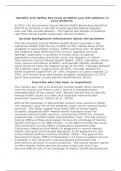
In 2023, the Neuro ICU was called out for a suspicious increase in CAUTI events. The hospital tracks CAUTIs
very closely and found an alarming increase in the Neuro ICU. It is not uncommon for patients to have a
Foley catheter because strict intake and output monitoring are required for seriously ill patients. Despite
audits for evidence-based Foley care, it was concerning that there was an increase in positive urine
cultures in patients with a Foley. Numerous survey studies were done to determine why there was a
sudden increase. A recent CAUTI event charged to the hospital demonstrated a positive UC result on a
foley that had been in place for eight days. When this foley was exchanged within a few hours of the first
sample, a new urine sample was sent, and the urine culture was negative for any bacteria. An indwelling
catheter must be placed more than 2 calendar days before it is considered a potential CAUTI event
(Huiszoon, 2020). This led to an investigation into how urine specimens were collected and why they were
collected in patients without a suspicion of infection. The current policy recommended collecting urine
from an indwelling catheter via the sampling port after scrubbing the hub thoroughly using the culture kit
with the vacutainer and tubes. This is following the AAH policy guidelines. The grey tube would be drawn
first, followed by the yellow tube. Before the investigation, urine samples were drawn from foleys that
had not been exchanged and were in place for more than 2 days. The other concern is how these patients
were being treated for positive cultures, putting them at risk for antibiotic-resistant infections and risk for
C-Diff (Nicolle et al., 2019). The Infectious Diseases Society of America (IDSA, 2019) recommends obtaining
urine cultures from freshly placed catheters or via midstream urine samples. So, the question remained:
Why are urine cultures being collected from Foley’s that have not been exchanged, and why are they
being collected without any suspicion of infection?
Evidence has shown that exchanging the urinary catheter before obtaining a sample avoids one that does
not contain a biofilm on the catheter. Biofilm forms on the urinary catheter within hours of being placed
and can lead to false positive urine cultures, as bacteria will happen when a catheter is in place (Chadha et
al.,2023). Biofilms enhance antibiotic resistance due to the gel-like matrix that forms on the catheter
(Walker et al., 2020). The risk of infection related to a urinary catheter increases by 3-10% a day (Frontera,
2021).
The patients, nurses, and the hospital are key stakeholders in this situation. Patients are subjected to
acquiring secondary infections and are at risk for C-Diff if treated with antibiotics (Nicolle et al., 2019).
As a key stakeholder, the nursing staff plays a pivotal role in preventing Hospital-Acquired Infections
(HAIs). Their decisions, such as the appropriate use of indwelling catheters and adherence to structured
processes, can significantly impact the incidence of HAIs. For instance, if a nurse follows a structured
process to assess the need for an indwelling catheter, uses the correct daily care of the device, and
prompts to discontinue the device when necessary, the risk of HAI can be reduced (Montero et al., 2023).
As a key stakeholder, the hospital has a significant role in preventing Hospital-Acquired Infections (HAIs).
It is their responsibility to allocate resources and implement strategies to prevent HAIs. For instance,
approximately 3.2% of the patient population is affected by HAIs, with 40% being Urinary Tract Infections
(UTIs). Neuro ICU patients are at a 2.5 % higher risk for CAUTIs due to neurogenic retention. Therefore,
the hospital needs to focus on preventing UTIs and CAUTIs among its patient population (Perrin et al.,
2021).
Options:
very closely and found an alarming increase in the Neuro ICU. It is not uncommon for patients to have a
Foley catheter because strict intake and output monitoring are required for seriously ill patients. Despite
audits for evidence-based Foley care, it was concerning that there was an increase in positive urine
cultures in patients with a Foley. Numerous survey studies were done to determine why there was a
sudden increase. A recent CAUTI event charged to the hospital demonstrated a positive UC result on a
foley that had been in place for eight days. When this foley was exchanged within a few hours of the first
sample, a new urine sample was sent, and the urine culture was negative for any bacteria. An indwelling
catheter must be placed more than 2 calendar days before it is considered a potential CAUTI event
(Huiszoon, 2020). This led to an investigation into how urine specimens were collected and why they were
collected in patients without a suspicion of infection. The current policy recommended collecting urine
from an indwelling catheter via the sampling port after scrubbing the hub thoroughly using the culture kit
with the vacutainer and tubes. This is following the AAH policy guidelines. The grey tube would be drawn
first, followed by the yellow tube. Before the investigation, urine samples were drawn from foleys that
had not been exchanged and were in place for more than 2 days. The other concern is how these patients
were being treated for positive cultures, putting them at risk for antibiotic-resistant infections and risk for
C-Diff (Nicolle et al., 2019). The Infectious Diseases Society of America (IDSA, 2019) recommends obtaining
urine cultures from freshly placed catheters or via midstream urine samples. So, the question remained:
Why are urine cultures being collected from Foley’s that have not been exchanged, and why are they
being collected without any suspicion of infection?
Evidence has shown that exchanging the urinary catheter before obtaining a sample avoids one that does
not contain a biofilm on the catheter. Biofilm forms on the urinary catheter within hours of being placed
and can lead to false positive urine cultures, as bacteria will happen when a catheter is in place (Chadha et
al.,2023). Biofilms enhance antibiotic resistance due to the gel-like matrix that forms on the catheter
(Walker et al., 2020). The risk of infection related to a urinary catheter increases by 3-10% a day (Frontera,
2021).
The patients, nurses, and the hospital are key stakeholders in this situation. Patients are subjected to
acquiring secondary infections and are at risk for C-Diff if treated with antibiotics (Nicolle et al., 2019).
As a key stakeholder, the nursing staff plays a pivotal role in preventing Hospital-Acquired Infections
(HAIs). Their decisions, such as the appropriate use of indwelling catheters and adherence to structured
processes, can significantly impact the incidence of HAIs. For instance, if a nurse follows a structured
process to assess the need for an indwelling catheter, uses the correct daily care of the device, and
prompts to discontinue the device when necessary, the risk of HAI can be reduced (Montero et al., 2023).
As a key stakeholder, the hospital has a significant role in preventing Hospital-Acquired Infections (HAIs).
It is their responsibility to allocate resources and implement strategies to prevent HAIs. For instance,
approximately 3.2% of the patient population is affected by HAIs, with 40% being Urinary Tract Infections
(UTIs). Neuro ICU patients are at a 2.5 % higher risk for CAUTIs due to neurogenic retention. Therefore,
the hospital needs to focus on preventing UTIs and CAUTIs among its patient population (Perrin et al.,
2021).
Options: