The Simple Sentence
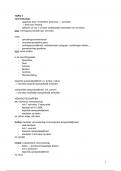
A) Argument structure (! Necessity of parts) TRANSITIVE = actual action or movement, influence
INTRANSITIVE (= not passiviziable) - Two-place verb
- One-place verb = 1 entity (mostly process S & DO (+)
verb) (+) S & PO (+)
Empty Subject (dummy entity = 0 particants) - Three-place verb = Di-transitive
real subject S, IO, DO
- Two-place verb S, DO, PC (prep. Complement) (+)
Subject + SC ( most copula – relational) (+) e.g. I explained it to her. “explain” = be passivized 1
Subject + PC (developing relations) (+) way.
S, DO, OC (object complement)
EXCEPTION
He lived a full life He took a shower. Where did you sleep?
DO = cognate (life & live same) dilexicalized, don’t mean it He slept [in his bed] =
lexically to a verb in a literally sense location
+ replace: He had a full life/ His life was He had a shower This bed hasn’t been slept
full in
B.2) Identifying S from SC Langacker
- Articles: definite (S) / indefinite extension by preposition (functions as 2nd LM) (V1 & 2)
- Replace: pos. S = “what/who he is” 2nd LM can be explicit V+
B.3) PO, PC & ADV
ADV PC PO
Passiv - - +
Arguement Not a necessary Tied to verb Tied to verb
? place verb replacement pos?
The Complex Sentence
Coordination Subordination (can be embedded)
S-deletion + -
function additive (and), disjunctive (or), additive, disjunctive, contrastive, explanatory
contrastive (but), explanatory (so) and more [Adv C]
Markers a) simple coordinators (and, or, neither, a) subordinators (simple(1el), compound (2el: so
nor, but, (for)) that), correlative(1el in SC, 1 el in MC: such ...
b) correlative coordinators (both...and, that))
either...or, neither...nor, not only ... but b) wh-elements
also) c) non-finite VP (never in MC)
Analyzing complex sentences: a procedure
Preparatory steps:
- Indicate all the verb-phrases – each verb-phrase forms the core el of a clause (either MC, SC or
coordinated clause). Take care: some verb phrases consist of more than one el, including tense
forming auxiliaries & modals).
- Decide which VP is the core of the MC, and then see how the rest fits in – in the case of multiple
embedding at different levels, you have to repeat this step at each level.
Step 1: What does the subclause depend of; at which level does it link up with the main clause?
a) VP-complementation (if functions at sentence level )
- Step 2a: Describe the syntactic characteristics of the VP-complement
Is it finite or non-finite; equi or no equi; which type of clause (to-inf, bare inf, gerund, participle, that-clause,
etc.
-- Step 3a: Which type of VP-complement is it?
Determine the underlying simple structure (2-place or 3-place verb) and the syntactic function: subject,
object (direct or prepositional), complement (subject, object or prepositional) or adverbial
--- Step 4a: specific analysis
(1) describe (where relevant) why this type of complementation has been selected and the nuance in
meaning
, (2) in case of an NP + non-finite: is it (V-0)-V or V–(S-V) or in between; alternatively – three place or two
place;
b) NP-complementation ( if it is a postmodifier of a
noun)
- Step 2b: Which type of NP-complement is it?
Determine whether it complements a de-verbal/de-adjectival noun OR whether it modifies, i.e. provides
extra info
-- Step 3b: Describe the syntactic structure of the NP-complement
Is it finite or non-finite; which type of clause or phrase (cp survey)
--- Step 4b: Specific analysis
(1) for complement clauses: de-verbal or de-adjectival
(2) relative clauses: type of relative clause (sentential, nominal, adnominal, adverbial…), defining vs non-
defining
c) ADJ-complementation (if it complements/specifies an
adjective)
-- Step 3c: Describe the syntactic structure of the ADJ-complement
Is it finite or non-finite; which type of clause or phrase (cp survey)
VP-Complementation: object & complement clauses
1. Non-finite clause-types
1.1 Two-place patterns
1.1.1 Verbs exclusively + to-infinitive
- Communication verbs - Cognition verbs
*promise, threaten, agree, undertake, * Verbs of intention: choose, intend, decide, plan, arrange, prepare;
volunteer; * Verbs of desire (emo): hope, want, need, desire, wish, long , can’t
* Directives: demand, ask, request; afford;
* Verbs of declaring: claim, pretend, - Verbs of effort: fail, manage, aim, seek, endeavour, learn;
profess;
1.1.2 Verbs exclusively + gerund
- Dislike it can not be hypothetical
- eye-witness report
- begin as a gradual process
- Prepositional verbs that do not lose their preposition (e.g. insist on)
- Communication verbs - Process verbs
* Directives: advocate, justify, defend, suggest, prevent, = avoid, defer, delay, postpone, escape; resume, keep,
prohibit, resist, allow, authorize, permit, recommend; go on, practice; give up, leave off, discontinue, finish,
* Verbs of declaring: acknowledge, admit, deny; stop; sit, stand;
* Verbs of judging: forgive, excuse; - Cognition verbs
* Verbs of reporting: report; * V of thinking: think of/about, consider, contemplate,
- Verbs of circumstance [-hu S; passive to-inf imagine, envisage, anticipate, appreciate, understand;
alternative) * Verbs of memory: recall, recollect;
= need, deserve, require, want, won’t bear * V of desire (emotive): resent, dislike, can’t stand, can’t
- Explanatory verbs [-hu subject] endure, enjoy, fancy, (don’t) mind, miss, grudge; can’t
= entail, involve, necessitate help;
1.1.2 Verbs taking both to-infinitive and gerund ( free = depends on context of verb)
= image schematic value of ‘to’ = goal/target, hence futurity, hypotheticalness, volition, specificity
- free choice: attempt, decline, dread, fear, intend, - mean
omit, venture, can’t bear * to-inf: intend
- process: begin, cease, continue & start * gerund: involve
* to – inf: MV = progressive form / stative verb - propose:
* gerund: MV = infinitive * to – inf: intend
- emotive verb: like, love, hate & prefer * gerund: suggest
* to – inf: enjoyment. activity in General - preference:
* gerund: Volition of S, particular occasion * to-inf: specific: “looking forward, toward sth”,
- regret, remember, forget hypothetical
* to – inf: action later in time * gerund: general: ongoing action, factual
* gerund: action earlier in time - understand
- verb of permission: * to –inf: to say / think that
* to – inf: overt subject * gerund: over subject – know why
* gerund: implied subject - try
- active/passive sentence * to – inf: intended achievement
* to-inf: active * gerund: express means or experiments
* gerund: passive undertaken
through which sth can be achieved.
A) Argument structure (! Necessity of parts) TRANSITIVE = actual action or movement, influence
INTRANSITIVE (= not passiviziable) - Two-place verb
- One-place verb = 1 entity (mostly process S & DO (+)
verb) (+) S & PO (+)
Empty Subject (dummy entity = 0 particants) - Three-place verb = Di-transitive
real subject S, IO, DO
- Two-place verb S, DO, PC (prep. Complement) (+)
Subject + SC ( most copula – relational) (+) e.g. I explained it to her. “explain” = be passivized 1
Subject + PC (developing relations) (+) way.
S, DO, OC (object complement)
EXCEPTION
He lived a full life He took a shower. Where did you sleep?
DO = cognate (life & live same) dilexicalized, don’t mean it He slept [in his bed] =
lexically to a verb in a literally sense location
+ replace: He had a full life/ His life was He had a shower This bed hasn’t been slept
full in
B.2) Identifying S from SC Langacker
- Articles: definite (S) / indefinite extension by preposition (functions as 2nd LM) (V1 & 2)
- Replace: pos. S = “what/who he is” 2nd LM can be explicit V+
B.3) PO, PC & ADV
ADV PC PO
Passiv - - +
Arguement Not a necessary Tied to verb Tied to verb
? place verb replacement pos?
The Complex Sentence
Coordination Subordination (can be embedded)
S-deletion + -
function additive (and), disjunctive (or), additive, disjunctive, contrastive, explanatory
contrastive (but), explanatory (so) and more [Adv C]
Markers a) simple coordinators (and, or, neither, a) subordinators (simple(1el), compound (2el: so
nor, but, (for)) that), correlative(1el in SC, 1 el in MC: such ...
b) correlative coordinators (both...and, that))
either...or, neither...nor, not only ... but b) wh-elements
also) c) non-finite VP (never in MC)
Analyzing complex sentences: a procedure
Preparatory steps:
- Indicate all the verb-phrases – each verb-phrase forms the core el of a clause (either MC, SC or
coordinated clause). Take care: some verb phrases consist of more than one el, including tense
forming auxiliaries & modals).
- Decide which VP is the core of the MC, and then see how the rest fits in – in the case of multiple
embedding at different levels, you have to repeat this step at each level.
Step 1: What does the subclause depend of; at which level does it link up with the main clause?
a) VP-complementation (if functions at sentence level )
- Step 2a: Describe the syntactic characteristics of the VP-complement
Is it finite or non-finite; equi or no equi; which type of clause (to-inf, bare inf, gerund, participle, that-clause,
etc.
-- Step 3a: Which type of VP-complement is it?
Determine the underlying simple structure (2-place or 3-place verb) and the syntactic function: subject,
object (direct or prepositional), complement (subject, object or prepositional) or adverbial
--- Step 4a: specific analysis
(1) describe (where relevant) why this type of complementation has been selected and the nuance in
meaning
, (2) in case of an NP + non-finite: is it (V-0)-V or V–(S-V) or in between; alternatively – three place or two
place;
b) NP-complementation ( if it is a postmodifier of a
noun)
- Step 2b: Which type of NP-complement is it?
Determine whether it complements a de-verbal/de-adjectival noun OR whether it modifies, i.e. provides
extra info
-- Step 3b: Describe the syntactic structure of the NP-complement
Is it finite or non-finite; which type of clause or phrase (cp survey)
--- Step 4b: Specific analysis
(1) for complement clauses: de-verbal or de-adjectival
(2) relative clauses: type of relative clause (sentential, nominal, adnominal, adverbial…), defining vs non-
defining
c) ADJ-complementation (if it complements/specifies an
adjective)
-- Step 3c: Describe the syntactic structure of the ADJ-complement
Is it finite or non-finite; which type of clause or phrase (cp survey)
VP-Complementation: object & complement clauses
1. Non-finite clause-types
1.1 Two-place patterns
1.1.1 Verbs exclusively + to-infinitive
- Communication verbs - Cognition verbs
*promise, threaten, agree, undertake, * Verbs of intention: choose, intend, decide, plan, arrange, prepare;
volunteer; * Verbs of desire (emo): hope, want, need, desire, wish, long , can’t
* Directives: demand, ask, request; afford;
* Verbs of declaring: claim, pretend, - Verbs of effort: fail, manage, aim, seek, endeavour, learn;
profess;
1.1.2 Verbs exclusively + gerund
- Dislike it can not be hypothetical
- eye-witness report
- begin as a gradual process
- Prepositional verbs that do not lose their preposition (e.g. insist on)
- Communication verbs - Process verbs
* Directives: advocate, justify, defend, suggest, prevent, = avoid, defer, delay, postpone, escape; resume, keep,
prohibit, resist, allow, authorize, permit, recommend; go on, practice; give up, leave off, discontinue, finish,
* Verbs of declaring: acknowledge, admit, deny; stop; sit, stand;
* Verbs of judging: forgive, excuse; - Cognition verbs
* Verbs of reporting: report; * V of thinking: think of/about, consider, contemplate,
- Verbs of circumstance [-hu S; passive to-inf imagine, envisage, anticipate, appreciate, understand;
alternative) * Verbs of memory: recall, recollect;
= need, deserve, require, want, won’t bear * V of desire (emotive): resent, dislike, can’t stand, can’t
- Explanatory verbs [-hu subject] endure, enjoy, fancy, (don’t) mind, miss, grudge; can’t
= entail, involve, necessitate help;
1.1.2 Verbs taking both to-infinitive and gerund ( free = depends on context of verb)
= image schematic value of ‘to’ = goal/target, hence futurity, hypotheticalness, volition, specificity
- free choice: attempt, decline, dread, fear, intend, - mean
omit, venture, can’t bear * to-inf: intend
- process: begin, cease, continue & start * gerund: involve
* to – inf: MV = progressive form / stative verb - propose:
* gerund: MV = infinitive * to – inf: intend
- emotive verb: like, love, hate & prefer * gerund: suggest
* to – inf: enjoyment. activity in General - preference:
* gerund: Volition of S, particular occasion * to-inf: specific: “looking forward, toward sth”,
- regret, remember, forget hypothetical
* to – inf: action later in time * gerund: general: ongoing action, factual
* gerund: action earlier in time - understand
- verb of permission: * to –inf: to say / think that
* to – inf: overt subject * gerund: over subject – know why
* gerund: implied subject - try
- active/passive sentence * to – inf: intended achievement
* to-inf: active * gerund: express means or experiments
* gerund: passive undertaken
through which sth can be achieved.