Garantie de satisfaction à 100% Disponible immédiatement après paiement En ligne et en PDF Tu n'es attaché à rien 4.2 TrustPilot
logo-home
Examen

BEHVO 445 Final Exam | Questions and Answers (Complete Solutions)

Note
-
Vendu
-
Pages
42
Grade
A
Publié le
11-12-2024
Écrit en
2024/2025

BEHVO 445 Final Exam | Questions and Answers (Complete Solutions) The experimental analysis of behavior is ____ A. Concerned with controlling and changing factors that affect behavior B. A natural-science approach to understanding behavior regulation C. Concerned with the principle of reinforcement D. All of these A _______ is behavior that is elicited by a biologically relevant stimulus, while a/an ______ is behavior controlled by its consequences. A. Reflex; respondent B. Reflex; operant C. Respondent; voluntary D. Operant; respondent Selection by consequences occurs at which three levels? A. Artificial selection, culture, and linguistic selection B. Natural selection, artificial selection, and cultural selection C. Natural selection, behavior (operant) selection, and cultural selection D. Artificial selection, natural selection, and linguistic selection Skinner stated that behavior (including human behavior) results from _________________. A. Genes B. Environment C. Self-determination D. Both Genes and Environment According to Baer, Wolf, and Risley (1968), what is the difference between basic and applied behavior analysis? A. Basic research is likely to look at any behavior and any variable, and applied research looks at variables that could improve behavior. B. Basic research is likely to look at any behavior and any variable. C. Applied research looks at variables that could improve behavior. D. None of these Which of the following statements are true of Pavlov and his contributions? A. He won the Nobel Prize. B. He investigated the salivary reflex. C. All of these D. He discovered the conditioned or conditional reflex. How are thinking and feeling treated from a behavioral perspective? A. More behavior to be explained B. The cause of overt behavior C. The relationship between the mental and the physical D. The mind and its regulation of behavior Learning refers to ____: A. The acquisition of behavior B. The maintenance of behavior C. The change in behavior as a result of events D. All of these The behavior of an organism _____ A. Focuses only on overt actions that can be measured by an outsider B. Is everything an organism does, including thinking and feeling C. Is everything an organism does, including biological processes such as digestion D. Includes the behaviors of organisms around the target organism Behavior theory states that all behavior is due to complex interaction between __________________ influence and __________________ experience A. Cultural; environmental B. Genetic; cultural C. Cultural; environmental D. Genetic; environmental Analysis of behavior becomes experimental when it involves _____. A. The observation of behavior B. The organism changing its behavior C. A component of learning D. The manipulation of a condition to see how behavior is affected Which of the following statements best describes the goals of behavior analysis? A. To explain the forces that shape human behavior and then to use these explanations to develop behavior management techniques for humans B. To explain how human thought, feeling, and intention both influence behavior and are influenced by behavior, and then to use this understanding to develop technologies to influence how people think and feel C. To work with already established principles and rules of behavior, apply them across species, and develop behavior management techniques D. To describe the principles and rules of behavior, apply them across species, and develop technologies for behavior change Which of the following statements is not a key assumption of behavior analysis? A. Behavior is a product of the organism's biological and evolutionary history. B. Principles of behavior discovered by experimental analyses of behavior are general and apply to all forms of animal life. C. Behavior is a product of the organism's past and current interactions with its environment. D. Feelings, thoughts, and intentions are possible causes of behavior. Behavior analysts recognize the importance of __________________, but tend to focus more on __________________. A. Biology; environment B. Environment; evolution C. Biology; evolution D. Environment; biology Behavior analysts define culture as _____: A. The ideas, values, and behaviors that are passed from generation to generation B. Traditions passed from one person to another through written or oral communication C. All the conditions, events, and stimuli arranged by other people that regulate human action D. Social influences on people that influence how they think, feel, and act Skinner argued that internal events such as feelings, thoughts, and intentions _____: A. Are unimportant B. Should be ignored C. Are behaviors that need to be explained D. Are often causes of our behavior Watson's conditioning of Little Albert used __________________ as a neutral stimulus and __________________ as the unconditioned stimulus. A. A white rabbit; a blast from an air horn B. A fur coat; an electric shock C. A white rat; the sound of a hammer hitting a rail D. A dog; ringing an alarm clock The idea that successful behaviors will increase in likelihood, while unsuccessful behaviors will decrease in likelihood, was first described in ____: A. Skinner's idea of selection by consequences B. Watson's stimulus-response psychology C. Pavlov's work on conditional reflexes D. Thorndike's law of effect Which of the following is not a difference between Skinner and Watson? A. The rejection of internal events as causes of behavior B. A rejection of genetics as an influence on behavior C. The inclusion of operant conditioning in understanding behavior D. An emphasis on habits in understanding the action of organisms The term _____ refers to behavior that is elicited, and the term _____ refers to behavior that is emitted: A. Operant; respondent B. Reflexive; flexible C. Respondent; operant D. Flexible; reflexive What does a duckling inherit in terms of imprinting? A. The behavior of following its mother B. The capacity to be reinforced by reducing the distance between itself and a moving object C. The behavior of following a "duck-sized" object D. The capacity to follow its mother as she obtains food in an ecological area Fixed-action patterns are _____. A. Sequences of behavior that are phylogenetic in origin B. Sequences of behavior that are learned through trial and error C. Patterns of reinforcement that are elicited by reflexes D. Patterns of reinforcement that are learned When the relationship is invariant and biologically based, the eliciting event is the ____ and the behavior following is the ____. A. Conditioned stimulus; conditioned response B. Unconditioned stimulus; conditioned response C. Conditioned stimulus; unconditioned response D. Unconditioned stimulus; unconditioned response Which law governing reflexes asserts that as the intensity of the stimulus increases, so does the strength of the responses? A. The law of latency B. The law of intensity-magnitude C. The law of response D. The law of the threshold The conditioning history of an individual within their lifetime can be referred to as their ______ history. A. Phylogenetic B. Evolutionary C. Ontogenetic D. Reinforcement While all members of a species share the same _________________ history, each member has a unique _________________ history. A. Phylogenetic; ontogenetic B. Ontogenetic; individual C. Individual; phylogenetic D. Ontogenetic; phylogenetic After five pairings of a tone followed by the presentation of meat powder, Pavlov's dogs are presented the tone by itself (a test trial). None of the dogs begin to salivate. In this case, the tone would best be called: A. An unconditioned stimulus B. A non-functional stimulus C. A conditioned stimulus D. A complex stimulus The topography of the UR and CR are always the same. True False In second-order conditioning, _______ is paired with the neutral stimulus. A. An unconditioned stimulus B. An unconditioned response C. A conditioned stimulus D. A conditioned response McCully (1982) suggested that many overdoses may be the result of _____. A. Taking too much of the drug B. A failure of tolerance due to the absence of the US C. A failure of tolerance due to a CR that is opposite the effect of the UR D. A failure of tolerance due to the absence of the CS Which of the following is not an example of respondent conditioning? A. A baby smiling at its parent after having been picked up for smiling in the past B. Feeling anxious any time you hear music from a scary movie C. Flinching slightly when the nurse tells you that they are about to give you a shot D. Feeling excited whenever you smell your significant other's cologne/perfume From the perspective of a behavior analyst, "cravings" can be explained as _____. A. A product of presenting the drug-related CS without the drug (US) B. A product of presenting the drug-related US without the drug (CS) C. A product of presenting both the drug-related CS and drug (US) at the same time D. A product of not presenting either the drug-related CS or the drug (US) You notice that when you are studying, small unexpected noises do not cause you to jump, but that slightly louder noises do. What is this an example of? A. The law of latency B. The law of the threshold C. The law of intensity-magnitude D. The law of habituation Which of the following is not one of the four ways discussed in the text for pairing a CS and a US? A. Simultaneous B. Overshadowing C. Delayed D. Trace Conditioned emotional responses that include an increase in heart rate, perspiration, or a change in blood pressure are examples of ______. A. Instincts B. Respondents C. Learning D. Operants Complex inflexible sequences of released behaviors are called _____. A. Reduction chains B. Fixed-action patterns C. Second-order conditioned reflexes D. Traits Reflexive behavior is said to be _____ and _____. A. Voluntary; inflexible B. Respondent; emitted C. Built in; flexible D. Involuntary; elicited Primary laws of the reflex do not include _____. A. The law of latency B. The law of threshold C. The law of habituation D. The law of magnitude To do away with an unwanted CR, one should _____. A. Present the CR without the US B. Present the CS without the CR C. Present the CS without the US D. Present the US without the CS A reduction in the UR due to repeated presentation of the US is called _____. A. Habituation B. Sensitization C. Forgetting D. Extinction Consider the following example: Bob is running late for work so he drives faster than usual. As a result of his increased speed, Bob is pulled over by a police officer and receives a ticket. After receiving the ticket, Bob drives at the correct speed) This is an example of _____. A. Positive reinforcement B. Negative reinforcement C. Positive punishment D. Negative punishment Skinner proposed that the basic datum (measure) for operant analysis should be _____. A. Magnitude B. Latency C. Frequency D. Rate Infrequent reinforcement generates responding that is persistent and continues to occur longer during extinction. This is called the _____. A. Post-reinforcement pause B. Molar maximizing C. Partial reinforcement extinction effect D. Intermittent resistance In terms of behavior-environment relations, establishing operations _____. A. Increase momentary responses that have produced reinforcement B. Increase the momentary effectiveness of reinforcement C. Are used to construct the foundations of behavior D. Momentarily increase both the responses that have produced reinforcement AND the effectiveness of reinforcement In positive reinforcement, a stimulus is ______ and, as a result, behavior ______. A. Removed; decreases B. Added; decreases C. Removed; increases D. Added; increases Consider the following example: "Joanne is very fair skinned In order to not get sunburned, she puts on sunscreen before she goes to the beach." She has found this to be effective and does this each time she goes to the beach. This is an example of ______. A. Positive reinforcement B. Negative reinforcement C. Positive punishment D. Negative punishment The re-occurrence of previously extinguished responding following the delivery of non-contingent reinforcement is referred to as _____. A. Resurgence B. Reinstatement C. Renewal D. Retrograde disinhibition Which of the following is not an example of operant conditioning? A. Flinching slightly when the nurse tells you that they are about to give you a shot B. A baby smiling at its parent after having been picked up for smiling in the past C. A rat pressing a lever that has produced food in the past D. Pressing the keys on the joystick in a pattern that produces a "combo" on a video game Any stimulus (or event) that follows a response and increases its frequency is said to have _____. A. A discriminant function B. A conditioned-stimulus function C. A consequence function D. A reinforcement function Shaping of behavior involves _____: A. The molding of a response class by the physical arrangement of the operant chamber B. Reinforcing closer and closer approximations to the final performance C. Withholding and giving food for correct performance of a specified level of response D. None of these Andrew spends a lot of time playing guitar and very little time studying. ______ suggest(s) that playing the guitar could be a reinforcer for studying. A. Punishment theories B. Respondent conditioning C. Social-cognitive conditioning D. The Premack principle What defines a contingency of reinforcement? A. Discriminative stimulus B. Operant response class C. Reinforcement D. All of these Negative punishment _____. A. Is a nonsensical term B. Involves a decrease in the frequency of responding C. Involves the removal of a stimulus or object contingent upon responding D. Includes procedures such as response cost E. All but one of these In order to treat her son's frequent tantrums while out shopping, Ruby put his tantrum behavior on extinction by refusing to buy any treats when he tantrums in the store This works and her son does not tantrum any more while shopping. Suddenly, the tantrum behavior reappears one day while they are out shopping. This reappearance of the previously extinguished behavior is an example of _____. A. Reappearance B. Spontaneous recovery C. Generalization D. Extinction burst The extinction burst refers to _____. A. An increase in frequency of the behavior when extinction is first started B. An increase in the variability of behavior when extinction is first started C. Increased emotional responding that occurs during extinction D. The tendency for previously reinforced behavior to reappear during extinction Max finds that his new dog will work really hard for bites of a doggy treat at the beginning of a training session, but appears to lose interest in the treats the more that Max gives to him. This is an example of _____. A. Extinction B. Deprivation C. Generalization D. Satiation An operant response class is _____. A. All of the variations of behavior that produce the environmental changes (same effects on the environment) required for reinforcement B. The different types of reinforcers that can be produced by a particular behavior C. All of the stimuli that set the occasion for a particular behavior D. A specific instance of a stimulus-behavior-reinforcer relation In negative punishment, a stimulus is ______ and, as a result, behavior ______. A. Removed; decreases B. Added; decreases C. Removed; increases D. Added; increases In terms of response stereotypes, variability, and reinforcement, the work by Barry Schwartz shows that reinforcement can produce _____ patterns of behavior. The work of Neuringer and colleagues indicates that reinforcement can (under certain procedures) produce ________. A. Stereotyped; response stability B. Stereotyped; response variability C. Response variability; stereotype D. Response immutability; response variability Which of the following would be an example of an abolishing operation (AO) for eating? A. Food deprivation B. The smell of rotten food items C. A "closed" sign on a restaurant D. Putting a lock on the fridge Natural selection selection of characteristics of a species at the genetic level Selection of operant behavior selection of behavior within the lifetime of the individual Cultural selection behavior patterns of groups of humans beyond a lifetime Law of threshold a point below which no response occurs and above which a response always occurs Law of intensity-magnitude as the intensity of the US increases, so does the magnitude of the UR Law of latency as the intensity of the US increases, the latency to appearance of the UR decreases Habituation repeated presentations of the US result in progressive reduction of UR Potentiation repeated presentations of the US result in progressive increments of UR Sensitization increase in the magnitude of other reflexes following presentation of unrelated eliciting stimulus Understand the processes and procedures of Respondent Conditioning, be fluent with the terms US, CS, UR, CR i. Respondent conditioning involves the transfer of the control of behavior from one stimulus to another ii. Present a tone to a dog—does not produce salivation. 1. The tone is therefore a neutral stimulus with respect to salivation. iii. Give the dog meat powder—dog immediately salivates. 1. Meat powder is therefore an unconditioned stimulus for salivation. iv. Repeatedly pair the tone with meat powder across trials. 1. The tone gradually acquires the ability to elicit salivation. v. The tone has been converted into a conditioned stimulus that elicits salivation as a conditioned response. Understand the processes and procedures of Respondent Extinction, be fluent with the terms US, CS, UR, CR i. Respondent extinction involves repeatedly presenting the CS without the US. ii. Each extinction trial (CS, no US) results in a decrease in associative strength toward the respondent level (strength of the target response before conditioning). Thorndike's Law of Effect a. The law of effect: gradually, nonsuccessful impulses will be stamped out and the impulses leading to the successful act will be stamped in b. This type of learning was often referred to as "trial-and-error" learning Little Albert Experiment US: Loud noise UR: Fear response which included crying and startle CS: White rat and other furry things CR: Fear response which included crying and startle The Watson experiment would not be approved by an ethics committee anymore as it exposed Little Albert to unnecessary psychological harm. Little Albert is also extremely vulnerable as he is a young baby. f. The experiment involved conditioning a nine-month-old infant named Albert B. to fear white rats Response/operant class: all the topographies that produce a common environmental consequence Stimulus class a group of antecedent stimuli that have a similar effect on responses and behavior Positive reinforcement Any stimulus or event the presentation of which increases or maintains the rate of a response Negative reinforcement any stimulus or event the removal of which increases or maintains the rate of a response Positive punishment any stimulus or event the presentation of which decreases the rate of the response Negative punishment any stimulus or event the removal of which decreases the rate of a response Unconditioned reinforcer a. Function as reinforcers due to heredity/evolution, do not require any learning history to become reinforcers i. Examples: food, water, oxygen, warmth, sexual stimulation, human touch. Conditioned reinforcer a. Neutral stimuli that begin to function as reinforcers as a result of being paired with other reinforcers (either conditioned or unconditioned) i. Examples of conditioned reinforcement: money, stickers, tokens Generalized conditioned reinforcers: a. Established through association with multiple reinforcers and may be especially potent as they are not dependent on any one motivating operation (money) Extinction the process of withholding the consequences that maintain the rate of an operant response In addition to a decrease in the rate of the operant, extinction also produces: i. Extinction burst ii. Increased operant variability iii. Increased force of responding iv. Emotional responses Reinstatement the recovery of behavior when the reinforcer is presented alone (response-independent reinforcement) after a period of extinction. Resurgence After a period of reinforcement, the increase in behavioral variability or topography during extinction is called resurgence. Renewal a. One type of post-extinction effect is called renewal, involving the recovery of responding when the animal is removed from the extinction context. In respondent extinction, such recovery of responding is well established and is thought to occur because of inhibitory learning to the extinction context (Bouton, 2004). Once the animal is removed from the extinction setting, the contextual cues for inhibition no longer occur and responding recovers. A similar effect is observed with operant behavior after extinction, but the evidence is not as extensive Value-altering effect An MO can change the value of a consequence (make it more or less reinforcing). Behavior-altering effect An MO can change the current frequency of the behavior that's been reinforced by a consequence in the past CMO-S A stimulus that has been paired with an MO will become capable of the same value-altering and behavior-altering characteristics i. Example: The more tired you become, the more valuable sleep becomes. "Tired" is the motivating operation. If you are always tired around 9pm then 9pm will start to become paired with the "tired" motivating operation. From now on, even if you aren't tired, 9pm will increase the value of sleep. 9pm has become the surrogate MO CMO-R a. A stimulus that has systematically preceded some form of worsening or improvement will thus function as a negative or positive reinforcer i. Example: You have been drinking for hours and your friend orders a round of whiskey shots. The "order" is the CMO-R signaling your situation is about to get worse. The value of escaping or avoiding being around for the order of shots has increased significantly CMO-T a. A stimulus that alters the value of another stimulus as a consequence i. Example: You are given a steak at a restaurant. The steak increases the value of a steak knife Know the difference between the antecedent control of a discriminative stimulus and a MO a. How are they similar? b. How do they differ? i. They both precede behavior. ii. They both evoke operant behavior (but for very different reasons). i. SDs have to do with the availability of a reinforcer (Has the reinforcer been delivered in the presence of that object in the past?) ii. MOs have to do with the effectiveness of a reinforcer (Is the "reinforcer" reinforcing at that moment in time?) What is the MO for negatively reinforced responding? a. The presentation of the aversive stimulus Skinner's Superstition Experiment a. Skinner (1948) presented deprived pigeons' response-independent food every 15 seconds. Each pigeon developed idiosyncratic behaviors he termed superstitious. He suggested reinforcement works "automatically" b. Occurs when reinforcement "accidentally" follows a behavior that did not produce the reinforcement c. Sports players who equate putting on a certain pair of socks with winning a game (leading to the "lucky socks" idea) Fixed Ratio Contingent upon the completion of a fixed number of responses which remains the same, reinforcement to reinforcement. Fixed Ratio pattern of responding i. break and run" or "stair-step pattern." ii. post reinforcement pause grows proportionately with increases in the ratio requirement. Fixed interval require the passage of a specified amount of time before reinforcement will be delivered contingent on a response. Fixed interval pattern of responding Scallop: long pause in responding following reinforcement, followed by accelerating rate a. Greatest responding just prior to end of interval Variable interval first response following a variable interval of time is reinforced Variable interval pattern of responding i. Tends to produce a low-to-moderate steady rate of responding Variable ratio i. a schedule of reinforcement where a behavior is reinforced after a random number of responses Variable ratio pattern of responding produces an overall high consistent rate of responding Choice the distribution of operant behavior among alternative response options. Preference the label used to describe an option that is selected more often than other available response options. Impulsive behavior selecting an immediate, small outcome over a delayed, larger outcome Self-control behavior selecting a larger, delayed outcome over a smaller, immediate outcome Matching law This matching between relative rate of reinforcement and relative rate of response Behavioral economics the use of basic economic concepts and principles to predict, control, and analyze behavior in choice situations. Delay discounting the devaluation of reinforcers that are delayed into the future Indifference point The point at which the larger later and smaller sooner options are equally valued (chosen with 50% preference) What two strategies can be implemented to alter the indifference point? 1. Preference reversals could be analyzed as changes in reinforcement value with increasing delay. In other words, reinforcement value decreases hyperbolically as the delay between making a choice and obtaining the reinforcer increases. 2. Commitment response is some behavior emitted at a time prior to the choice point that eliminates or reduces the probability of impulsive behavior. A student who has invited a classmate over to study on the Friday night of the party (commitment response) ensures that they will "hit the books" and give up the option of partying when the choice arrives Behavioral momentum _____: A. Refers to behavior that persists or continues in the presence of a discriminative stimulus for reinforcement despite disruptive factors. B. Refers to the tendency for behavior that is intermittently reinforced to be more resistant to extinction than behavior on continuous reinforcement. C. Refers to the high rate of behavior observed on variable schedules compared to fixed schedules of reinforcement. D. Refers to the higher rate of behavior observed in ratio schedules compared to interval schedules. The shape of the response pattern generated by a fixed-interval schedule is called a ______. A. Break and pause B. Ogive C. Accelerating dynamic D. Scallop When considering ratio and interval schedules of reinforcement, _____. A. Interval schedules produce a higher rate of response B. Ratio schedules produce a higher rate of response C. To get the highest rate of responding, the researcher must alternate between ratio and interval schedules D. Rate of responding is equal Schedules that generate predictable stair-step or break-and-run patterns are _____. A. Random ratio B. Variable ratio C. Fixed ratio D. Fixed interval Human performance on FI varies from animal data due to ______. A. Alternate strategies B. Intelligence differences C. Self-instruction D. Contingency effects Consider the following example: "A rat receives a pellet for the first response after 5 minutes regardless of how often they press the lever." This is an example of a(n) _____ schedule) A. Interval B. Ratio C. Concurrent D. Baseline The time between any two reinforcers is called the _______________. A. Inter-reinforcement interval (IRI) B. Post-reinforcement pause (PRP) C. Pre-ratio pause D. Inter-response time (IRT) Schedules of reinforcement were first described by: A. Francis Mechner B. B. F. Skinner C. Fergus Lowe D. Charles Ferster On a cumulative record, the rate of response is indicated by the ______ of the line) A. Thickness B. Height C. Slope Sally is given money as an allowance from her parents every two weeks. This is an example of a ______ schedule of reinforcement. A. Fixed-interval B. Fixed-time C. Fixed-ratio D. Fixed-allowance Variable ratio schedules generate _____. A. Post-reinforcement pauses B. Break-and-run performance C. High and constant rates of responding D. Locked rates How many responses are required for reinforcement under a FI 10 min schedule? Under a FR 33 schedule? A. Zero and zero. They are both response-independent schedules of reinforcement B. One and thirty three, respectively. C. More than thirty three for both schedules D. Thirty three and one, respectively On a fixed-interval schedule, the post-reinforcement pause is approximately ____ the length of the inter-reinforcement interval. A. One-fourth B. One-third C. One-half D. Three-fourths Increasing the number of responses required in a ratio schedule of reinforcement too quickly often results in a stereotyped pattern of behavior that includes emotional responding and a failure to perform the required behavior. This pattern of behavior is referred to as: A. Ratio strain B. A post-reinforcement pause C. A pre-reinforcement pause D. An inter-trial interval In general, as the number of response required per reinforcement under fixed-ratio schedules is increased, the post-reinforcement pause__. A. Increases B. Decreases C. Is unaffected Mark's boss allows him to take a break after every 10 keychains that he assembles. This is an example of a ______ schedule of reinforcement. A. Variable-interval B. Variable-ratio C. Fixed-interval D. Fixed-ratio Lowe et al. (1983) explained their observation that humans generated either high or low rates of responding, but not the typical schedule patterns observed in animals, during schedule training, by arguing that: A. Language causes humans to behave according to a rule rather than the arranged contingencies. B. Schedule studies in humans are too short to develop the stereotypical patterns. C. Schedule effects do not generalize from animal to human behavior. D. Humans are not motivated to be in the study so they do not pay sufficient attention to the contingencies. Which of the following is/are involved in the partial reinforcement extinction effect? A. Discrimination between reinforcement and extinction is more rapid on CRF B. Quicker extinction on intermittent reinforcement compared with CRF C. The higher the rate of response, the greater the resistance to change D. All of these Progressive-ratio (PR) schedules are frequently used to evaluate _____. A. How fast an organism can respond B. An organism's ability to tolerate increased work loads C. The value of a reinforcer D. The health of the organism If food is presented every time a pigeon pecks a key, then there is a ______ schedule of reinforcement. A. Concurrent B. Continuous C. Differentiation D. Interval A rat placed in a chamber with two response levers, each operating on a variable-interval schedule, one that pays off approximately 5 reinforcers per minute and a second that pays off approximately 10 reinforcers per minute, will most likely distribute its behavior as __________. A. 100% of responses to the lever that gives 10 reinforcers per minute B. 75% of responses to the lever that gives 10 reinforcers per minute C. 67% of responses to the lever that gives 10 reinforcers per minute D. 50% of responses to the lever that gives 10 reinforcers per minute Catania (1975, 1980) created a study where pigeons were able to choose between a choice and a no-choice condition and found that: A. pigeons were unable to comprehend the choice component of their task and selected randomly B. pigeons rotated between the choice and no choice conditions C. pigeons chose the no-choice condition D. pigeons chose the choice condition more often than the no-choice condition The quantitative law of effect suggests that response rates on a single option will be highest when: A. extraneous reinforcement is lower than the reinforcers for the target behavior B. extraneous reinforcement is higher than the reinforcers for the target C. extraneous reinforcement is equal to the reinforcers for the target behavior D. extraneous reinforcement is only available after the occurrence of the target behavior When the response is continuous rather than discrete, use a matching equation for: A. Rate of response on each alternative B. Time spent on each alternative C. The single operant D. Several concurrent schedules of reinforcement In general, adding a common delay to the time before the availability of a smaller-sooner outcome and a larger-larger outcome: A. Will have no effect on preference for either outcome B. Will increase preference for the smaller-sooner outcome C. Will increase preference for the larger-later outcome D. Will result in a difference between the two outcomes
Montrer plus Lire moins
Établissement
BEHVO 445
Cours
BEHVO 445


Oups ! Impossible de charger votre document. Réessayez ou contactez le support.

École, étude et sujet

Établissement
BEHVO 445
Cours
BEHVO 445

Infos sur le Document

Publié le
11 décembre 2024
Nombre de pages
42
Écrit en
2024/2025
Type
Examen
Contient
Questions et réponses

Sujets

Aperçu du contenu

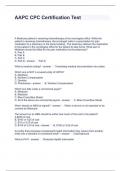
BEHVO 445 Final Exam


The experimental analysis of behavior is ____

A. Concerned with controlling and changing factors that affect behavior
B. A natural-science approach to understanding behavior regulation
C. Concerned with the principle of reinforcement
D. All of these

A _______ is behavior that is elicited by a biologically relevant stimulus, while a/an
______ is behavior controlled by its consequences.

A. Reflex; respondent
B. Reflex; operant
C. Respondent; voluntary
D. Operant; respondent

Selection by consequences occurs at which three levels?

A. Artificial selection, culture, and linguistic selection
B. Natural selection, artificial selection, and cultural selection
C. Natural selection, behavior (operant) selection, and cultural selection
D. Artificial selection, natural selection, and linguistic selection

Skinner stated that behavior (including human behavior) results from
_________________.

A. Genes
B. Environment
C. Self-determination
D. Both Genes and Environment

According to Baer, Wolf, and Risley (1968), what is the difference between basic and
applied behavior analysis?

A. Basic research is likely to look at any behavior and any variable, and applied
research looks at variables that could improve behavior.
B. Basic research is likely to look at any behavior and any variable.
C. Applied research looks at variables that could improve behavior.
D. None of these

,Which of the following statements are true of Pavlov and his contributions?

A. He won the Nobel Prize.
B. He investigated the salivary reflex.
C. All of these
D. He discovered the conditioned or conditional reflex.

How are thinking and feeling treated from a behavioral perspective?

A. More behavior to be explained
B. The cause of overt behavior
C. The relationship between the mental and the physical
D. The mind and its regulation of behavior

Learning refers to ____:

A. The acquisition of behavior
B. The maintenance of behavior
C. The change in behavior as a result of events
D. All of these

The behavior of an organism _____

A. Focuses only on overt actions that can be measured by an outsider
B. Is everything an organism does, including thinking and feeling
C. Is everything an organism does, including biological processes such as digestion
D. Includes the behaviors of organisms around the target organism

Behavior theory states that all behavior is due to complex interaction between
__________________ influence and __________________ experience

A. Cultural; environmental
B. Genetic; cultural
C. Cultural; environmental
D. Genetic; environmental

Analysis of behavior becomes experimental when it involves _____.

A. The observation of behavior
B. The organism changing its behavior
C. A component of learning
D. The manipulation of a condition to see how behavior is affected

Which of the following statements best describes the goals of behavior analysis?

A. To explain the forces that shape human behavior and then to use these explanations

,to develop behavior management techniques for humans
B. To explain how human thought, feeling, and intention both influence behavior and are
influenced by behavior, and then to use this understanding to develop technologies to
influence how people think and feel
C. To work with already established principles and rules of behavior, apply them across
species, and develop behavior management techniques
D. To describe the principles and rules of behavior, apply them across species, and
develop technologies for behavior change

Which of the following statements is not a key assumption of behavior analysis?

A. Behavior is a product of the organism's biological and evolutionary history.
B. Principles of behavior discovered by experimental analyses of behavior are general
and apply to all forms of animal life.
C. Behavior is a product of the organism's past and current interactions with its
environment.
D. Feelings, thoughts, and intentions are possible causes of behavior.

Behavior analysts recognize the importance of __________________, but tend to focus
more on __________________.

A. Biology; environment
B. Environment; evolution
C. Biology; evolution
D. Environment; biology

Behavior analysts define culture as _____:

A. The ideas, values, and behaviors that are passed from generation to generation
B. Traditions passed from one person to another through written or oral communication
C. All the conditions, events, and stimuli arranged by other people that regulate human
action
D. Social influences on people that influence how they think, feel, and act

Skinner argued that internal events such as feelings, thoughts, and intentions _____:

A. Are unimportant
B. Should be ignored
C. Are behaviors that need to be explained
D. Are often causes of our behavior

Watson's conditioning of Little Albert used __________________ as a neutral stimulus
and __________________ as the unconditioned stimulus.

A. A white rabbit; a blast from an air horn
B. A fur coat; an electric shock

, C. A white rat; the sound of a hammer hitting a rail
D. A dog; ringing an alarm clock

The idea that successful behaviors will increase in likelihood, while unsuccessful
behaviors will decrease in likelihood, was first described in ____:

A. Skinner's idea of selection by consequences
B. Watson's stimulus-response psychology
C. Pavlov's work on conditional reflexes
D. Thorndike's law of effect

Which of the following is not a difference between Skinner and Watson?

A. The rejection of internal events as causes of behavior
B. A rejection of genetics as an influence on behavior
C. The inclusion of operant conditioning in understanding behavior
D. An emphasis on habits in understanding the action of organisms

The term _____ refers to behavior that is elicited, and the term _____ refers to behavior
that is emitted:

A. Operant; respondent
B. Reflexive; flexible
C. Respondent; operant
D. Flexible; reflexive

What does a duckling inherit in terms of imprinting?

A. The behavior of following its mother
B. The capacity to be reinforced by reducing the distance between itself and a moving
object
C. The behavior of following a "duck-sized" object
D. The capacity to follow its mother as she obtains food in an ecological area

Fixed-action patterns are _____.

A. Sequences of behavior that are phylogenetic in origin
B. Sequences of behavior that are learned through trial and error
C. Patterns of reinforcement that are elicited by reflexes
D. Patterns of reinforcement that are learned

When the relationship is invariant and biologically based, the eliciting event is the ____
and the behavior following is the ____.

A. Conditioned stimulus; conditioned response
B. Unconditioned stimulus; conditioned response
€22,52
Accéder à l'intégralité du document:

Garantie de satisfaction à 100%
Disponible immédiatement après paiement
En ligne et en PDF
Tu n'es attaché à rien

Faites connaissance avec le vendeur

Seller avatar
Les scores de réputation sont basés sur le nombre de documents qu'un vendeur a vendus contre paiement ainsi que sur les avis qu'il a reçu pour ces documents. Il y a trois niveaux: Bronze, Argent et Or. Plus la réputation est bonne, plus vous pouvez faire confiance sur la qualité du travail des vendeurs.
NurseHenny EXAMS
S'abonner Vous devez être connecté afin de suivre les étudiants ou les cours
Vendu
150
Membre depuis
2 année
Nombre de followers
71
Documents
1900
Dernière vente
1 semaine de cela
AFFORDABLE EXAMS AND STUDY GUIDES

On this page you will find verified, well elaborated exams and packages, offered by seller NURSE HENNY.

4,3

27 revues

5
19
4
4
3
0
2
1
1
3

Récemment consulté par vous

Pourquoi les étudiants choisissent Stuvia

Créé par d'autres étudiants, vérifié par les avis

Une qualité sur laquelle compter : rédigé par des étudiants qui ont réussi et évalué par d'autres qui ont utilisé ce document.

Le document ne convient pas ? Choisis un autre document

Aucun souci ! Tu peux sélectionner directement un autre document qui correspond mieux à ce que tu cherches.

Paye comme tu veux, apprends aussitôt

Aucun abonnement, aucun engagement. Paye selon tes habitudes par carte de crédit et télécharge ton document PDF instantanément.

Student with book image

“Acheté, téléchargé et réussi. C'est aussi simple que ça.”

Alisha Student

Foire aux questions