Externalities and Market Failures
Externalities are the unintended costs or benefits that result from an economic activity and
affect third parties who are not directly involved in the transaction. They are a primary cause of
market failures, situations where markets fail to allocate resources efficiently. Externalities can
be either positive or negative, and their presence means that the market equilibrium does not
reflect the true social costs or benefits of an activity.
Negative Externalities
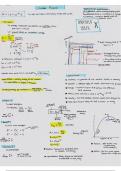
Negative externalities impose external costs on third parties. Examples include pollution from
factories, noise from construction sites, or traffic congestion. In these cases, the marginal
private cost (MPC) of production is lower than the marginal social cost (MSC), leading to
overproduction of the good in a free market. This results in deadweight loss (DWL),
representing the loss of societal welfare.
Government Responses to Negative Externalities:
1. Taxes and Charges: Pigouvian taxes are imposed to align private costs with social
costs (e.g., carbon taxes on emissions).
2. Regulations: Governments can set limits or standards on harmful activities (e.g.,
emissions caps).
3. Tradable Permits: Market-based approaches like cap-and-trade systems allow firms to
buy and sell pollution permits, providing economic incentives to reduce emissions.
Positive Externalities
Positive externalities occur when third parties benefit from an economic activity without paying
for it. Examples include education (which leads to a more productive workforce) and vaccination
programs (which reduce disease spread). In such cases, the marginal private benefit (MPB) is
lower than the marginal social benefit (MSB), leading to underproduction in a free market.
Government Responses to Positive Externalities:
1. Subsidies: Financial incentives encourage greater production or consumption (e.g.,
subsidies for renewable energy or college tuition).
2. Public Provision: Direct government funding of beneficial goods and services (e.g.,
public education or vaccination programs).
Externalities are the unintended costs or benefits that result from an economic activity and
affect third parties who are not directly involved in the transaction. They are a primary cause of
market failures, situations where markets fail to allocate resources efficiently. Externalities can
be either positive or negative, and their presence means that the market equilibrium does not
reflect the true social costs or benefits of an activity.
Negative Externalities
Negative externalities impose external costs on third parties. Examples include pollution from
factories, noise from construction sites, or traffic congestion. In these cases, the marginal
private cost (MPC) of production is lower than the marginal social cost (MSC), leading to
overproduction of the good in a free market. This results in deadweight loss (DWL),
representing the loss of societal welfare.
Government Responses to Negative Externalities:
1. Taxes and Charges: Pigouvian taxes are imposed to align private costs with social
costs (e.g., carbon taxes on emissions).
2. Regulations: Governments can set limits or standards on harmful activities (e.g.,
emissions caps).
3. Tradable Permits: Market-based approaches like cap-and-trade systems allow firms to
buy and sell pollution permits, providing economic incentives to reduce emissions.
Positive Externalities
Positive externalities occur when third parties benefit from an economic activity without paying
for it. Examples include education (which leads to a more productive workforce) and vaccination
programs (which reduce disease spread). In such cases, the marginal private benefit (MPB) is
lower than the marginal social benefit (MSB), leading to underproduction in a free market.
Government Responses to Positive Externalities:
1. Subsidies: Financial incentives encourage greater production or consumption (e.g.,
subsidies for renewable energy or college tuition).
2. Public Provision: Direct government funding of beneficial goods and services (e.g.,
public education or vaccination programs).